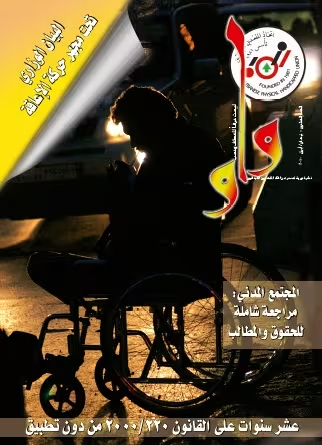
This report is issued by the Lebanese Physical Handicapped Union in July 2011.
Objective of the report:
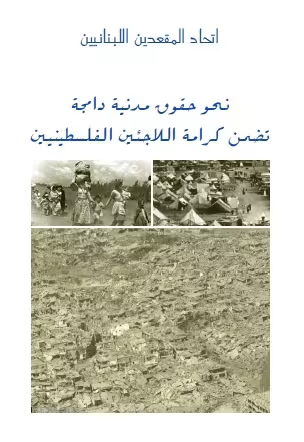
Awareness of society on inclusion in civil laws encompassing the rights of Palestinian refugees in Lebanon
Content of the report:
-Introduction
Legislative Reality
- Prohibition of refugees to the workplace
- The demanded documents to obtain occupation
- Banning from the benefits of health and social services
- Outlawing refugees from possessing a residence
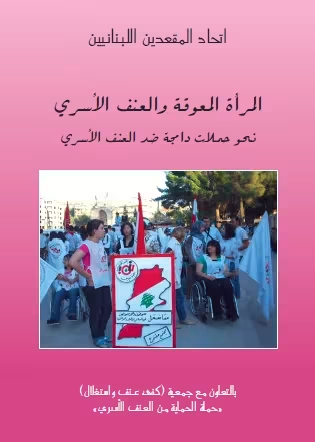
This report is issued by the Lebanese Physical Handicapped Union in 2011.
Objective of this report:
Awareness on repudiating and avoiding domestic violence against women with disability
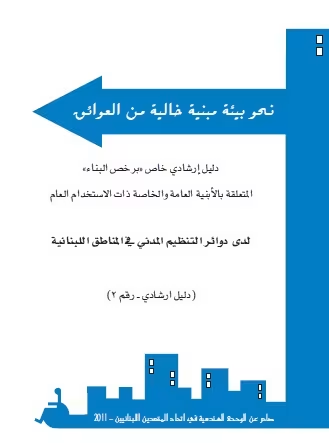
Special guidelines for “Building Licenses” pertaining to public and private buildings of the urban planning centers across Lebanon
Guidelines no. 2
- This guideline is issued by The Lebanese Physical Handicapped Union, arranged by engineer Bashar Abdel Samad, in October 2011.
Objective of the guideline:
Support the application of the decree concerning the accessible environment for people with disability.
Raise awareness on inclusion of people with disability.
This mission was undertaken between the 2nd and 18thof July 2011 to assess the shelter options for the Syrians displaced in Northern Lebanon (the Akkar region).
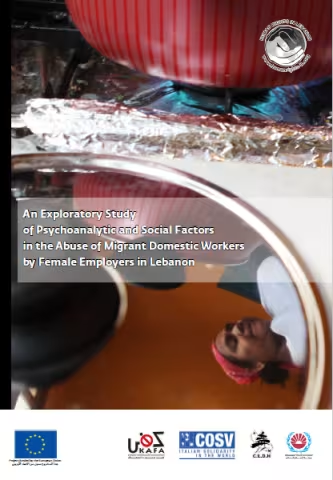
The brief of this qualitative exploratory study was to conduct targeted interviews with female employers of migrant domestic workers, psychiatrists, lawyers and institutional stakeholders in Lebanon.
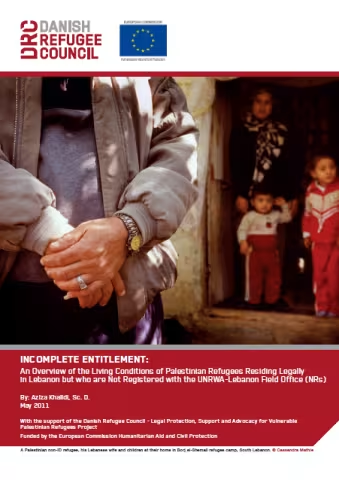
This study is designed to explore distinguishing features of Palestinians not registered with UNRWA in terms of their general living conditions, with a focus on access to basic services, and their aspirations.
This report is the result of a joint effort by UNDP and UN-HABITAT to gain a better understanding of the various dynamics governing access to basic urban services in the Adjacent Areas of Palestine Refugee Camps in Lebanon.
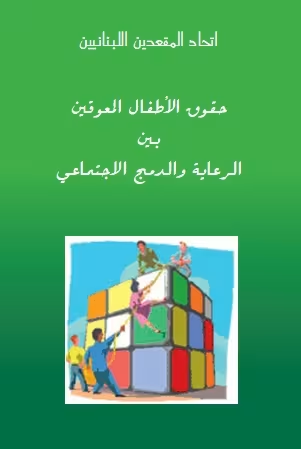
This study is issued by the Lebanese Physical Handicapped Union in 2011.
Objective of the report:
Launch discussion around social inclusion of children with disability in Lebanon and promote the inclusion criteria in accordance with related general policies in Lebanon.
This report will provide a description of the assessment conducted by IMC’s Mental Health and Psychosocial team in the region of Wadi Khaled following the displacement of Syrians into the northern villages between the Lebanese-Syrian borders as a result of the internal conflic
UNHCR, coordinating the operations in the North along side with the HRC (High Relief Commission) and DRC as its main implementing partner, requested from DRC to conduct a first rapid assessment in the Bekaa with the following objectives: a) To identify existing areas of displa
سلسلة أوراق عمل #1 | تشرين الأول 2010
إدارة مخيمات اللاجئين الفلسطينيين في المشرق العربي: حوكمات تبحث عن الشرعيةساري حنفي
"يوما بعد يوم، تصبح كثافة المخيم لا تطاق. يتنامى حجم العائلة الفلسطينية بلا هوادة، يجتاح المهاجرون العراقيون أمكنتنا. لا مساحات خضراء، ولا أماكن للهو الاطفال. نعم هذا مؤلم... على الرغم من ذلك، فأنا أحب أن أكون هنا مع عائلتي وبين الناس الذين أعرفهم. هنا أشعر بالامن." بهذه الكلمات وصف لاجئ فلسطيني من الطبقة الوسطى أجريت معه مقابلة التجربة المتناقضة التي يعيشها في مخيم جرمانا (دمشق)؛ إحساسًا بوضع حضري موجع، وفي الوقت ذاته إحساسًا بالراحة ولانتماء لمجتمع. صحيح أن محيط المخيم...
Working Paper Series #1 | October 2010
Palestinian Refugee Camps in the Arab East: Governmentalities in Search of LegitimacySari Hanafi
“Camp crowdedness becomes unbearable. The size of Palestinian families is increasing relentlessly, and Iraqi migrants are invading our space. There are no green areas, or any playgrounds for kids. Yes this is painful … but nevertheless I like being here amongst my family and people. Here, I feel safe.” This is how one interviewee, a middle class Palestinian refugee, portrayed his paradoxical experience in Jaramana camp, Damascus. He describes its painful urban...
Working Paper Series #3 | July 2010
Describing the Lebanese Youth: A National and Psycho-Social SurveyCharles Harb
The present research investigates socio-demographic, socio-cultural and social-psychological profiles of a representative sample of Lebanese youth. The study thus provides a first assessment of youth in Lebanon, with a clear hope to replicate this research in other parts of the Arab world. This report does not aim to provide a comprehensive model testing between levels of analyses, but rather focuses on a more descriptive profiling of such variables in a way that may be useful to...
Research and Policy Memo #4 | April 2010
Addressing Poor Living Conditions to Improve Health in Palestinian Camps in LebanonRima R. Habib
According to research carried out at the American University of Beirut, the living environment of Palestinian refugees residing in Bourj el Barajneh camp in Beirut lacks the basic services and infrastructure necessary to safeguard the health of community residents. Established in 1948 by the International League of Red Cross Societies, Bourj el Barajneh camp is one of the largest and oldest refugee camps in Lebanon. Housing more than 20,000 refugees, the...
مذكرات للباحثين و صناع القرار #1 | آب 2010
التصدي للظروف المعيشية السيئة لتحسين الصحة في المخيمات الفلسطينية في لبنانريما ر. حبيب
وفقاً لبحث أجرته الجامعة الاميركية في بيروت، تفتقر البيئة المعيشية للاجئين الفلسطينين المقيمين في مخيم برج البراجنة في بيروت إلى الخدمات الاساسية والبنية التحتية اللازمة للحفاظ على صحة سكان المجتمع المحلي
أنشأت الرابطة الدولية لجمعيات الصليب الاحمر مخيم برج البراجنة في سنة 1948 ،وهو من أكبر وأقدم مخيمات اللاجئين في لبنان. ووفقا للمعايير الانسانية، يعتبر المخيم مزدحماً بالسكان إذ يسكنه أكثر من 20000 لاجئ
IFI Research and Policy Memo #1 | April 2010
The Transnational Tobacco Industry Effectively Hampers Tobacco Control Policy-Making in LebanonRima Nakkash
Lebanon is still considered one of the weakest countries in the region with regards to regulating tobacco use, despite having ratified the World Health Organisation’s Framework convention on Tobacco Control in 2005. Lebanon has failed numerous attempts to introduce a national tobacco control policy, including banning smoking in closed public areas, banning advertising and sponsorship, and placing large pictorial health warnings on tobacco...
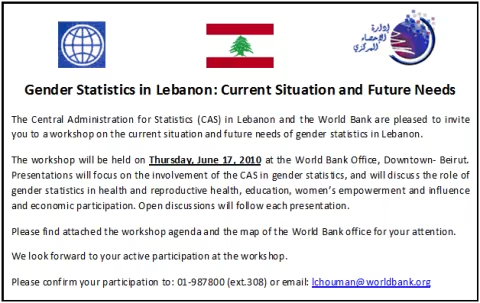
The Central Administration of Statistics (CAS) and the World Bank organized a workshop entitled "Gender Statistics in Lebanon: Current Situation and Future Needs," which took place on June 17, 2010.