Resources

Intervention Sectors
Displaying 81 - 100 of 167
National
Publishing Date
Advocacy aims at creating or changing policies, laws, regulations, distribution of resources or other decisions that affect people’s lives and to ensure that such decisions lead to implementation. Such advocacy is generally directed at policy makers including politicians, government officials and public servants, but also private sector leaders whose decisions impact upon people’s lives, as well as those whose opinions and actions influence policy makers, such as journalists and the media. Advocacy proved to be integral part for organizations (CSO's) working on ending violence against women in...
National
Publishing Date

Research Report | June 2013
Arab States and UN Human Rights Mechanisms by Fateh Azzam
The revolts that have rocked the Arab region in 2011 have focused on demands for dignity, social and economic justice, and political freedoms. As the protests unfolded and spread from one country to another, their chants gained remarkable consistency in their rejection of unaccountable leadership and exclusionary economic and development policies that had failed for decades. The revolts were a wake-up call to all those concerned with politics and development in the region, that development can no longer be...

National
Publishing Date
يقدم المرصد اللبناني لحقوق العمال والموظفين، تقريره السنوي الأول "الاحتجاجات وقضايا العمال  في لبنان عام 2012: عام نهوض القطاع العام وتعرية الاتحاد العمالي العام." ويأتي التقرير بدعم من منظمة "دياكونيا"، باعتباره الإصدار الأول من سلسلة تقارير مرتقبة. وبالإضافة إلى رصد التحركات العمالية في مختلف القطاعات، يفرد التقرير مساحة لبعض النقابيين وبعض مؤسسات المجتمع المدني الفاعلة في وسط العمال لتقديم مساهمات حول قضاياهم التي نحن أيضا معنيون في متابعتها بالمرصد العمالي، ومنها قضايا متعلقة بحقوق العمال المعوقين، والعمال الفلسطينين وعاملات المنازل المهاجرات. كما أفرد التقرير مساحة إضافية لأعضاء في هيئة...
National
Publishing Date
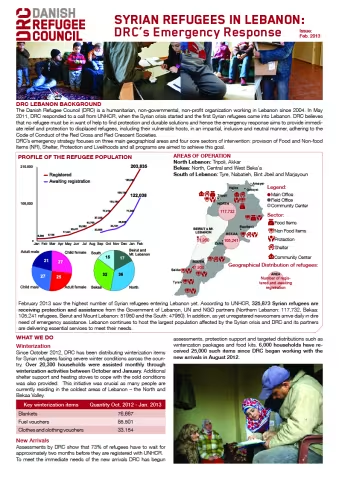
The Danish Refugee Council (DRC) is a humanitarian, non-governmental, non-profit organization working in Lebanon since 2004. In May 2011, DRC responded to a call from UNHCR, when the Syrian crisis started and the first Syrian refugees came into Lebanon. DRC believes that no refugee must be in want of help to find protection and durable solutions and hence the emergency response aims to provide immediate relief and protection to displaced refugees, including their vulnerable hosts, in an impartial, inclusive and neutral manner, adhering to the Code of Conduct of the Red Cross and Red Crescent...
National
Publishing Date
تواصلت خلال عام 2012 حالات الاعتداء على العمال السوريين في أنحاء مختلفة من لبنان، من البقاع إلى الجبل ومن الشمال إلى الجنوب مرورا بالعاصمة وضواحيها. وتشي الحالات التي تم رصدها، أن الاعتداءات ضد العمال الأجانب، والسوريين بشكل خاص، ليست بحالات فردية ومعزولة بل تأتي ضمن سياق عام من التحريض العنصري ضد هذه الفئة بالتحديد. وقد رصد "المرصد اللبناني لحقوق العمال والموظفين" في هذا الإطار 29 حالة عنف موثقة ضد عمال سوريين، من خطف وعنف جسدي وسلب. هذا، وبقي المعتدين في معظم الحالات مجهولي الهوية، مما حال دون سوقهم من قبل السلطات اللبنانية إلى العدالة فضلاً عن تقصير الحكومة في اتخاذ التدابير التي من شأنها...
National
Publishing Date
This report was prepared by ANND in cooperation with its member from 10 Arab countries. It is considered a result of the new direction that was followed after the revolution outbreak in the region. It is the first report of the Arab Watch for social and economic rights.
National
Publishing Date
This resource, published by Oxfam in 2013, aims to present standards that were originally developed for Oxfam staff to ensure a consistent approach to promoting gender equality in humanitarian preparedness and response programming.
National
Publishing Date
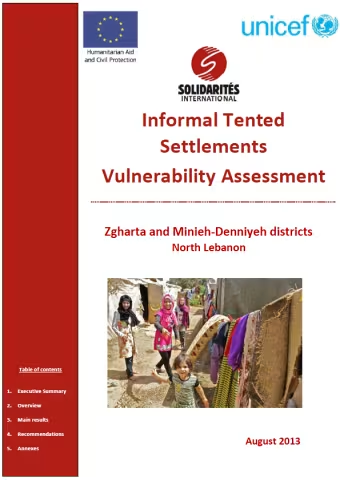
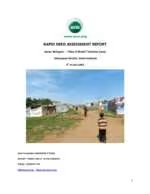
This report is the result of 4 weeks’ field work from April 22 to May 17 carried out in the two districts of Zgharta and Minieh-Dennieh by SOLIDARITÉS INTERNATIONAL’s (SI) outreach workers.
National
Publishing Date

Working Paper | December 2012
Production of Norms and Securitization in Development Policies: From Human Security to Security Sector Reform by Penelope Larzilliere 
Several regional products have been very successful as region-based products, such as Saudi Dates, Jordanian Thyme, Syrian Barazi, Egyptian Foul Mdamas, and Lebanese Chick Pea paste (Homos Tahini). These trends of regionbased, Geographic indicator (GI) and governmental labeled products are considered to be an added value to agroindustrial sector, and are highly efficient tactics to increase small and medium-sized enterprises (SME’s...

National
Publishing Date
Summary Booklet | June 2012 Arab Uprisings Symposium Summary Critically Assessing the Changing Landscape of Power and Players IFI by Maureen Ali This symposium is part of the AUB-wide Arab Uprisings Research Initiative, which was launched and is supported by the Office of the Provost and managed by the Issam Fares Institute for Public Policy and International Affairs. AUB has invited over twenty scholars from the Arab world and abroad to this Symposium to discuss critical themes that have emerged to date, and to help shape our future research agenda. The symposium will highlight shifting power...
National
Publishing Date

Working Paper | May 2012
Women’s Citizenship Rights in Lebanon by Maya W. Mansour and Sarah G. Abou Aad
This paper tackles citizenship rights of Lebanese women married to foreigners, from an international human rights perspective at first, as consecrated over and over by multiple conventions and treaties; to move afterwards to a more practical approach in exposing the provisions of the Lebanese Constitution, the nationality law and regulations, while pointing out the consequences and challenges in addition to the movements of the civil society facing such trials. The analysis used in...

National
Publishing Date
   This study targeted the prisons in South Lebanon within the provinces of Tyre (Tyre prison) and Nabatiye (Nabatiye and Tebnin prisons). Its human and material limits were wide as it included most of the inmates in the three prisons and their families- whether living in or outside the south (Beirut, Baalabek, and Zahle) and remaining Lebanese regions. The main target was to detect and acquire knowledge about the social, educational, medical and economic needs of these families, to follow them up, and shed light on them through a program on which all public and private community stakeholders...