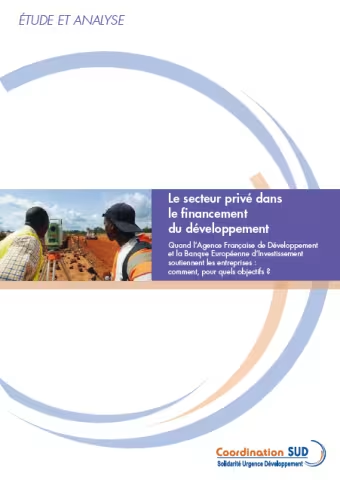
Les politiques de coopération au développement des bailleurs étatiques placent de plus en plus le secteur marchand comme un acteur clé du développement, à la fois comme un partenaire financier ou opérationnel mais aussi comme un objectif en soi. Sa croissance dans les pays du Sud, que ce soit dans le domaine productif ou de la fourniture de services, y compris pour de la délégation de services publics ou l’offre de services bancaires, est considérée comme un indicateur positif. Les gouvernements des pays membres de l’UE cherchent ainsi à maximiser son rôle comme catalyseur ou «substitut» de...
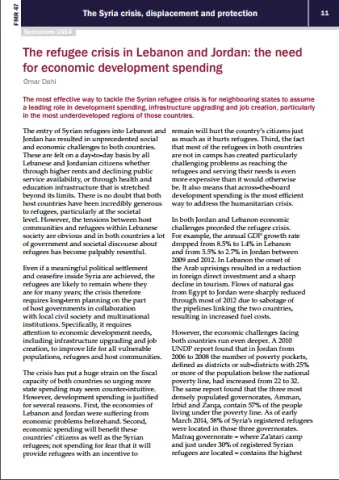
This thematic report provides an overview of available lessons identified from assessments undertaken concerning the humanitarian situation in Syria as well as the situation for Syrian refugees in host-countries.
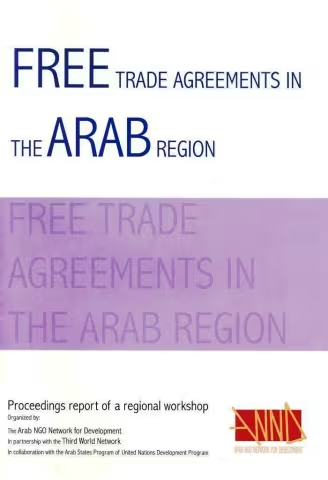
This report is a summary of the presentations given during the regional workshop on free trade agreements in the Arab region. The meeting was part of the two-year project on the “socio-economic impact of trade liberalization policies on the Arab region”.
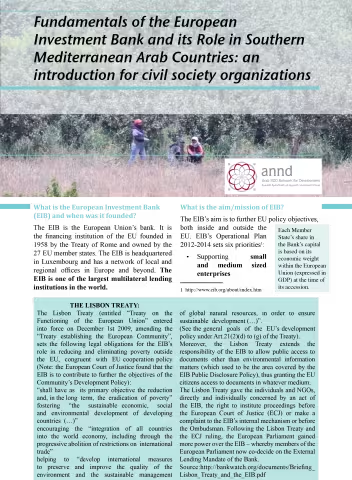
The EIB is the European Union’s bank. It is the financing institution of the EU founded in 1958 by the Treaty of Rome and owned by the 27 EU member states. The EIB is headquartered in Luxembourg and has a network of local and regional offices in Europe and beyond.
The report looks at different technologies related to the power, transport, agriculture and water sectors in Lebanon and assess their potential to reduce greenhouse gas emissions and increase resilience to climate change.
Over 57,000 displaced Syrians are receiving protection and assistance in Lebanon through the efforts of the Government of Lebanon and UN and NGO partners.
The National Report for the United Nations Conference on Sustainable Development (Rio + 20) presents the current situation as is and highlights the achievements and failures, strengths and weaknesses, opportunities and risks.
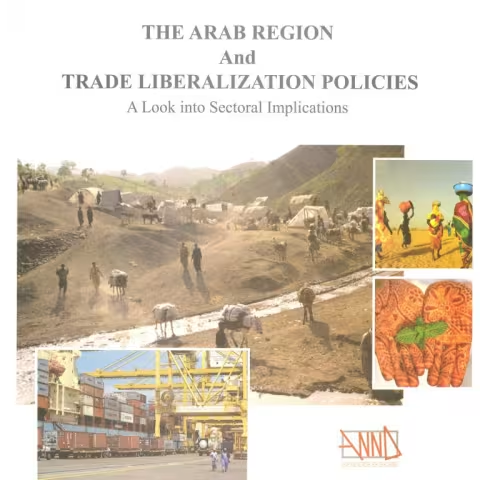
It contains 8 chapters: 1) an introduction to the general debate on trade and development, 2) an overview of the situation In the Arab region, 3) the engagement of Arab countries with the WTO, 4) Arab countries and the Euro-Mediterranean partnership, 5) Arab countries and free
The report provides an overview of Lebanon’s greenhouse gas emissions per sector, and analyses the impacts of the country’s projected climatic changes on several economic, social and environmental sectors.
This report will provide a description of the assessment conducted by IMC’s Mental Health and Psychosocial team in the region of Wadi Khaled following the displacement of Syrians into the northern villages between the Lebanese-Syrian borders as a result of the internal conflic
This reference book includes chapters on resources, legal and integral frameworks, and the constitutional structure of NGOs. It aims at contributing to reinforce the role of civil society in the economic and social development of Lebanon.
In the framework of “Towards a National Dialogue on Corruption in Lebanon”, the United Nations Development Programme and the Lebanese Transparency Association were able to lay down the foundation of anti-corruption modules as translated into the document entitled “Towards a Na
The forum was held less than two months after 9/11. The forum included general discussions as well as teach-ins on specific issues related to globalization, the WTO, and the challenges in the Arab world under the current world order.