The National Report on Freedom of Religion & Belief was launched by the National Working Group on FoRB in Lebanon, which Peace of Art is part of. This report is the proud work of the National Working Group on Freedom of Religion and Belief (FoRB) in Lebanon.
In the most recent impact report, you will find the joys and pains of another exceptional 12 months that were bittersweet for some and out of the ordinary for absolutely everyone. Despite all the uncertainties we are living through from a continued economic meltdown and an ailing healthcare system, our team has, by the grace of God, persisted in carrying out the mission with hope and faith.
أطلقت لجنة الإنماء الوطني برنامج "نهضة" الزراعي في تموز 2020 استجابة للوضع الإقتصادي المتردي في لبنان. حددت الجمعية أن السبب الرئيسي لذلك التردي، هو الإتكال الكبير في استهلاك المنتجات الزراعية الاستراتيجية على استيراد تلك المُنتجات من الخارج. الحل المباشر يكون في التحول التدريجي للمقومات الإقتصادية الزراعية إلى نموذج إنتاجي تصاعدي وفق خطة طويلة الأمد، يتم ترشيدها بأهداف محددة في الأمن الغذائي، وتنفيذها في خطة علمية منهجية تحرص على استدامة النتائج المتوخاة، لتتكامل مع النسيج الإقتصادي للبنان. يتم مراقبة وضبط نجاح وتقدم هكذا خطة عبر قياس دوري لمكونات محددة وواضحة، استناداً لمعلوماتٍ دقيقة تكون...
We Rise through Art is a handbook produced under the project with the same title in response to Beirut's explosion, highlighting activities and tools that can be adopted by trainers, coaches and facilitators with pre-adolescents and children under arts, sports and recreation.
Beirut Explosion: Greatest Tragedies Come With Greatest Acts of Kindness.
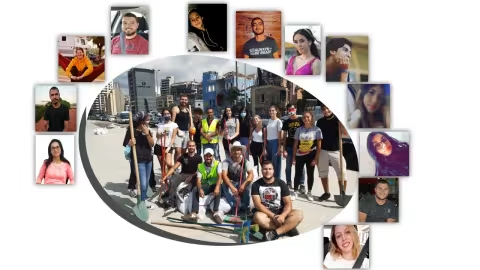
Youth from a Sports and Youth Association (Chabibeh Sporting Club) become volunteers and share stories of compassion and pain mixed together to shed light on the darkest hour of their country.
We Play for Peace is a handbook produced under the project with the same title highlighting activities and tools that can be adopted by trainers, coaches and facilitators with pre-adolescents and children under arts, sports and recreation.
This report is based on answers to two surveys carried out in Lebanon in 2018 as part of a project to understand how refugees and humanitarian staff perceive the impact of the reforms enshrined in the Grand Bargain.
Only a handful of studies in Lebanon have shed light on the changing gendered dynamics within the refugee families by comparing gender roles, expectations, and practices before and after displacement (as result of armed conflict).
This study maps the current state of gender justice in the Arab region, documenting barriers as well as opportunities. Its primary research aim is to determine how to develop an environment, at the legal, policy, and social levels that is conducive to gender justice.
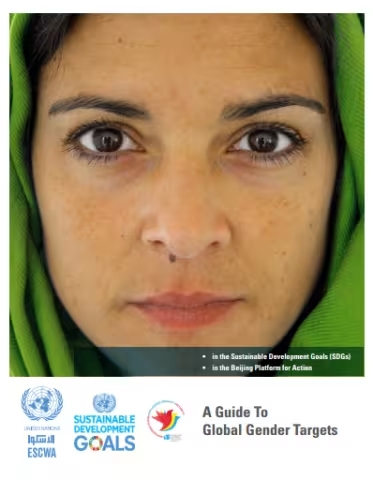
The present guide proposes to reconcile the gender-related targets in the Sustainable Development Goals with the objectives of the Beijing Platform according to various sub-topics. It is organized in two sections.
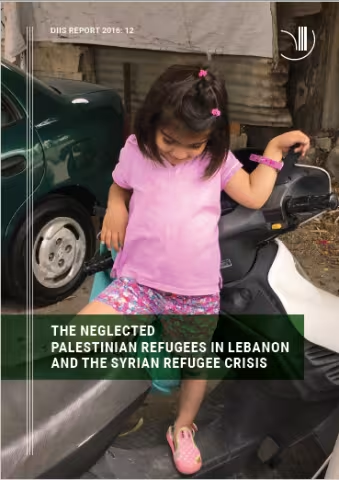
This document provides information about the situation of Palestine refugees in Lebanon, including non-registered Palestinian refugees, undocumented (“non-ID”) Palestinians, and Palestine refugees from Syria.
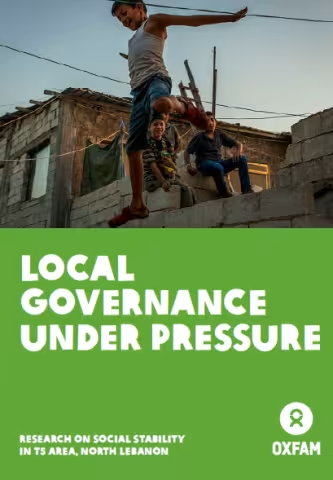
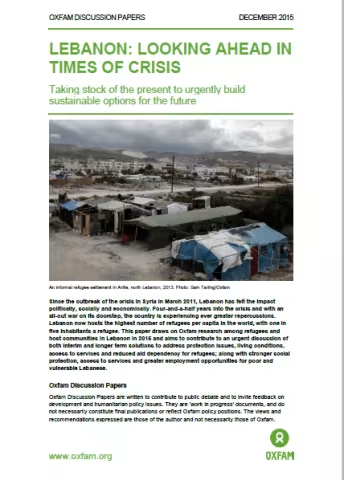
This paper draws on Oxfam research among refugees and host communities in Lebanon in 2015 and aims to contribute to an urgent discussion of both interim and longer term solutions to address protection issues, living conditions, access to services and reduced aid dependency for refugees; along with stronger social protection, access to services and greater employment opportunities for poor and vulnerable Lebanese.
This paper is inspired by examples of domestic workers organizing themselves in different parts of the world through social and solidarity economy enterprises and organizations which have become more evident since the advent of the ILO Domestic Workers Convention 2011, (No.189
This study aims to shed light on the industry that profits from the recruitment of women from South Asian countries into domestic work employment in the Middle East, with a particular focus on Bangladesh, Jordan and Lebanon.
Considerable analysis has been undertaken to date on the challenges and impacts on and of Syrian refugees in Lebanon – including by Oxfam – but the bulk of this analysis is seen through the lens of the wider Syria crisis and often fails to take into consideration Lebanon itsel