This report aims to provide a contextual understanding of migration governance in the Lebanese context, as well as its implications for refugees and migrants.
Lebanon has had an ambiguous approach to the more than one million Syrians seeking protection in the country since 2011. The country is neither party to the 1951 Convention relating to the Status of Refugees, nor does it have any national legislation dealing with refugees.
In May 2015, the Lebanese authorities instructed UNHCR to temporarily suspend registration of Syrian refugees, including individuals already in the country and new arrivals.
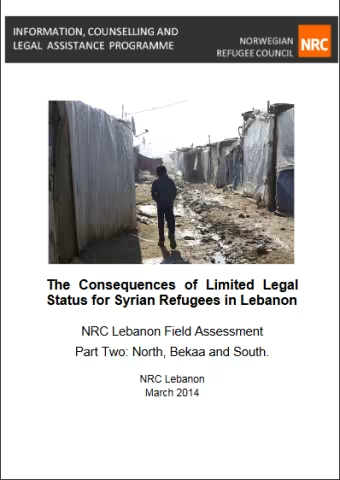
In December 2013, NRC launched a report entitled ‘The Consequences of Limited Legal Status for Syrian Refugees in Lebanon: NRC Field Assessment in Aarsal and Wadi Khaled’ (Part One) based on the findings of an assessment that NRC conducted between
Since the unrest in Syria began in March 2011, the Bekaa Valley in Lebanon has hosted varying numbers of displaced Syrian families. Local actors such as municipalities and NGOs registered families for assistance received through regional and international donors.
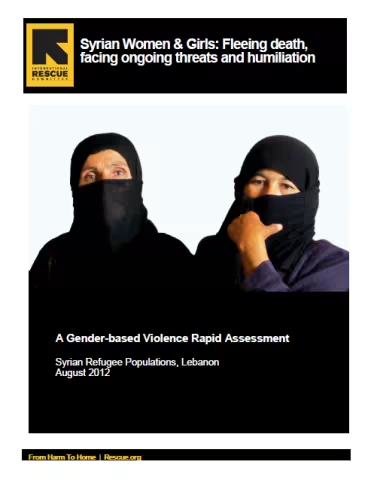
This Gender-based Violence Rapid Assessment conducted by International Rescue Committee in 2012 focuses on risks and violence faced by women and girls among the Syrian refugee population within Lebanon.
Executive summary of a survey conducted by UNICEF. Objectives of the study: - To assess the magnitude of the problem of violence at home, in schools, in institutions and in the neighborhood of camp environment.