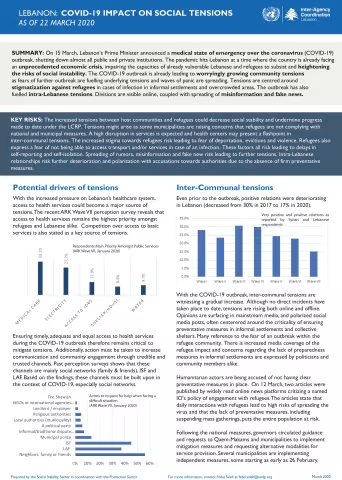
On 15 March, Lebanon’s Prime Minister announced a medical state of emergency over the coronavirus (COVID-19) outbreak, shutting down almost all public and private institutions. The pandemic hits Lebanon at a time where the country is already facing an unprecedented economic crisis, impairing the capacities of already vulnerable Lebanese and refugees to subsist and heightening the risks of social instability. The COVID-19 outbreak is already leading to worryingly growing community tensions as fears of further outbreak are fuelling underlying tensions and waves of panic are spreading. Tensions...
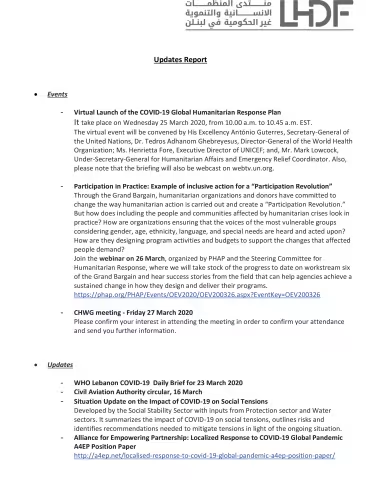
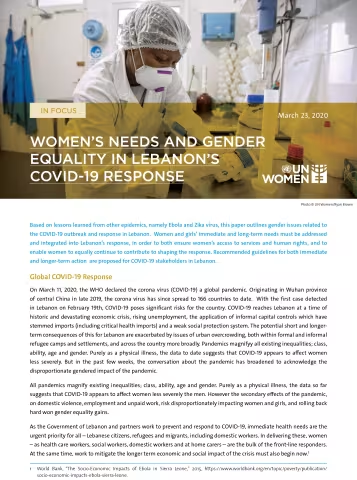
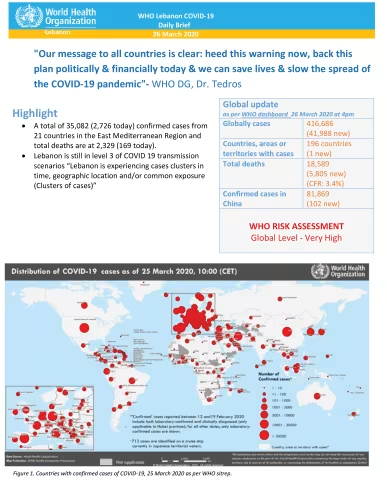
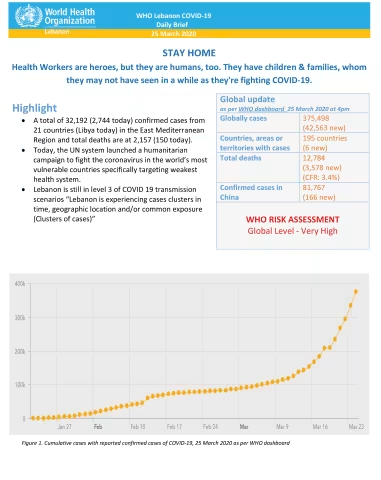
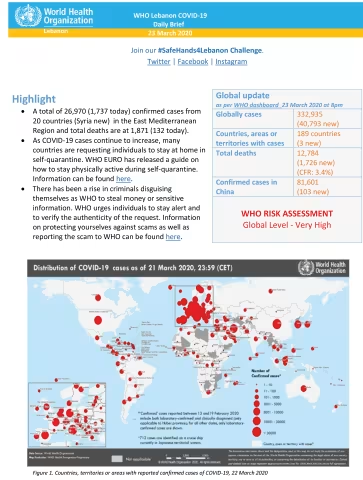
On March 11, 2020, the WHO declared the corona virus (COVID-19) a global pandemic. Originating in Wuhan province
of central China in late 2019, the corona virus has since spread to 166 countries to date.
“More than 60% of Syrian refugees households comprise a person with disabilities and 1/5 Syrian refugees has a disability in Lebanon and Jordan”, shows a large study conducted by Humanity & Inclusion (HI) and iMMAP.
Analyzing the Impact on the Personal and Professional Development
of Young Participants at Erasmus Plus/Youth in Action/Euromed projects through “Chabibeh Sporting Club” From 2008 till 2017
More than a decade after the United Nations’ adoption of the Convention on the Elimination of All Forms of Discrimination against Women, which is adopted by many countries including Lebanon, these countries returned in 2015 to commit themselves to achieve gender equality and t
UNFPA on behalf of UNDP and UN Women organized a national workshop on gender-related laws, policies and practices in Lebanon, which was held in Beirut on the 7th and 8th of August, 2018.
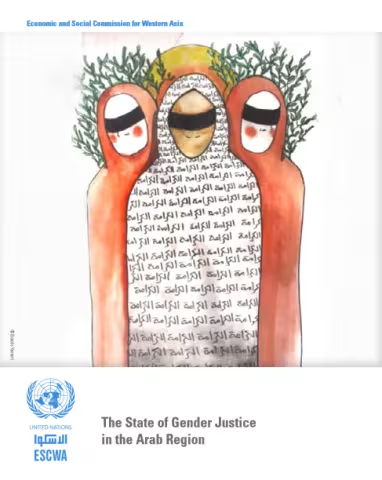
This study maps the current state of gender justice in the Arab region, documenting barriers as well as opportunities. Its primary research aim is to determine how to develop an environment, at the legal, policy, and social levels that is conducive to gender justice.
This report aims to explore the fragmented organisation of healthcare services in Lebanon, for Syrian refugees. Although it is not an assessment of the Lebanese healthcare system, this report does nevertheless reflect on the challenges and underlying dynamics of the current Lebanese system, which are reproduced in the healthcare provision for Syrian refugees. In this sense, the report highlights the privatised, rather ad hoc, and irregular provision of healthcare in Lebanon, notably for Syrian refugees, which tends to take on a more curative rather than preventive approach, resulting in...
Since the uprising in Syria in March 2011, over 4.3 million Syrians have fled to neighboring countries. Over a million have sought refuge in Lebanon, constituting almost a quarter of the Lebanese population and becoming the largest refugee population per capita in the world.
With inequitable health coverage being a longstanding problem in Lebanon, Syrian refugee women’s health, and specifically their sexual and reproductive health, is disproportionately affected. An increase in gender-based violence and early marriage, a lack of access to emergency obstetric care, limited access to...
This cross sectional survey was conducted among Syrian refugees living in Lebanon, to monitor access to and utilization of key health services. Refugees in Lebanon are predominantly living in urban areas and informal settlements and there are no refugee camps.
Over 250,000 migrant women are employed by private households in Lebanon to carry out household tasks such as cleaning, cooking, and caring for children and the elderly.
The objective of the report is to identify the psychosocial impact and needs of humanitarian actors working with refugees in Syria, Lebanon, Jordan, Egypt, North Iraq and Palestine.
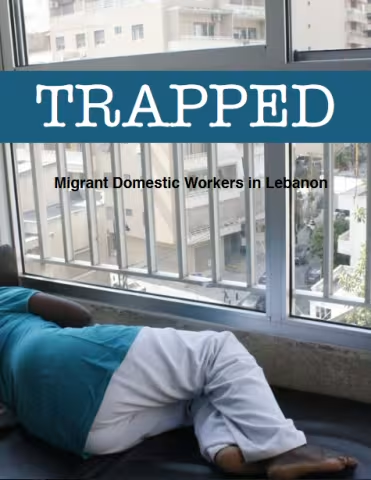
The right to freedom of movement forms one of the cornerstones of the international human rights regime and the Lebanese legal system. It is a right that everyone ought to enjoy regardless of race, national origin, residence status, religion or any other criteria.