The National Report on Freedom of Religion & Belief was launched by the National Working Group on FoRB in Lebanon, which Peace of Art is part of. This report is the proud work of the National Working Group on Freedom of Religion and Belief (FoRB) in Lebanon.
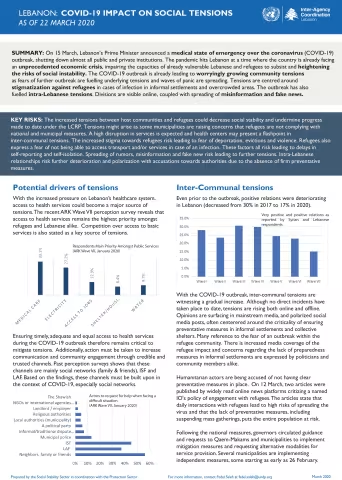
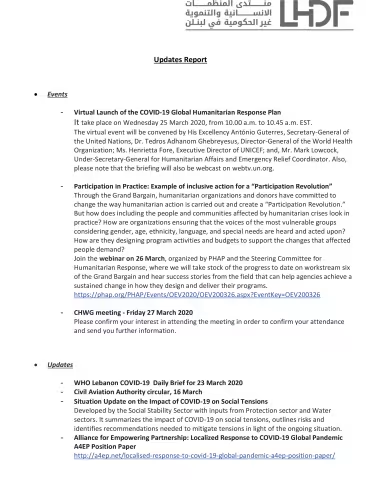
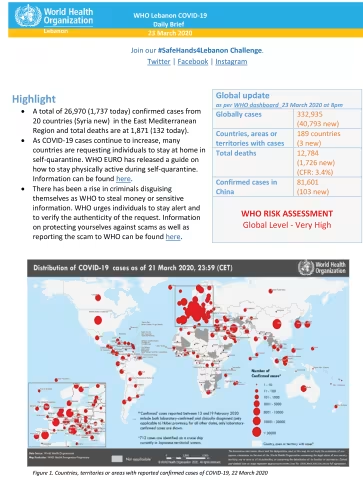
On 15 March, Lebanon’s Prime Minister announced a medical state of emergency over the coronavirus (COVID-19) outbreak, shutting down almost all public and private institutions. The pandemic hits Lebanon at a time where the country is already facing an unprecedented economic crisis, impairing the capacities of already vulnerable Lebanese and refugees to subsist and heightening the risks of social instability. The COVID-19 outbreak is already leading to worryingly growing community tensions as fears of further outbreak are fuelling underlying tensions and waves of panic are spreading. Tensions...
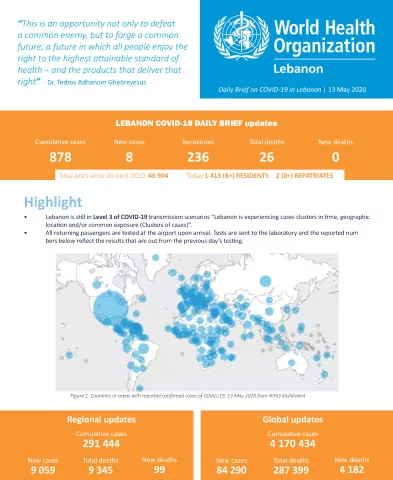
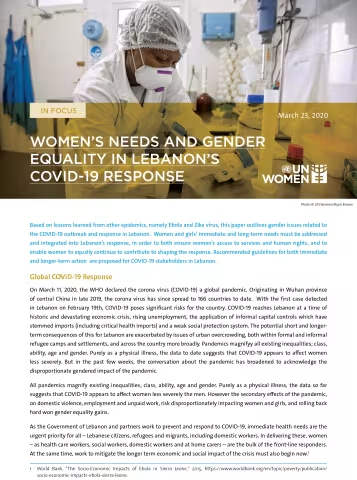
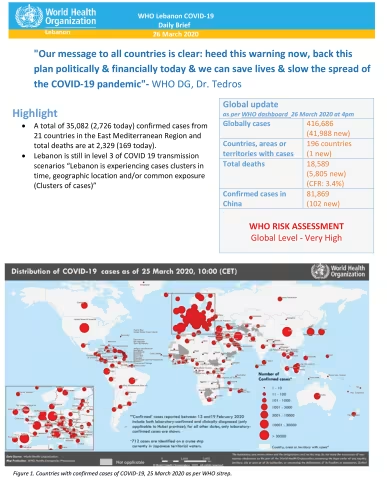
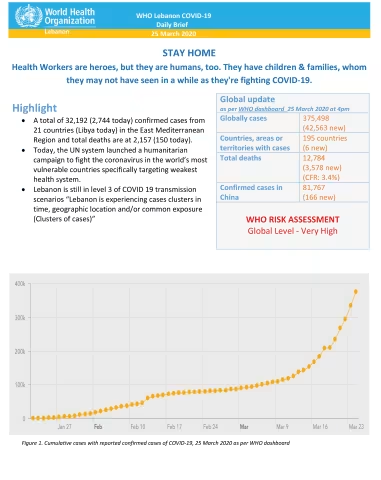
On March 11, 2020, the WHO declared the corona virus (COVID-19) a global pandemic. Originating in Wuhan province
of central China in late 2019, the corona virus has since spread to 166 countries to date.
“More than 60% of Syrian refugees households comprise a person with disabilities and 1/5 Syrian refugees has a disability in Lebanon and Jordan”, shows a large study conducted by Humanity & Inclusion (HI) and iMMAP.
Analyzing the Impact on the Personal and Professional Development
of Young Participants at Erasmus Plus/Youth in Action/Euromed projects through “Chabibeh Sporting Club” From 2008 till 2017
This report aims to explore the fragmented organisation of healthcare services in Lebanon, for Syrian refugees. Although it is not an assessment of the Lebanese healthcare system, this report does nevertheless reflect on the challenges and underlying dynamics of the current Lebanese system, which are reproduced in the healthcare provision for Syrian refugees. In this sense, the report highlights the privatised, rather ad hoc, and irregular provision of healthcare in Lebanon, notably for Syrian refugees, which tends to take on a more curative rather than preventive approach, resulting in...
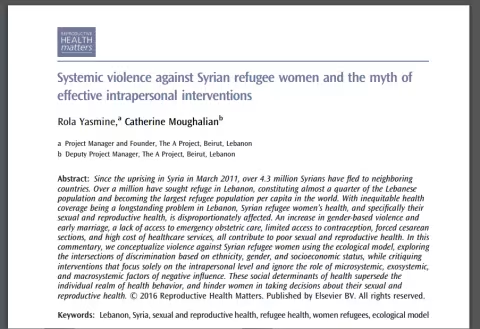
Since the uprising in Syria in March 2011, over 4.3 million Syrians have fled to neighboring countries. Over a million have sought refuge in Lebanon, constituting almost a quarter of the Lebanese population and becoming the largest refugee population per capita in the world.
With inequitable health coverage being a longstanding problem in Lebanon, Syrian refugee women’s health, and specifically their sexual and reproductive health, is disproportionately affected. An increase in gender-based violence and early marriage, a lack of access to emergency obstetric care, limited access to...
This cross sectional survey was conducted among Syrian refugees living in Lebanon, to monitor access to and utilization of key health services. Refugees in Lebanon are predominantly living in urban areas and informal settlements and there are no refugee camps.
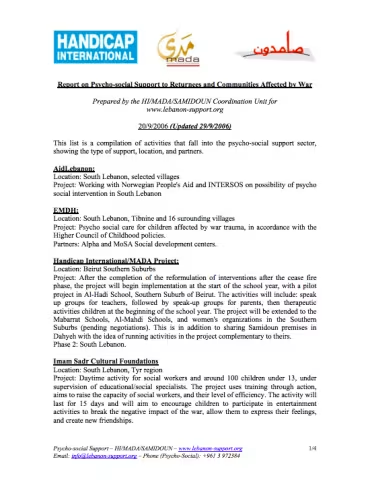
The objective of the report is to identify the psychosocial impact and needs of humanitarian actors working with refugees in Syria, Lebanon, Jordan, Egypt, North Iraq and Palestine.
يوجد في لبنان 21 سجنا وأربعة من هذه السجون مخصصة للنساء. و هناك سجنان اضافيان للأحداث. انّ الكشف النفسي و الرعاية الصحية النفسية غائبان في السجون اللبنانية.
نأمل أن التوصيات الصادرة في هذه الدراسة تصبح واقعا كما أنها ستغير حياة العديد من الأشخاص المنسية خلف القضبان وستمنع "حكم بالسجن مدى الحياة" مماثل في المستقبل للسجناء.
Lebanon has a total of 212 prisons, out of which 4 are specific to women. And there are 2 additional prisons dedicated to minors. Mental health screening and care is absent in Lebanese prisons.
Catharsis hopes the recommendations from this study become a reality as they will change the live of many forgotten person behind bars, some of whom have been in prison for over 35 years, and it will prevent a similar “life sentence” fate for future mentally ill inmates.
This study sought to characterize the physical and emotional conditions, dietary habits, coping practices, and living conditions of this elderly population arriving in Lebano
This document represents the strategic plan of the Middle East and North Africa Harm Reduction Association,MENAHRA, for the period of July 2014 till December 2019.
The development of a revised strategic plan was necessary due to the new challenges faced, and changing contexts in which MENAHRA has been operating in the past few years. Established in 2007 as a network of organisations with a central Secretariat in Beirut and three Knowledge Hubs in Iran, Lebanon and Morocco,MENAHRA has taken on additional roles over the past years, including the management of a large regional HIV grant. The...