People affected by humanitarian crises, particularly those displaced and/or living in camps and camp-like settings,
are often faced with specific challenges and vulnerabilities that must be taken into consideration when planning for
readiness and response operations for the COVID-19 outbreak ..
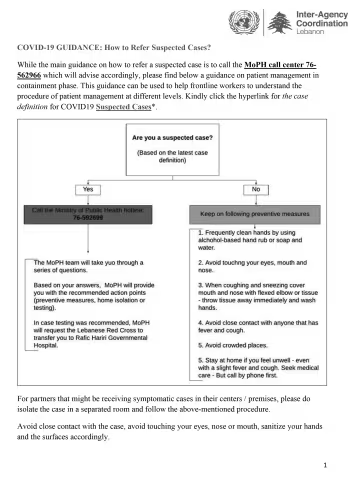
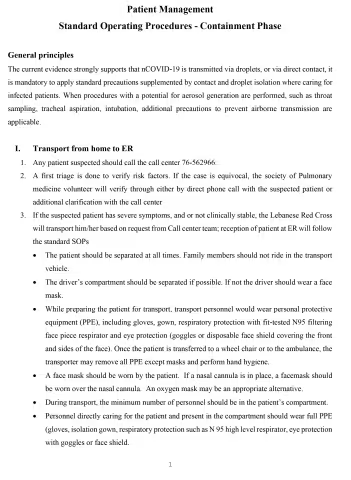
While the main guidance on how to refer a suspected case is to call the MoPH call center 76-562966 which will advise accordingly, please find below a guidance on patient management in containment phase.
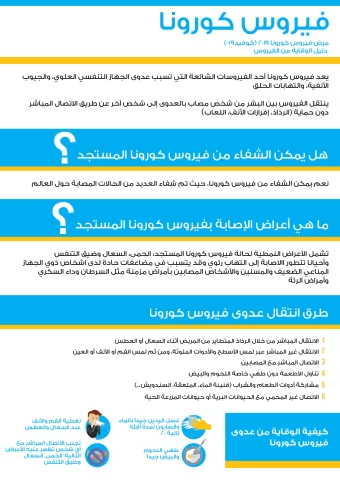
Coronaviruses are a large family of respiratory viruses that cause diseases ranging from the common cold to the more
severe diseases such as Severe Acute Respiratory Syndrome (SARS).
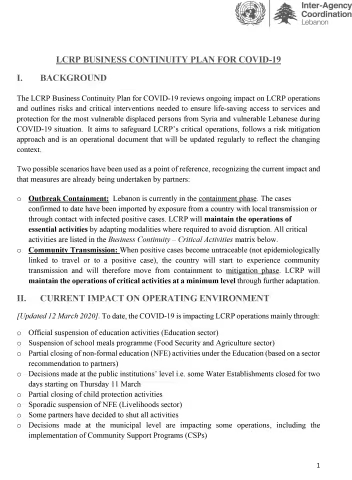
The LCRP Business Continuity Plan for COVID-19 reviews ongoing impact on LCRP operations and outlines risks and critical interventions needed to ensure life-saving access to services and protection for the most vulnerable displaced persons from Syria and vulnerable Lebanese during COVID-19 situation.
The current evidence strongly supports that nCOVID-19 is transmitted via droplets, or via direct contact, it
is mandatory to apply standard precautions supplemented by contact and droplet isolation where caring for
infected patients.
This document provides an update that aims to provide an operational snapshot for NGOs in a rapidly changing context. This also provides some suggestions around national level response planning from a field perspective.
“More than 60% of Syrian refugees households comprise a person with disabilities and 1/5 Syrian refugees has a disability in Lebanon and Jordan”, shows a large study conducted by Humanity & Inclusion (HI) and iMMAP.
This report aims to explore the fragmented organisation of healthcare services in Lebanon, for Syrian refugees. Although it is not an assessment of the Lebanese healthcare system, this report does nevertheless reflect on the challenges and underlying dynamics of the current Lebanese system, which are reproduced in the healthcare provision for Syrian refugees. In this sense, the report highlights the privatised, rather ad hoc, and irregular provision of healthcare in Lebanon, notably for Syrian refugees, which tends to take on a more curative rather than preventive approach, resulting in...