The research will provide better understanding on the legislations and laws that authorities are using to control or oppress any movement or any type of activism on gender and sexuality issues in JORDAN.
Titled “Let The Resolution Begin…. Live Gender Equity”, this resource is the annual report of ABAAD Resource Center for Gender Equity, which lists the accomplishments of the organization for the period between June 2011 and June 2012.
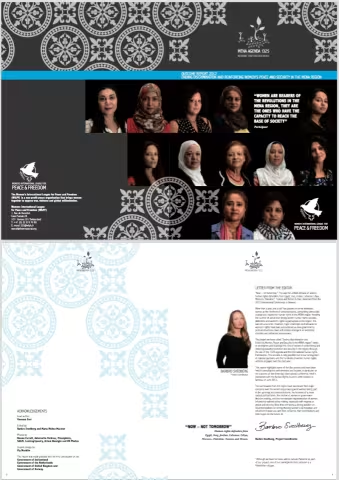
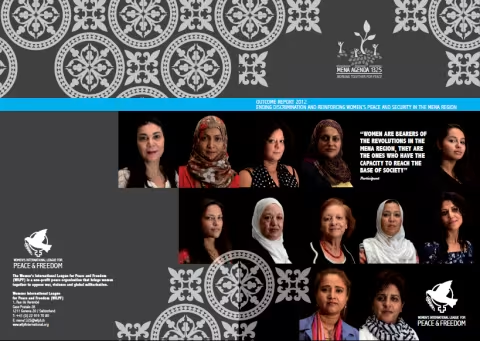
In late 2011, WILPF began to develop a programme to enhance the collective capacities of women’s rights organisations to respond to the unprecedented political events in the Middle East and North Africa (MENA).
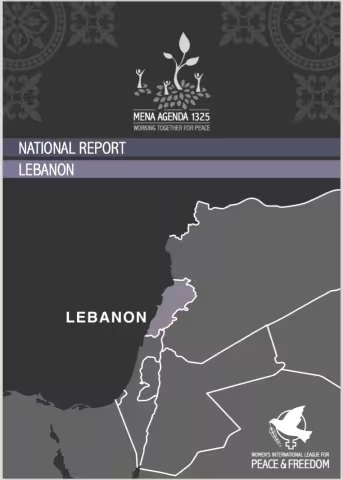
ABAAD-Resource Center for Gender Equality, in partnership with Women's League for International Peace and Freedom (WILPF) and in collaboration with the United Nations Interim Forces (UNFIL) in South Lebanon, organized the National Consultation Meeting on May 10th, 2012 at Holi
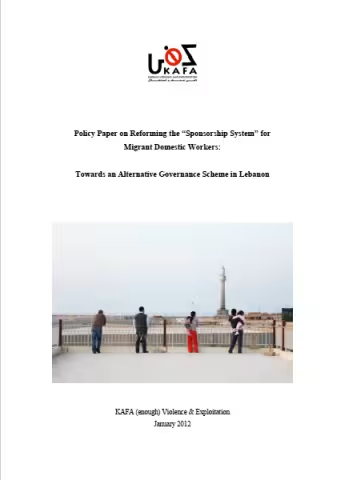
In recent years, the “sponsorship system” (kafala) in Lebanon and in other countries in the region has been identified as a core problem leading to the exploitation and abuse of migrant domestic workers.
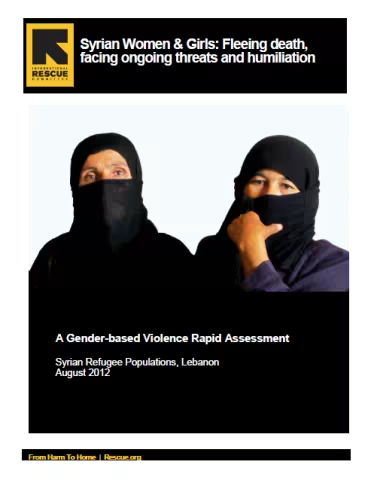
This Gender-based Violence Rapid Assessment conducted by International Rescue Committee in 2012 focuses on risks and violence faced by women and girls among the Syrian refugee population within Lebanon.
Research Paper | October 2011
A Case Study on Lebanon’s National Strategy for Forest Fire Management Elissar Harati and Hana A. El‐Ghali
The case study on Lebanon’s forest fire policy aims to trace the policy-formulation process which led to the National Strategy for Forest Fire Management. The policy represents a successful example of a civil society organization, namely a nongovernmental organization (NGO) specialized in reforestation activities, influencing policy-making through research and advocacy. The mandate of forest fires falls under the jurisdiction of a number of institutions...
Research Paper | October 2011
A Case Study on Lebanon’s National Strategy for Forest Fire Management Elissar Harati and Hana A. El‐Ghali
The case study on Lebanon’s forest fire policy aims to trace the policy-formulation process which led to the National Strategy for Forest Fire Management. The policy represents a successful example of a civil society organization, namely a nongovernmental organization (NGO) specialized in reforestation activities, influencing policy-making through research and advocacy. The mandate of forest fires falls under the jurisdiction of a number of institutions...
Human trafficking and its link to migrant domestic labor in Lebanon is a complex, sensitive, and challenging issue. It raises numerous questions and demands further exploration.
This report was presented at the International Labour Conference, 99th Session, 2010. It was intended to facilitate the discussion of domestic work at the Conference and consists of ten chapters, each of which covers issues pertaining to the topic of domestic work.
This publication is a compilation of reports prepared by group of civil society organizations in light of the review of Lebanon under the first-cycle of Universal Periodic Review (2010).The booklet includes the report reviewing conditions of economic and social rights in Leban
هذه الدراسة تم انجازها عام 2010، من قبل عزّة شرارة بيضون، بدعم من منظمتي أوكسفام برطانيا(OXFAM) و كفى عنف و استغلال و بتمويل من UNTRUSTED FUND ضمن إطار مشروع "تطوير مقاربات و استراتيجيات العمل مع الرجال لمناهضة العنف المنزلي في الشرق الاوسط".
This brochure elaborates on the achievements of the UNDP’s 4 portfolios in Lebanon: Democratic Governance, Poverty & Social Development, Environment & Energy, and Crisis Prevention & Recovery.
On December 9, 2009, a Lebanese criminal court sentenced a Lebanese woman to 15 days in jail for repeatedly beating Jonalin Malibago, her Filipina maid, three years earlier.
هذا الكتيّب، من إعداد جمعية حلم نشر عام 2009، يعرض حقائق ووقائع لها علاقة بالهوية والميول الجنسية، وإنتهاكات حقوق الإنسان التي قد تستهدف أشخاص بسبب ميولهم أم هويتهم الجنسية.
The starting point for the present Report is that, since the publication of the first volume in the series, the region’s human development fault lines have grown more complex, and in some cases deepened.