We Play for Peace is a handbook produced under the project with the same title highlighting activities and tools that can be adopted by trainers, coaches and facilitators with pre-adolescents and children under arts, sports and recreation.
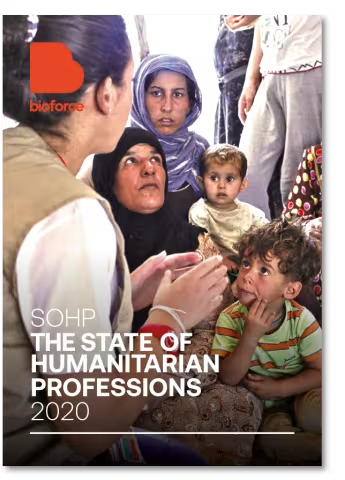
The State of Humanitarian Professions 2020 (SOHP) is the result of a year-long consultation with more than 1,500 humanitarian professionals. For the first time, this study gathers and analyses key figures on 24 humanitarian professions, as well as on recruitment practices and professional development in the sector. In addition, the SOHP study demonstrates the need to coordinate on the challenges of professionalising humanitarian teams, with 19 recommendations to be discovered in the final report.
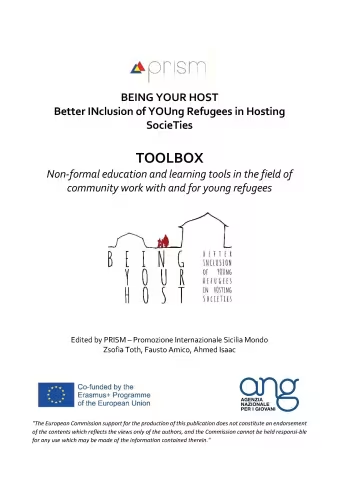
The toolbox is intended as an open learning resource for youth workers that are engaged in community work with young refugees, asylum seekers and young people with migration background. Specifically: project managers, community leaders, educators, facilitators, social workers, intercultural mediators that are interested to improve their ability in the social inclusion of excluded groups.
The toolbox could also be used in formal settings such as schools, colleges and universities addressing
development challenges as well as for project managers and experts engaged in the design and...
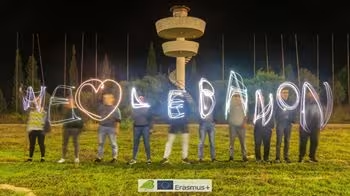
This document is the outcome of a workshop done during the Erasmus Plus training "Influence Youth".
The workshop was about the topic of teamwork, specifically the challenges faced when working with a team of volunteers and how to overcome it.
The participants of the workshop talked about their challenges and possible interventions were shared also by participants based on their experience working in this field.
The document includes the information shared by the participants in this workshop.
More than a decade after the United Nations’ adoption of the Convention on the Elimination of All Forms of Discrimination against Women, which is adopted by many countries including Lebanon, these countries returned in 2015 to commit themselves to achieve gender equality and t
UNFPA on behalf of UNDP and UN Women organized a national workshop on gender-related laws, policies and practices in Lebanon, which was held in Beirut on the 7th and 8th of August, 2018.
The Arab region continues to manage uncertainties on its path towards an inclusive and sustainable growth trajectory: geopolitical tensions persist, and global interest rates have soared.
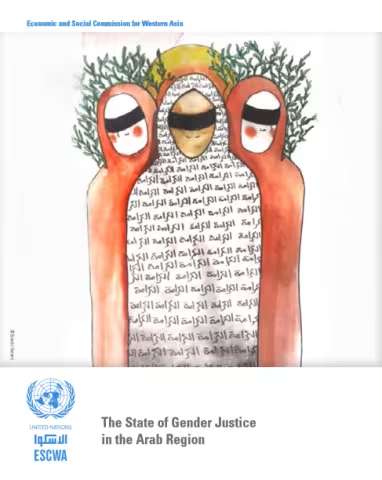
This study maps the current state of gender justice in the Arab region, documenting barriers as well as opportunities. Its primary research aim is to determine how to develop an environment, at the legal, policy, and social levels that is conducive to gender justice.
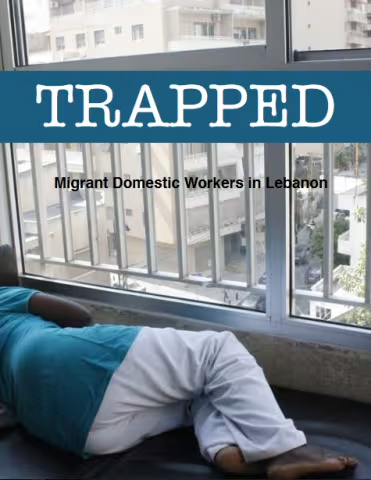
Over 250,000 migrant women are employed by private households in Lebanon to carry out household tasks such as cleaning, cooking, and caring for children and the elderly.
The right to freedom of movement forms one of the cornerstones of the international human rights regime and the Lebanese legal system. It is a right that everyone ought to enjoy regardless of race, national origin, residence status, religion or any other criteria.
This paper is inspired by examples of domestic workers organizing themselves in different parts of the world through social and solidarity economy enterprises and organizations which have become more evident since the advent of the ILO Domestic Workers Convention 2011, (No.189
This study aims to shed light on the industry that profits from the recruitment of women from South Asian countries into domestic work employment in the Middle East, with a particular focus on Bangladesh, Jordan and Lebanon.
In most Arab countries, family matters including Domestic Violence continue to be handled by religious courts as civil legislation does not criminalise acts of violence within the family.
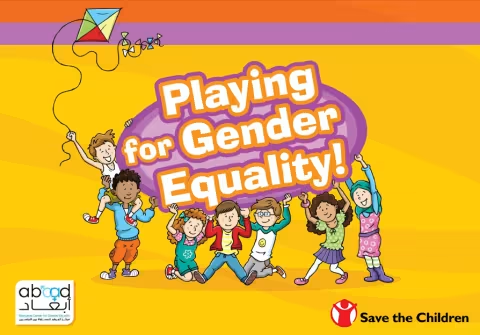
The manual is composed of fun and interactive games for children aged 8 to 12 years old. The games will facilitatethe learning of important concepts and terminology pertaining to Gender Equality. More importantly, during/afterthe games have been played, it allows the trainer the freedom to begin important discussions about the conceptsthat the children learned during the games.
This resource, published by Oxfam in 2013, aims to present standards that were originally developed for Oxfam staff to ensure a consistent approach to promoting gender equality in humanitarian preparedness and response programming.
The research will provide better understanding on the legislations and laws that authorities are using to control or oppress any movement or any type of activism on gender and sexuality issues in JORDAN.
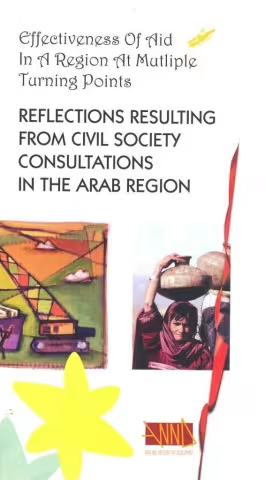
This book tackles key Issues of concern within the aid discussion. It outlines issues of particular importance for civil society in the Arab region and highlights the difference of prospectives between government representatives and CSOs.
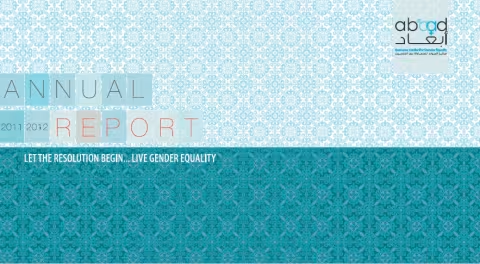
Titled “Let The Resolution Begin…. Live Gender Equity”, this resource is the annual report of ABAAD Resource Center for Gender Equity, which lists the accomplishments of the organization for the period between June 2011 and June 2012.