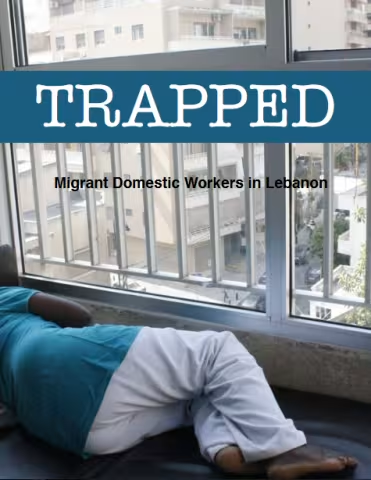
Over 250,000 migrant women are employed by private households in Lebanon to carry out household tasks such as cleaning, cooking, and caring for children and the elderly.
The right to freedom of movement forms one of the cornerstones of the international human rights regime and the Lebanese legal system. It is a right that everyone ought to enjoy regardless of race, national origin, residence status, religion or any other criteria.
The research will provide better understanding on the legislations and laws that authorities are using to control or oppress any movement or any type of activism on gender and sexuality issues in JORDAN.
Human trafficking and its link to migrant domestic labor in Lebanon is a complex, sensitive, and challenging issue. It raises numerous questions and demands further exploration.
This publication is a compilation of reports prepared by group of civil society organizations in light of the review of Lebanon under the first-cycle of Universal Periodic Review (2010).The booklet includes the report reviewing conditions of economic and social rights in Leban