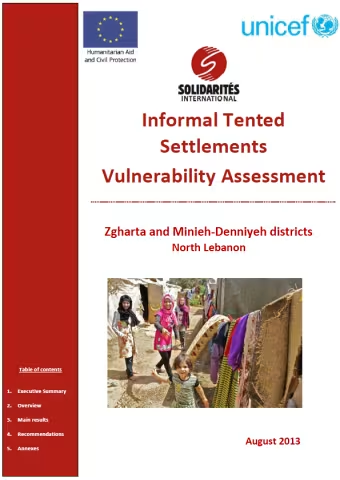
This report constitutes the final publication of the outcomes of the program "Development in Lebanon: Poverty Eradication, Gender Equity and Youth Participation; the Role of NGOs Civil Society and Other Actors".
This report is the result of 4 months of field data collection from April to August 2013 carried out in the Informal Tented Settlements (ITS) of the two districts of Zgharta and Minieh-Dennieh by SOLIDARITÉS INTERNATIONAL’s (SI) outreach workers.
Shedding the lights on UNDP's recovery efforts in South Lebanon and the Southern Suburb of Beirut in the aftermath of the July 2006 aggression, the booklet tackles the recovery initiatives undertaken by UNDP from rubble removal activities to other quick impact initiatives.
A brochure that highlights the work of the “transfer of knowledge through expatriates nationals” (TOKTEN) project in cooperation with several ministries in Lebanon.
This report is a summary of the presentations given during the regional workshop on free trade agreements in the Arab region. The meeting was part of the two-year project on the “socio-economic impact of trade liberalization policies on the Arab region”.
The European Bank for Reconstruction and Development (EBRD) was established in 1991, in response to the major changes in the political and economic context in Central and Eastern European countries.1 Today it has 65 shareholders, of which 63 are countries, and the other two ar
The EIB is the European Union’s bank. It is the financing institution of the EU founded in 1958 by the Treaty of Rome and owned by the 27 EU member states. The EIB is headquartered in Luxembourg and has a network of local and regional offices in Europe and beyond.
In this Brochure you will find an introduction to the aid effectiveness process, key milestones through which the concept was developed, Main Principles that define the concept, Challenges that face the implementation of aid effectiveness, and a highlight on the context of the
The National Report for the United Nations Conference on Sustainable Development (Rio + 20) presents the current situation as is and highlights the achievements and failures, strengths and weaknesses, opportunities and risks.
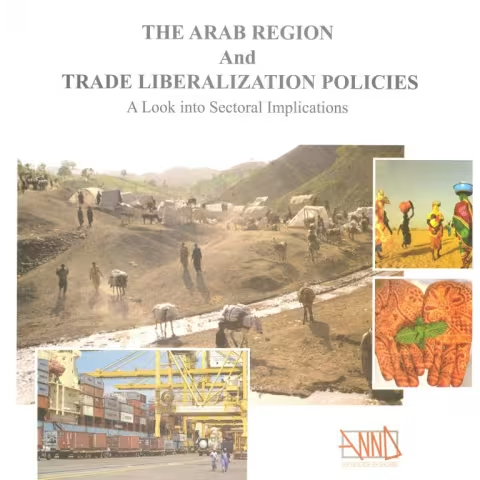
It contains 8 chapters: 1) an introduction to the general debate on trade and development, 2) an overview of the situation In the Arab region, 3) the engagement of Arab countries with the WTO, 4) Arab countries and the Euro-Mediterranean partnership, 5) Arab countries and free
UNDP, through the CEDRO project, and the Ministry of Energy & Water published the first version of the "National Wind Atlas of Lebanon" which will create a growing momentum in Lebanon towards strengthening and developing the renewable energy sector in the country.
This report will provide a description of the assessment conducted by IMC’s Mental Health and Psychosocial team in the region of Wadi Khaled following the displacement of Syrians into the northern villages between the Lebanese-Syrian borders as a result of the internal conflic