The July war 2006, lasted 34 days, and led to the displacement of 915,762 (almost 25% of the Lebanese population) persons, relocating into public and private schools all over the country. With the coming into force of the cease fire in August 14th 2006, there was a rapid return of the displaced to the south.
The Arab region lacks sustainable natural resource management, mostly in the areas of energy efficiency and its overwhelming reliance on fossil fuels for virtually all its energy needs.
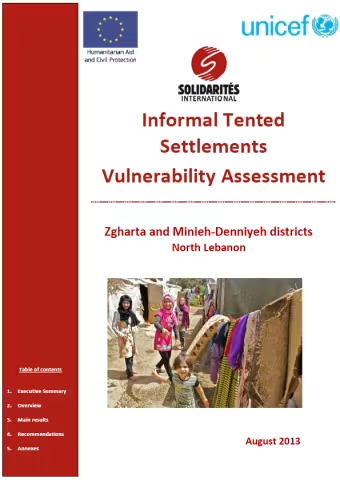
This report is the result of 4 months of field data collection from April to August 2013 carried out in the Informal Tented Settlements (ITS) of the two districts of Zgharta and Minieh-Dennieh by SOLIDARITÉS INTERNATIONAL’s (SI) outreach workers.
This report will provide a description of the assessment conducted by IMC’s Mental Health and Psychosocial team in the region of Wadi Khaled following the displacement of Syrians into the northern villages between the Lebanese-Syrian borders as a result of the internal conflic
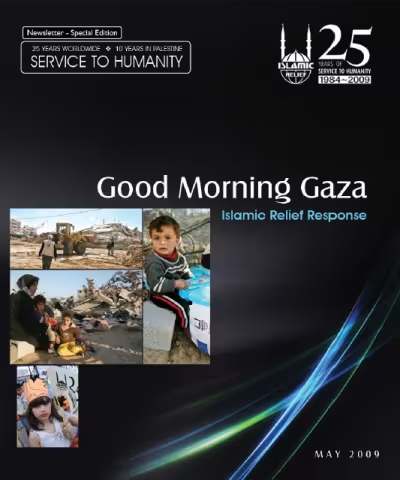
Months after the war, the Gaza Strip remains a disaster zone. Families are in despair, as hundresds of them had their homes totally destroyed and do not have proper shelter to endure Gaza's conditions.
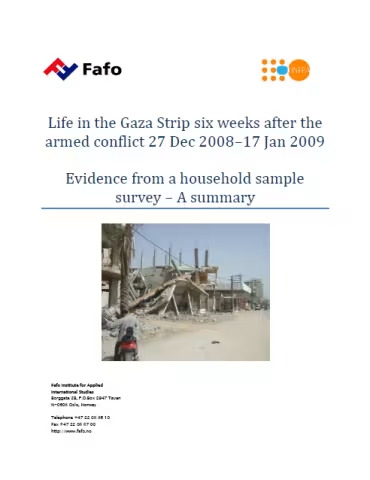
This multi-topic household sample survey was implemented to collect data to document the living conditions in the Gaza Strip in the wake of Israel’s assault on 27 December and the ensuing armed conflict.
A booklet highlighting UNDP's prompt response to the environmental disaster that hit the Lebanese coastline resulting from the air strike on the fuel storage tanks of the Jiyeh power plant.
The objectives of this assessment are to identify and prioritize environmental impacts caused by the July 2006 war, to propose measures to alleviate those impacts rated as significant, and to recommend opportunities for greening the recovery, reconstruction, and reform process