This report is the result of 4 weeks’ field work from April 22 to May 17 carried out in the two districts of Zgharta and Minieh-Dennieh by SOLIDARITÉS INTERNATIONAL’s (SI) outreach workers.
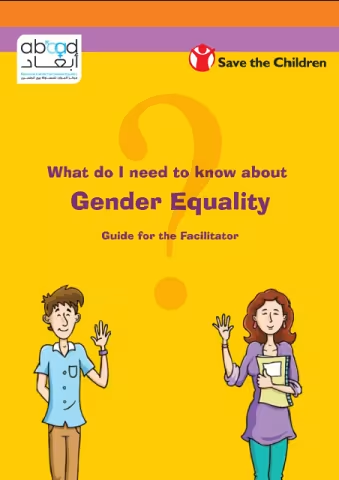
This guide has been published in 2013 by ABAAD – Resource Center for Gender Equality, with the support of Save The Children. It is a manual intended for the use of facilitators, to guide them in explaining notions relevant to gender and gender equality to children and youth.
This study, supported by UNFPA, assessed the reproductive health and gender-based violence among displaced Syrian women in Lebanon between July and September 2012.
The research will provide better understanding on the legislations and laws that authorities are using to control or oppress any movement or any type of activism on gender and sexuality issues in JORDAN.
Since the unrest in Syria began in March 2011, the Bekaa Valley in Lebanon has hosted varying numbers of displaced Syrian families. Local actors such as municipalities and NGOs registered families for assistance received through regional and international donors.
This report is a summary of the presentations given during the regional workshop on free trade agreements in the Arab region. The meeting was part of the two-year project on the “socio-economic impact of trade liberalization policies on the Arab region”.
The human rights situation in the Syrian Arab Republic has deteriorated significantly since November 2011, causing further suffering to the Syrian people. Widespread violence and increasingly aggravated socio-economic conditions have left many communities in a perilous state.
As of the end of April 2012, the number of Syrian families displaced in the Bekaa has increased to 2,800 households. Families registered with local partners receive kits of dry food, but they have requested more variety and choice in food items.
Titled “Let The Resolution Begin…. Live Gender Equity”, this resource is the annual report of ABAAD Resource Center for Gender Equity, which lists the accomplishments of the organization for the period between June 2011 and June 2012.
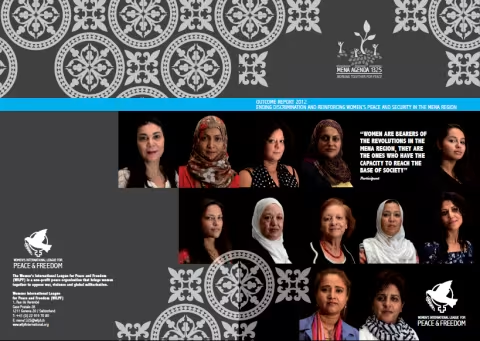
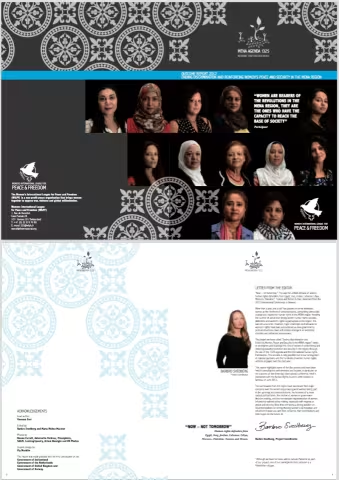
In late 2011, WILPF began to develop a programme to enhance the collective capacities of women’s rights organisations to respond to the unprecedented political events in the Middle East and North Africa (MENA).