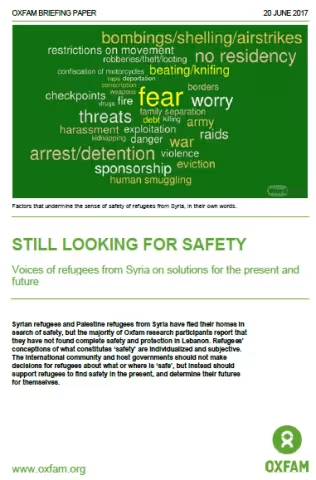
Based on the findings of participatory protection research that Oxfam undertook with refugees in Lebanon between late 2016 and early 2017, this paper explores refugees’ own definitions and conceptions of safety, and highlights refugee perspectives on how the international comm
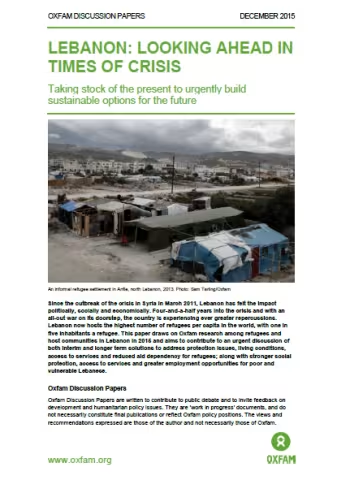
Lebanon has had an ambiguous approach to the more than one million Syrians seeking protection in the country since 2011. The country is neither party to the 1951 Convention relating to the Status of Refugees, nor does it have any national legislation dealing with refugees.
This working paper seeks to document and analyse collaboration mechanisms between local authorities and humanitarian actors in addressing the Syrian refugee crisis in urban and peri-urban settings in Lebanon.
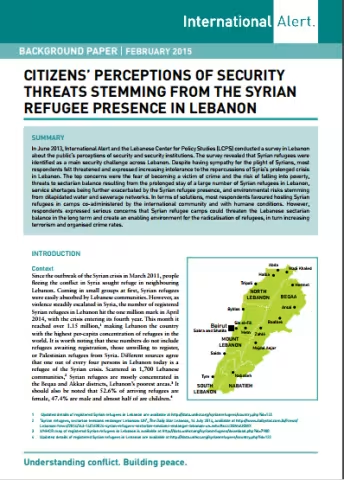
This paper focuses on the outcomes of a nationwide survey on the Lebanese public’s perceptions of the security implications of the Syrian refugee presence.
Considerable analysis has been undertaken to date on the challenges and impacts on and of Syrian refugees in Lebanon – including by Oxfam – but the bulk of this analysis is seen through the lens of the wider Syria crisis and often fails to take into consideration Lebanon itsel
Having limited legal status has direct negative consequences for Syrian refugees’ access to protection and assistance during their stay in Lebanon. Limited legal status also increases the risks of abuse and exploitation. Lebanon is not a signatory to the 1951 Refugee Convention, hence the limited legal protection for refugees and asylum seekers in Lebanon, although it is bound by the customary law principle of non-refoulement and by the obligations of the human rights treaties which it has signed and which are incorporated into its Constitution. International standards under these obligations...
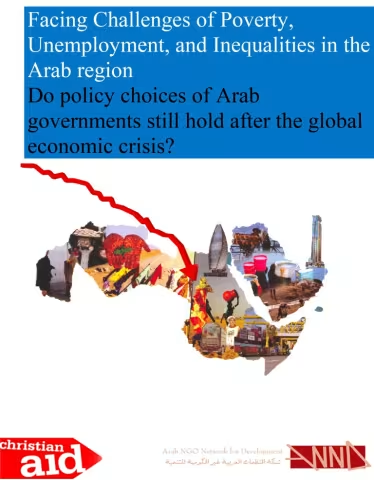
This paper was produced by ANND and Christian Aid and contains five main sections: “Executive Summary: a crisis of multiple dimensions; the threat of explosive vulnerabilities and increasing insecurities”, “Vulnerability to poverty: the key challenges faced by the Arab region”
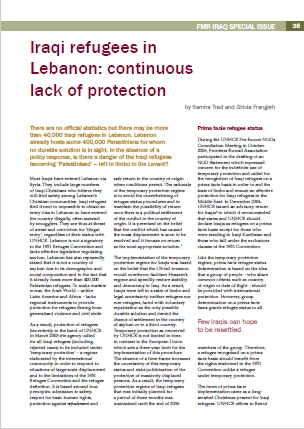
There are no official statistics but there may be more than 40,000 Iraqi refugees in Lebanon. Lebanon already hosts some 400,000 Palestinians for whom no durable solution is in sight.
The study upon which this article is based analyzes the status of Arab women in general, gender relations in the Middle East, and the situation of Arab women with disabilities, based on available disability statistics from a few selected countries and the author's observations
To help expand the focus of the social protection debate to include the informal sector, particularly women workers, the ILO global programme STEP, "Strategies and Tools against Social Exclusion and Poverty" and the global network called Women in Informal Employment: Globalizi