“More than 60% of Syrian refugees households comprise a person with disabilities and 1/5 Syrian refugees has a disability in Lebanon and Jordan”, shows a large study conducted by Humanity & Inclusion (HI) and iMMAP.
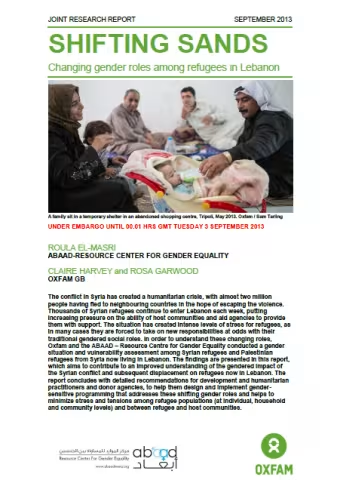
The conflict in Syria has created a humanitarian crisis, with almost two million people having fled to neighbouring countries in the hope of escaping the violence.
Disability & Vulnerability Focal Point (DVFP) have been developed based on the observation that one of the greatest difficulties following a crisis is not only to identify and to access to vulnerable people including people with disabilities, but also to accompany them wit
The overall objective of the assessment was to identify emergency WASH needs and gaps of most vulnerable Syrian refugees and host families in five geographical areas, 4 collective centres and Bab al-Tebbaneh, Tripoli in North Lebanon.
UNHCR, coordinating the operations in the North along side with the HRC (High Relief Commission) and DRC as its main implementing partner, requested from DRC to conduct a first rapid assessment in the Bekaa with the following objectives: a) To identify existing areas of displa
ان كتاب " العنف القانوني ضد المرأة في لبنان قوانين الأحوال الشخصية والعقوبات" هو عبارة عن ثلاثة دراسات قانونية تم تنفيذها من قبل باحثات قانونيات بالتعاون مع التجمع النسائي الديمقراطي اللبناني في اكتوبر 2008، و هدفها تسليط الضوء على مواضيع العنف ضد المرأة في قوانين الأحوال الشخ
منذ أجل طويل والجدل قائم حول موضوع تعرّض حقوق المرأة - الزوجية منها بشكل خاص - للانتهاك، بحيث انقسم المجتمع الدولي إلى معسكرين: أحدهما يعترف بوجود التمايز والانتهاكات على حساب النساء، والثاني ينفيه.
تم اعداد هذا الدليل من قبل منظمة رصد العمل الدولي من أجل حقوق المرأة لمنطقة اسيا و المحيط الهادئ، بدعم من المفوضية الاوروبية، وأصدرته جمعية كفى عنف و استغلال في آب 2008. يأتي هذا الدليل ضمن مشروع اقليمي متكامل سيتم تنفيذه بين عامي 2009 و 2011 في لبنان وسوريا والاردن.
The study upon which this article is based analyzes the status of Arab women in general, gender relations in the Middle East, and the situation of Arab women with disabilities, based on available disability statistics from a few selected countries and the author's observations