الراصد السوري في لبنان يدرس حالة حقوق الإنسان لللاجئين السوريين في منطقة البقاع في لبنان ، بدعم من الصندوقوهو مشروع لمدة سنة حيث يقدر عدد اللاجئين السوريين ب 011 www.ahrfund.org العربي لحقوق الإنسانألف لاجئ حسب احصاءات الامم المتحدة وتم التركيز في هذه التقرير على منطقة البقاع الشرقي – برالياس وقد شملالتقرير 211 شخص موزعين على أكثر من مخيم .
This a survey aiming at studying the situation of Syrian refugees as newcomers as part pf SHEILD's project for assessing and distributing NFIs for newcomer HHs from 2012 to 2014. The study base is te data collected through door to door HH and individual assessments carrried out throughout the priod covered by the study via the standard newcomers assessment questionnaire which tackles all aspects of a newcomer refugee in terms of social, economic, shelter, health, protection, basic needs, food scurity and nutrition and other necessary aspects.
تقرير بحثي | أيلول 2015
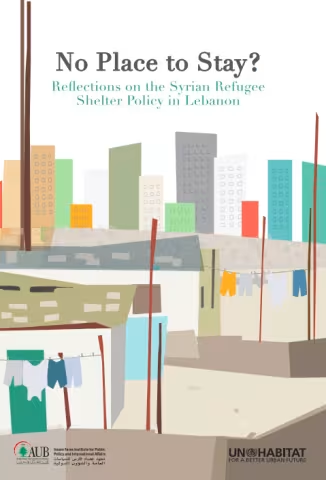
هل لهم من مأوى؟ بحث في مجال توفير مآو مؤقتة للاجئين السوريين في لبنان من إعداد ناصر ياسين, طارق عسيران, ريما الراسي, و مروى البستاني
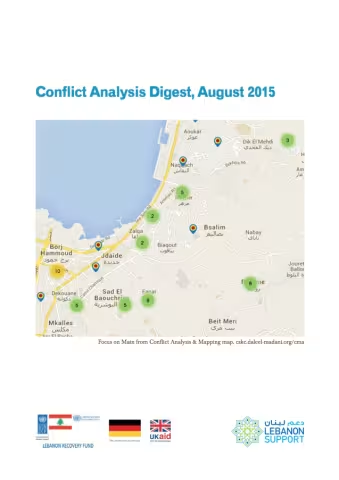
This Conflict Analysis Digest is composed of:
I. Current conflict trends
1- Overview of mapped conflict incidents in Lebanon, with the villages where most incidents are mapped for each classification. (Between 1 July 2014 and 28 June 2015) 2- Mapped air strikes/ armed conflicts and violations classified as Syrian Border Conflicts. (Between 1 July 2014 and 28 June 2015) 3- Overview of mapped conflict incidents in the Matn.
II. Brief thematic report Politics of security, discourses of fear and economic fatigue: the conflict dynamics in al-Matn
Abstract: This short report provides an...
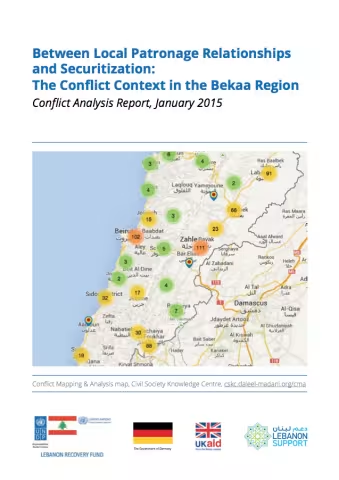
This report provides an analytical summary of the conflict context in the Bekaa region of Lebanon, with a focus on the relationships between the Syrian de facto refugees and the Lebanese host communities in the Baalbeck-Hermel area. It is based on a socio-political qualitative assessment and a conflict analysis that are primarily based on experiences and perspectives of key informants,2 as well as Lebanese and Syrian residents of the Bekaa. Unless otherwise noted, information in this report is based on these interviews. The report is intended as a quick reading of the field at a set point in...
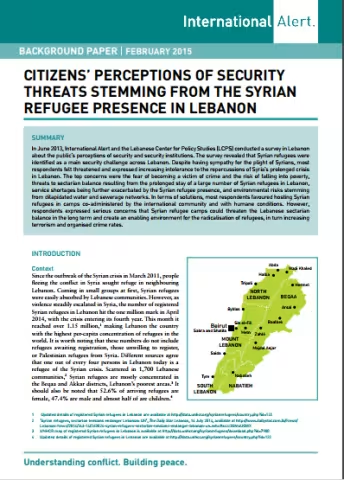
This paper focuses on the outcomes of a nationwide survey on the Lebanese public’s perceptions of the security implications of the Syrian refugee presence.
The objective of the Civil Society Review is to bring civil society practitioners, experts, activists, and researchers together to develop knowledge, as well as to innovate new tools and practices so as to strengthen Lebanon’s civil society and its voice. The Civil Society Review produces evidence-based research and analysis and disseminates findings and recommendations to promote civic engagement, shape policies, and stimulate debate within civil society spheres in Lebanon.
This scoping study is intended to contribute to the ongoing policy discussions among governments, donors, and United Nations agencies about the education of Syrian refugees in Lebanon, Turkey, and Jordan (the three countries with the largest populations of Syrian refugees),
This study sought to characterize the physical and emotional conditions, dietary habits, coping practices, and living conditions of this elderly population arriving in Lebano
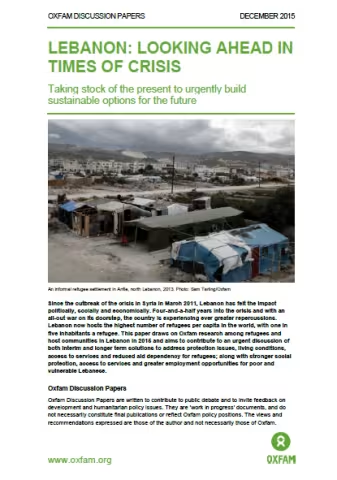
Considerable analysis has been undertaken to date on the challenges and impacts on and of Syrian refugees in Lebanon – including by Oxfam – but the bulk of this analysis is seen through the lens of the wider Syria crisis and often fails to take into consideration Lebanon itsel
In Lebanon, the question of hosting and ensuring protection for Syrian refugees in light of the government stance against the erection of camps has created many deliberations concerning different proposed and implemented shelter options and solutions. UN-Habitat, in partnership with the American University of Beirut’s (AUB) Issam Fares Institute for Public Policy and International Affairs (IFI), initiated a research study in July 2014 to address solutions for hosting and ensuring protection for refugees specifically on the subject of erecting camps to address the Syrian crisis. The study...
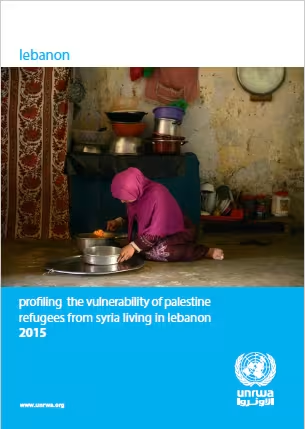
The “Profiling vulnerability of Palestine refugees from Syria living in Lebanon” report is a multi-sectorial analysis of the vulnerability experienced by the Palestine Refugees from Syria [PRS] according to the following sectors: economic; education; food-security; health; protection; non-food items; shelter and water, sanitation and hygiene. It provides information on the living conditions of PRS to inform decision-making on programmatic activities. The survey is based on the VASyR [Vulnerability Assessment of Syrian Refugees in Lebanon] and adapted for UNRWA’s specific context. Data was...
In May 2015, the Lebanese authorities instructed UNHCR to temporarily suspend registration of Syrian refugees, including individuals already in the country and new arrivals.
Since 2011, Lebanon has seen a huge influx of refugees fleeing the violence in Syria and currently hosts the biggest number of Syrian refugees in the world.
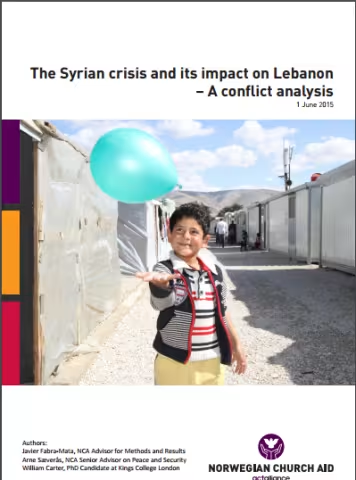
The present report analyses the impact of the Syrian conflict and refugee crisis on Lebanon and Lebanese host communities. This brief analysis presents the main conflict issues and trends, and the network of interaction between local and national level conflict dynamics.
As the Syrian crisis enters the fourth year, there is a timely need to reflect on the wider implications on Lebanon. The influx of over a million and half Syrian refugees brought a total of 400,000 school age refugees to Lebanon. This dramatic demographic shift posed a formidable challenge to an education system suited to deliver education to a national student population of just over 900,000. To date, the Lebanese Ministry of Education and Higher Education (MEHE) which only host 30% of the student population in Lebanon shouldered the burden of education service delivery with support from...
Widening Access to Quality Education for Syrian Refugees: The role of private and
NGO Sectors in Lebanon
Authors
Maha Shuayb, Nisrine Makkouk and Suha Tuttunji
September 2014
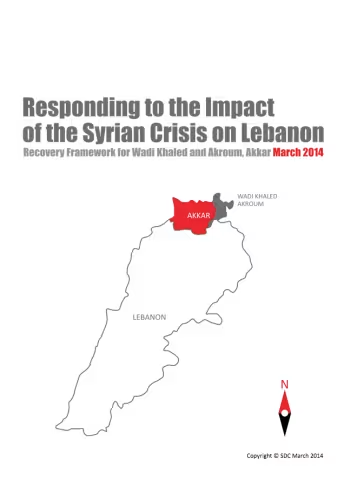
The Swiss Agency for Development and Cooperation (SDC) is pleased to share with you the report:
“Responding to the Impact of the Syrian Crisis on Lebanon: Recovery Framework for Wadi Khaled and Akroum, Akkar”, March 2014.
SDC facilitated a process to shed light on the impact of the Syria crisis at the national level but also on the local level. The formulation of a recovery framework for Wadi Khaled and Akroum is a process that can be replicated for other affected regions of Lebanon.
The findings and recommendations are based on consultations (between October 2013 and January 2014) with...
In May 2014 the Lebanese authorities put in place new requirements for Palestinian refugees from Syria trying to enter Lebanon. Many of the conditions are very difficult to meet and have the effect of denying people fleeing conflict the possibility of seeking safety in Lebanon. This briefing details the restrictions facing Palestinian refugees from Syria who try to enter or stay in Lebanon, as far as these are known. It describes some of the implications for refugees and includes the accounts of several Palestinian refugees from Syria who have been directly affected.