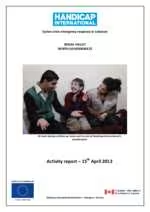
The general objective of the project is to contribute to mitigate the impact of the Syrian Crisis on the most vulnerable persons and their families - including Syrian injured refugees and other vulnerable groups - by responding to their basic and specific needs.
This study, supported by UNFPA, assessed the reproductive health and gender-based violence among displaced Syrian women in Lebanon between July and September 2012.
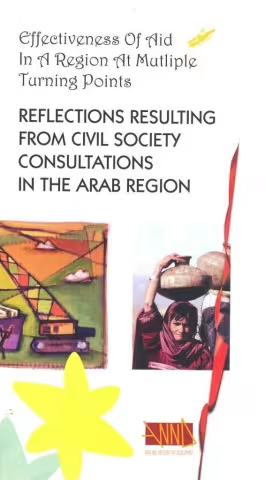
This book tackles key Issues of concern within the aid discussion. It outlines issues of particular importance for civil society in the Arab region and highlights the difference of prospectives between government representatives and CSOs.
The human rights situation in the Syrian Arab Republic has deteriorated significantly since November 2011, causing further suffering to the Syrian people. Widespread violence and increasingly aggravated socio-economic conditions have left many communities in a perilous state.
This mission was undertaken from 19 March to 5 April 2012 to assess the shelter options for displaced Syrians in West and Middle Bakaa. The shelter needs must be evaluated with respect to the current situation.
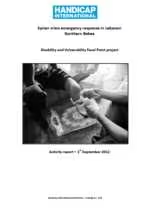
Disability & Vulnerability Focal Point (DVFP) have been developed based on the observation that one of the greatest difficulties following a crisis is not only to identify and to access to vulnerable people including people with disabilities, but also to accompany them wit
The Strategic Planning is based on the findings of fieldwork carried out in several villages in Dinnieh, which aimed at identifying the major characteristics of the region in different fields.
The overall objective of the assessment was to identify emergency WASH needs and gaps of most vulnerable Syrian refugees and host families in five geographical areas, 4 collective centres and Bab al-Tebbaneh, Tripoli in North Lebanon.
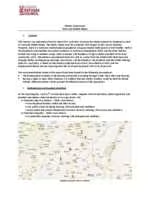
This mission was undertaken between the 2nd and 18thof July 2011 to assess the shelter options for the Syrians displaced in Northern Lebanon (the Akkar region).
The Manual on the Internal Management of the Non Governmental Organizations (NGOs) in Lebanon aims at providing a practical tool to develop and build the capacities of the NGOs in Lebanon.
This paper seeks to explain why women remain marginal in the Lebanese economy. It conducts a thorough review of literature to shed light on the economic, social and legal context to identify barriers to their full participation.
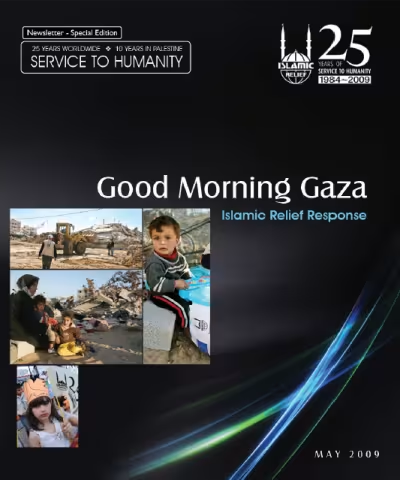
Months after the war, the Gaza Strip remains a disaster zone. Families are in despair, as hundresds of them had their homes totally destroyed and do not have proper shelter to endure Gaza's conditions.
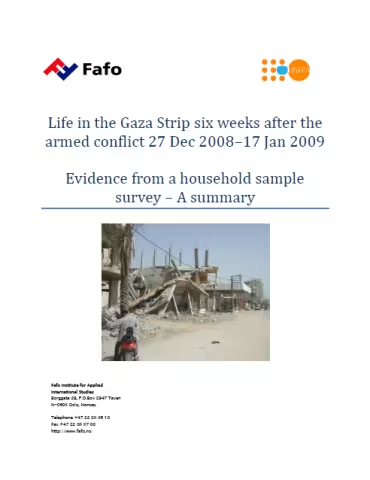
This multi-topic household sample survey was implemented to collect data to document the living conditions in the Gaza Strip in the wake of Israel’s assault on 27 December and the ensuing armed conflict.
This package contains two documents: - "AidProvidedbyPremiereUrgence_upto22August2006": Summary of the aid provided by Premiere Urgence, Lebanon, up to 22 August 2006 following the July 2006 Israeli war on Lebanon.
A committee constituted of stakeholders in both KRC and EL-NADIM visited some villages in south Lebanon between September 4th & 7th, 2006. This post-war exploration tour extended to Marjeyoun, Tyr & Bint Jbeil.
• 40,000 Benefit from Food & Non-Food Relief Items in Southern Lebanon & Bekaa Valley • Survey on Situation of Migrant Domestic Workers following Voluntary Repatriation of 13,300 Stranded Migrants to Countries of Origin • Support to the Government of Lebanon in Managin
This package includes two documents: - "Islamic_Relief_Sitrep": Islamic Relief's situation report summarizing their relief activities to date and planned actions following the July 2006 Israeli war on Lebanon, prepared by IR's Disaster Preparedness and Response Unit (DPRU).