Refugee protection is inherently political. While international law and values inevitably influence governments’ decisions about how to respond to refugees, so too do power and interests.
This policy brief analyses the socio-political implications of the so-called October policies, and suggests legislative, political, and practical measures to improve the situation of Syrian refugees in Lebanon. It also aims to inform policy formulation regarding Syrian refugees from a human rights-based perspective, while discussing modalities for enhanced programming at the civil society level.
This policy brief is the fourth publication of a research project investigating the social effects of political and legal measures on Syrian refugees’ daily lives. The brief is based on a consultative...
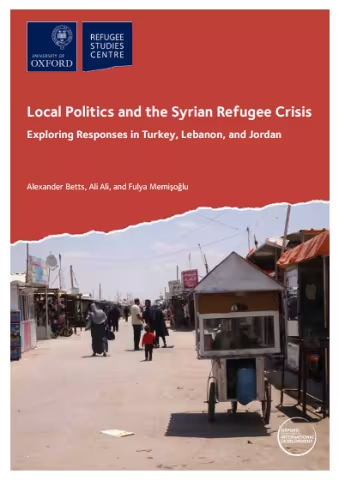
This working paper seeks to document and analyse collaboration mechanisms between local authorities and humanitarian actors in addressing the Syrian refugee crisis in urban and peri-urban settings in Lebanon.
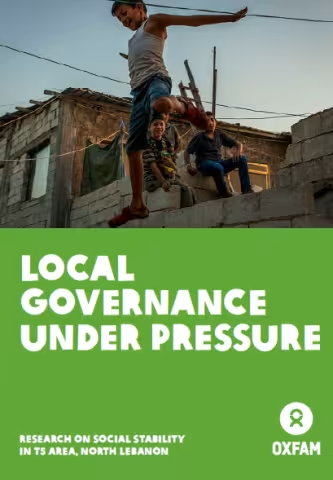
The population shift from Syria, as a result of the Syrian Crisis, is causing enormous pressure on host communities and exacerbating instability factors.
The “Review of the Public Procurement Legal Framework in Lebanon” introduces the Sustainable Public Procurement (SPP) in Lebanon and elaborates on the legal of the country’s procurement and sustainability laws that may offer a legal possibility for the adoption of SPP principl
The Israeli July 2006 war exposed the Lebanese population to disastrous conditions. It has profoundly affected residents’ livelihoods through bringing down access to services, infrastructure and natural resources. Responding to these emerging problems poses further challenges for the Lebanese government and society. In this respect, different emergency measures have been undertaken to address the arising needs, starting with assessing physical, economic and social damages.
As a contribution to identifying short and medium term intervention needs, the World Bank initiated undertaking a Post...