TrustLaw is the Thomson Reuters Foundation’s global pro bono legal programme, connecting the best law firms and
corporate legal teams around the world with high-impact NGOs and social enterprises working to create social and
environmental change. We produce groundbreaking legal research, and offer innovative training courses worldwide.
Through TrustLaw, over 100,000 lawyers offer their time and knowledge to help organisations achieve their social
mission for free. This means NGOs and social enterprises can focus on their impact instead of spending vital resources
on legal support.
TrustLaw connects the world’s leading legal teams with high-impact NGOs and social
enterprises working to create social and environmental change. We help produce
groundbreaking legal research and offer innovative training courses worldwide.
We have supported grassroots organisations to employ their first staff members, helped
vulnerable women access loans to start their first businesses and brought renewable
energy lighting to slums. Free legal assistance on these projects has made a significant
impact on local communities working to overcome poverty and discrimination.
We are the largest...
The “Review of the Public Procurement Legal Framework in Lebanon” introduces the Sustainable Public Procurement (SPP) in Lebanon and elaborates on the legal of the country’s procurement and sustainability laws that may offer a legal possibility for the adoption of SPP principl
The National Report for the United Nations Conference on Sustainable Development (Rio + 20) presents the current situation as is and highlights the achievements and failures, strengths and weaknesses, opportunities and risks.
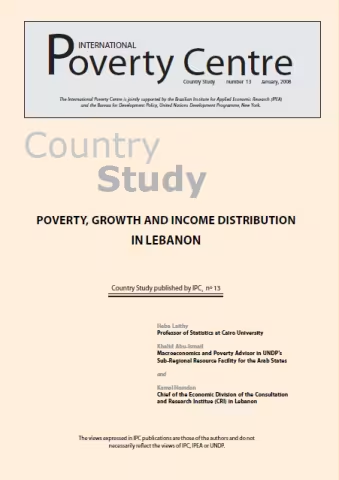
This Country Study is based on a full national report that is the first to draw a profile of poverty in Lebanon based on money-metric poverty measurements of household expenditures.
In the framework of “Towards a National Dialogue on Corruption in Lebanon”, the United Nations Development Programme and the Lebanese Transparency Association were able to lay down the foundation of anti-corruption modules as translated into the document entitled “Towards a Na