We Rise through Art is a handbook produced under the project with the same title in response to Beirut's explosion, highlighting activities and tools that can be adopted by trainers, coaches and facilitators with pre-adolescents and children under arts, sports and recreation.
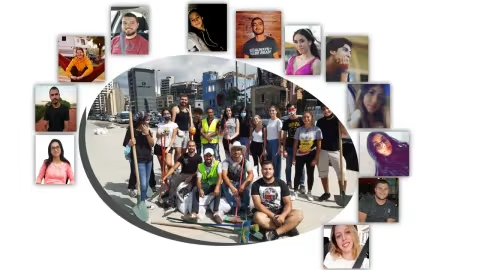
Beirut Explosion: Greatest Tragedies Come With Greatest Acts of Kindness.
Youth from a Sports and Youth Association (Chabibeh Sporting Club) become volunteers and share stories of compassion and pain mixed together to shed light on the darkest hour of their country.
We Play for Peace is a handbook produced under the project with the same title highlighting activities and tools that can be adopted by trainers, coaches and facilitators with pre-adolescents and children under arts, sports and recreation.
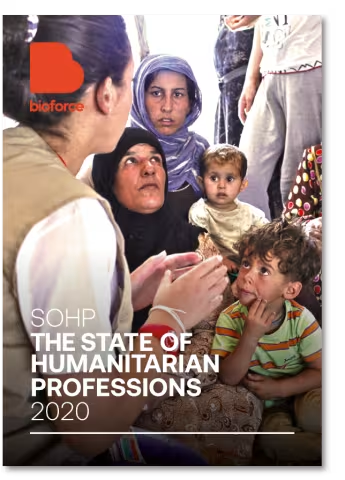
The State of Humanitarian Professions 2020 (SOHP) is the result of a year-long consultation with more than 1,500 humanitarian professionals. For the first time, this study gathers and analyses key figures on 24 humanitarian professions, as well as on recruitment practices and professional development in the sector. In addition, the SOHP study demonstrates the need to coordinate on the challenges of professionalising humanitarian teams, with 19 recommendations to be discovered in the final report.
The toolbox is intended as an open learning resource for youth workers that are engaged in community work with young refugees, asylum seekers and young people with migration background. Specifically: project managers, community leaders, educators, facilitators, social workers, intercultural mediators that are interested to improve their ability in the social inclusion of excluded groups.
The toolbox could also be used in formal settings such as schools, colleges and universities addressing
development challenges as well as for project managers and experts engaged in the design and...
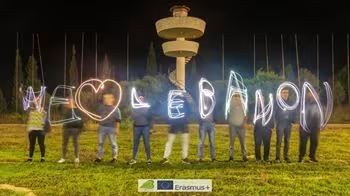
This document is the outcome of a workshop done during the Erasmus Plus training "Influence Youth".
The workshop was about the topic of teamwork, specifically the challenges faced when working with a team of volunteers and how to overcome it.
The participants of the workshop talked about their challenges and possible interventions were shared also by participants based on their experience working in this field.
The document includes the information shared by the participants in this workshop.
This report is based on answers to two surveys carried out in Lebanon in 2018 as part of a project to understand how refugees and humanitarian staff perceive the impact of the reforms enshrined in the Grand Bargain.
Only a handful of studies in Lebanon have shed light on the changing gendered dynamics within the refugee families by comparing gender roles, expectations, and practices before and after displacement (as result of armed conflict).
This study maps the current state of gender justice in the Arab region, documenting barriers as well as opportunities. Its primary research aim is to determine how to develop an environment, at the legal, policy, and social levels that is conducive to gender justice.
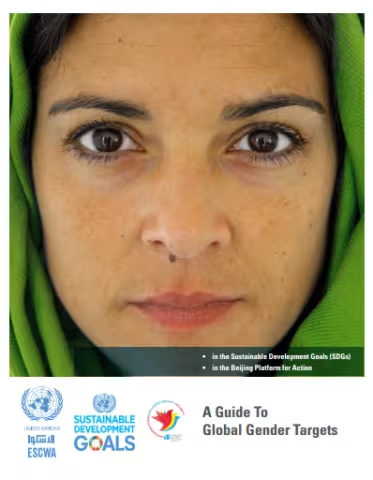
The present guide proposes to reconcile the gender-related targets in the Sustainable Development Goals with the objectives of the Beijing Platform according to various sub-topics. It is organized in two sections.
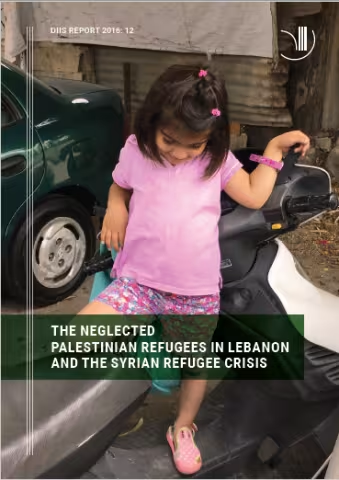
This document provides information about the situation of Palestine refugees in Lebanon, including non-registered Palestinian refugees, undocumented (“non-ID”) Palestinians, and Palestine refugees from Syria.
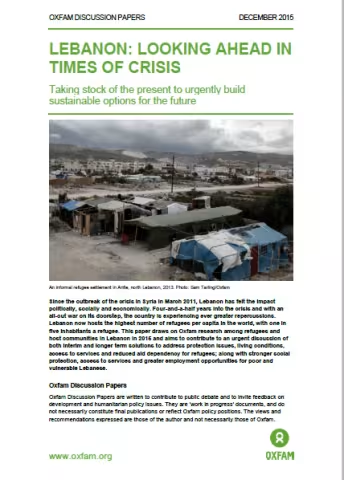
This paper draws on Oxfam research among refugees and host communities in Lebanon in 2015 and aims to contribute to an urgent discussion of both interim and longer term solutions to address protection issues, living conditions, access to services and reduced aid dependency for refugees; along with stronger social protection, access to services and greater employment opportunities for poor and vulnerable Lebanese.
This paper is inspired by examples of domestic workers organizing themselves in different parts of the world through social and solidarity economy enterprises and organizations which have become more evident since the advent of the ILO Domestic Workers Convention 2011, (No.189
This study aims to shed light on the industry that profits from the recruitment of women from South Asian countries into domestic work employment in the Middle East, with a particular focus on Bangladesh, Jordan and Lebanon.
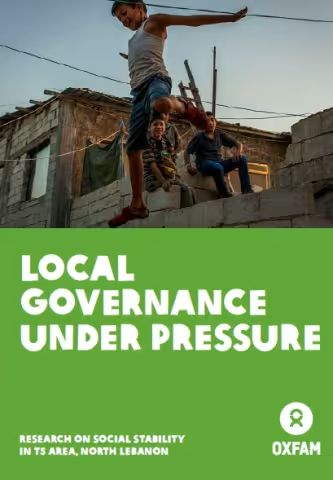
Considerable analysis has been undertaken to date on the challenges and impacts on and of Syrian refugees in Lebanon – including by Oxfam – but the bulk of this analysis is seen through the lens of the wider Syria crisis and often fails to take into consideration Lebanon itsel