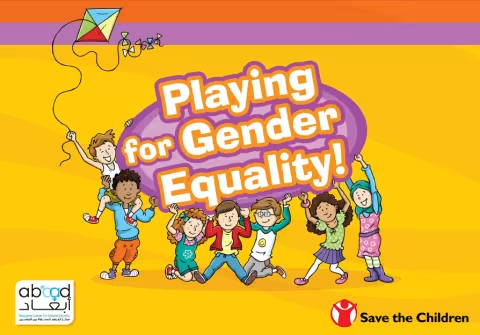
The manual is composed of fun and interactive games for children aged 8 to 12 years old. The games will facilitatethe learning of important concepts and terminology pertaining to Gender Equality. More importantly, during/afterthe games have been played, it allows the trainer the freedom to begin important discussions about the conceptsthat the children learned during the games.
This report constitutes the final publication of the outcomes of the program "Development in Lebanon: Poverty Eradication, Gender Equity and Youth Participation; the Role of NGOs Civil Society and Other Actors".
This resource, published by Oxfam in 2013, aims to present standards that were originally developed for Oxfam staff to ensure a consistent approach to promoting gender equality in humanitarian preparedness and response programming.
Although Lebanon is known in the Middle East for its relative political openness and for the degree of freedom Lebanese women enjoy, it paradoxically has one of the lowest rates of women’s political engagement in the region.
This paper seeks to explain why women remain marginal in the Lebanese economy. It conducts a thorough review of literature to shed light on the economic, social and legal context to identify barriers to their full participation.
The report assesses the progress made in the achievement of the Millennium Development Goals (MDGs) based on new national data which was formulated after the first MDGR that was published in 2003.
This report, compiled by Pernilla Ouis and Tove Myhrman, is a comparative situation analysis of honour violence, early marriages and sexual abuse in Lebanon, the Occupied Palestinian Territories and Yemen.