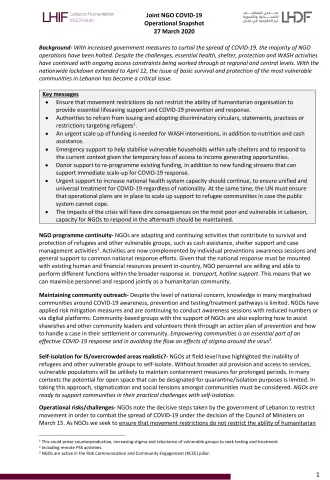
This document provides an update that aims to provide an operational snapshot for NGOs in a rapidly changing context. This also provides some suggestions around national level response planning from a field perspective.
The Building a Better Response project, together with the UN Office for the Coordination of Humanitarian Affairs (OCHA) and the International Humanitarian City, launched the Building a Better Response (BBR) e-learning course in Arabic with a panel discussion in Dubai on the role of local non-governmental organizations (NGOs) in humanitarian response. The event came in advance of the World Humanitarian Summit, set to take place in Istanbul in May 2016, where much of the conversation is expected to focus on placing local actors at the center of humanitarian response.
Our work cannot be as...
The United Nations Secretary-General has called for the first ever World Humanitarian Summit: to reaffirm our commitment to humanity and chart a course for change. The Secretary-General’s Agenda for Humanity calls on global leaders to commit to five core responsibilities in the name of our shared humanity:
Global leadership to prevent and end conflict
Uphold the norms that safeguard humanity
Leave no one behind
Change people's lives – from delivering aid to ending need
Invest in humanity
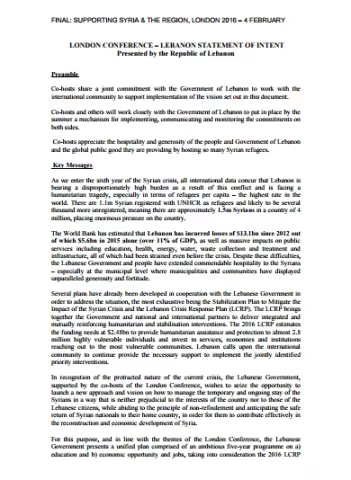
LONDON CONFERENCE – LEBANON STATEMENT OF INTENT Presented by the Republic of Lebanon: Supporting Syria & The Region
Summary: The Government of Lebanon affirms that the success of the Conference in London will depend on how international partners respond to this vision and support Lebanon to uphold the central pillars of providing humanitarian assistance, education for all, and the expansion of economic opportunities and jobs. The Government urges that the international community provide multi-annual funding of $4.9bn to cover this year’s Lebanon Crisis Response Plan and plans set out in this...
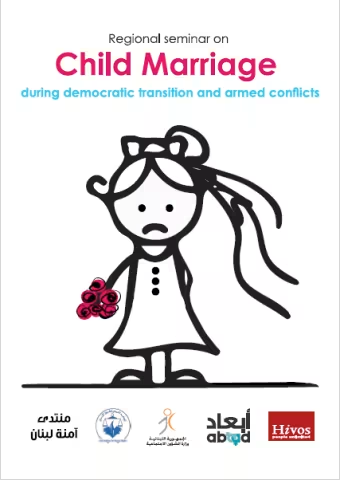
This booklet comprises of the presentations and papers that were presented and discussed during the seminar that was held in Beirut in October 2015, titled “Regional Seminar on Child
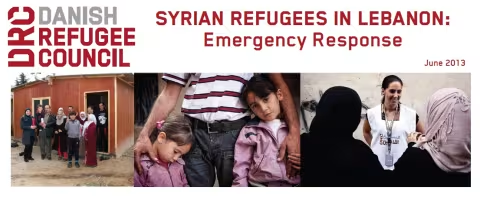
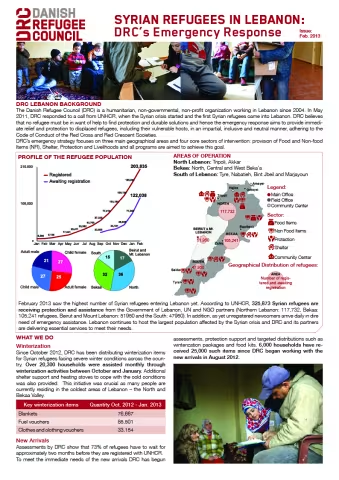
The Syrian crisis continues to provoke an ever increasing displacement across the border into Lebanon. According to the UNHCR, more than 569,000 Syrian refugees are now receiving protection and assistance from the Lebanese government, the UN and NGO’s. With no end to the crisis in sight, the number of Syrian refugees entering Lebanon is expected to rise to one million by the end of the year, posing a significant challenge to hosting communities around Lebanon. DRC and its partners continue to provide essential services to meet the needs of refugees and locals.
DRC’s emergency strategy focuses...
The Danish Refugee Council (DRC) is a humanitarian, non-governmental, non-profit organization working in Lebanon since 2004. In May 2011, DRC responded to a call from UNHCR, when the Syrian crisis started and the first Syrian refugees came into Lebanon. DRC believes that no refugee must be in want of help to find protection and durable solutions and hence the emergency response aims to provide immediate relief and protection to displaced refugees, including their vulnerable hosts, in an impartial, inclusive and neutral manner, adhering to the Code of Conduct of the Red Cross and Red Crescent...
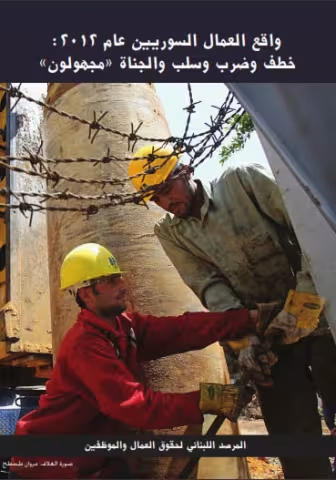
تواصلت خلال عام 2012 حالات الاعتداء على العمال السوريين في أنحاء مختلفة من لبنان، من البقاع إلى الجبل ومن الشمال إلى الجنوب مرورا بالعاصمة وضواحيها. وتشي الحالات التي تم رصدها، أن الاعتداءات ضد العمال الأجانب، والسوريين بشكل خاص، ليست بحالات فردية ومعزولة بل تأتي ضمن سياق عام من التحريض العنصري ضد هذه الفئة بالتحديد. وقد رصد "المرصد اللبناني لحقوق العمال والموظفين" في هذا الإطار 29 حالة عنف موثقة ضد عمال سوريين، من خطف وعنف جسدي وسلب. هذا، وبقي المعتدين في معظم الحالات مجهولي الهوية، مما حال دون سوقهم من قبل السلطات اللبنانية إلى العدالة فضلاً عن تقصير الحكومة في اتخاذ التدابير التي من شأنها...