It is the mothers’ memory during times of war, the wound that will never heal, a memory that is completely unique, just like their pain… a deep memory; as deep as their pride, it is obviously reflected in the wrinkles of their faces and the natures of their voices.
This memory will be the core of the project; which is an artistic book containing a short introduction and 30-35 artistic black and white portraits, for Syrian women (mothers necessarily), combined with short stories from their real-life during the last four years. Women do not have to be in Syria today, but they must all express...
This study aims to shed light on the industry that profits from the recruitment of women from South Asian countries into domestic work employment in the Middle East, with a particular focus on Bangladesh, Jordan and Lebanon.
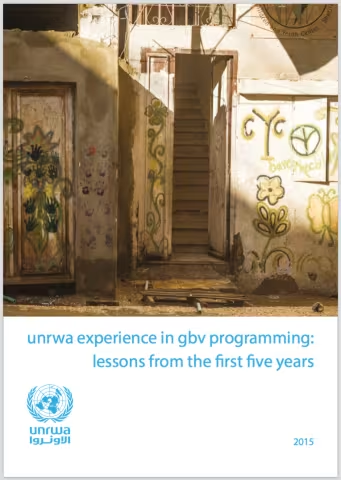
This document provides elements of discussion and pragmatic solutions to challenges in addressing GBV in the context of resistance. It does not provide clear cut answers to all questions, but intends to bring together evidence from UNRWA and results from other agencies.
This document is the outcome of a workshop organised by UNRWA on the 31st of March 2010 on “Community of Practice in Building Referral Systems for Women Victims of Violence”.
This paper explores some faces of globalization by using a gender perspective, in order to consider reproduction (psychological and emotional as well as biological) and the activities and attitudes of care that give moral resources for response to systemic tragedy, not only fo
This paper provides a brief overview of what is known about effective strategies for involving men in violence prevention efforts from the perspective of men who are recipients of anti-violence programs as well as from the men who provide them.
This study, prepared by Dr. Ray Jureidini, identifies practices and patterns that are the key causes for women domestic migrant workers' vulnerability in Bahrain and provide alternative approaches for effective means for action.