The three CS Guidance notes cover 3 essential areas; Getting started with CS in Lebanon; CS in Project Design Cycle; and CS Procurement, Recruitment, and accountability.
يشكّل البحث القائم على الأدلّة حجر الأساس في أيِّ محاولةٍ جدّية لإنتاج المعرفة حول المجتمع أو فهم الظواهر والسلوكيات والمواقف الاجتماعية والثقافية والسياسية، وذلك في سبيل التخطيط لاستجابات وتدخّلات مناسبة (سواء التخطيط للمشاريع أو صياغة السياسات). وعليه، تقدّم هذه الوحدة التعليمية لمنظّمات المجتمع المدني وجهاته الفاعلة والعاملين فيه في لبنان مفاهيم أساسية حول تصميم الأبحاث، إلى جانب بعض المبادئ التوجيهية العملية التي تخوّلهم تحقيق الاستفادة القصوى من أدوات البحث في عملهم.
Evidence-based research forms the backbone of any serious attempt to produce knowledge about society or understand social, cultural, and political phenomena, behaviors,and attitudes, in order to devise the adequate responses and interventions (whether in programming or policy making). Hence, this module provides civil society organisations, actors, practitioners in Lebanon with basic concepts in research design and practical guidelines to optimise the use of research method tools in their work.
أصبحت المنظمات أكثر اقتناعاً بضرورة إشراك فئات محدّدة من الجمهور، والرأي العام عموماً، في نشاطها ومسار تحقيق أهدافها. وفي هذا الاطار، لوحظ ازدياد حاجة المنظمات غير الحكومية إلى اختصاصيي/ ات الاعلام والتواصل الذين تولج إليهم عادة مهمّة دعم المنظمة في إبراز أنشطتها وتنظيم حملاتها الاعلاميّة والتواصل مع الخارج، الامر الذي من شأنه أن يفيد مشاريعها الانمائيّة، أو الخيريّة، أو التغييريّة.
من هنا، أتى هذا الدليل ليمدّ المنظّمات غير الحكومية بأبرز المعلومات والارشادات المتعلقة بأهمّ محاور التواصل والانشطة الخاصّة بإبراز العمل التي غالباً ما تحتاجها.
يفيد هذا الدليل بالدرجة الاولى العاملين/ات في أقسام...
NGOs now have a growing need for Information and Communication specialists, whose task usually consists of supporting the organisation by shedding light on its activities, organising its media campaigns and communicating with external parties, which would yield bene ts to the organisation’s projects in the eld of development, charity or change.
This guidebook aims to build the capacities of civil society organisations’ members, prepare them for using organisational management tools, and introduce them to good governance mechanisms.
Maps of businesses open in Nahr El Bared's adjacent area including food production businesses, construction and hardware industries, beauty and entertainment enterprises, and health, education and communication businesses.
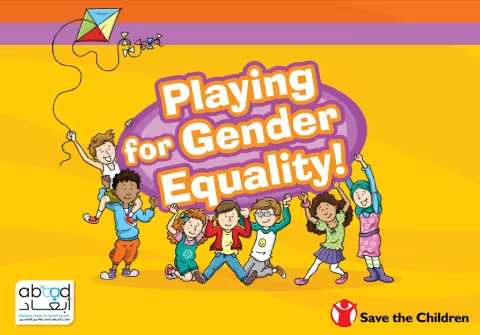
The manual is composed of fun and interactive games for children aged 8 to 12 years old. The games will facilitatethe learning of important concepts and terminology pertaining to Gender Equality. More importantly, during/afterthe games have been played, it allows the trainer the freedom to begin important discussions about the conceptsthat the children learned during the games.
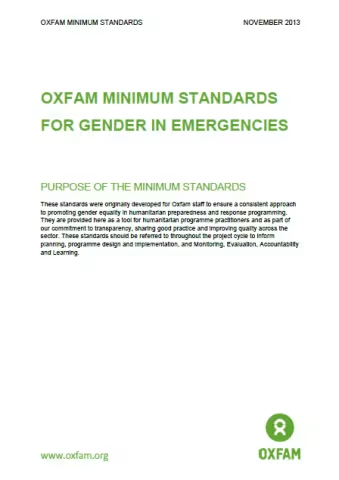
This resource, published by Oxfam in 2013, aims to present standards that were originally developed for Oxfam staff to ensure a consistent approach to promoting gender equality in humanitarian preparedness and response programming.
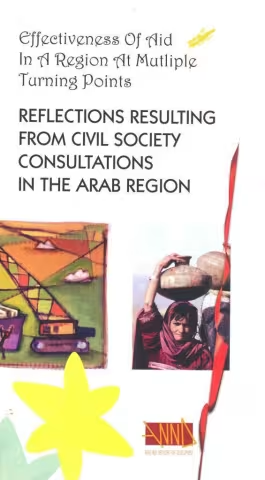
This book tackles key Issues of concern within the aid discussion. It outlines issues of particular importance for civil society in the Arab region and highlights the difference of prospectives between government representatives and CSOs.
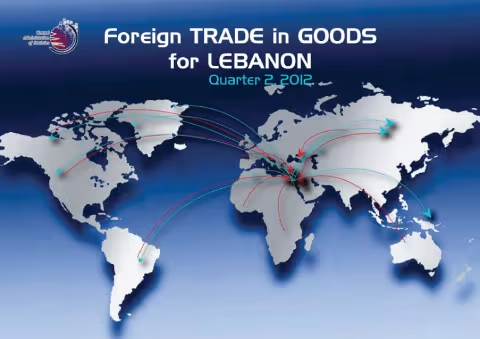
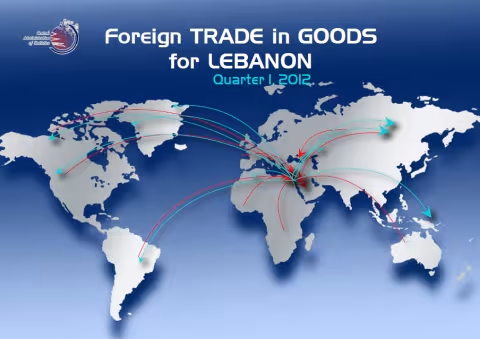
The value of Lebanese imports of goods in Quarter Q1 year 2012 was 9346 billion LBP. This was 518 billion LBP, 5.9% higher than imports in Q4 of previous year 2011, and 2162 billion LBP, i.e. 30% increase comparing to the same Quarter Q1 of year 2011.
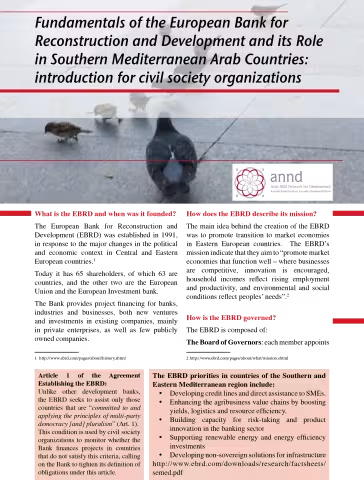
The European Bank for Reconstruction and Development (EBRD) was established in 1991, in response to the major changes in the political and economic context in Central and Eastern European countries.1 Today it has 65 shareholders, of which 63 are countries, and the other two ar
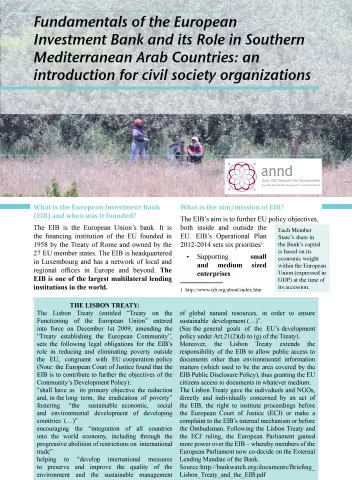
The EIB is the European Union’s bank. It is the financing institution of the EU founded in 1958 by the Treaty of Rome and owned by the 27 EU member states. The EIB is headquartered in Luxembourg and has a network of local and regional offices in Europe and beyond.
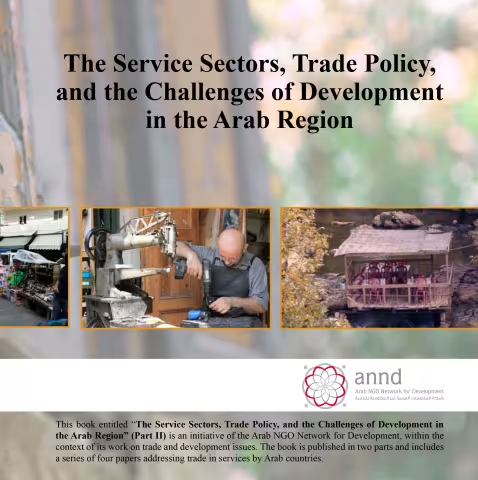
This book entitled “The Service Sectors, Trade Policy, and the Challenges of Development in the Arab Region” (Part II) is an initiative of the Arab NGO Network for Development, within the context of its work on trade and development issues.
The Strategic Planning is based on the findings of fieldwork carried out in several villages in Dinnieh, which aimed at identifying the major characteristics of the region in different fields.
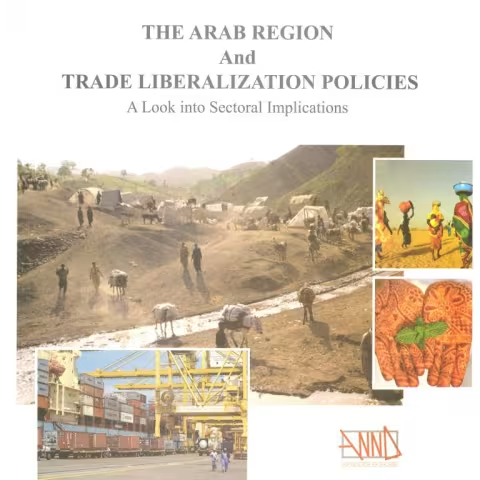
It contains 8 chapters: 1) an introduction to the general debate on trade and development, 2) an overview of the situation In the Arab region, 3) the engagement of Arab countries with the WTO, 4) Arab countries and the Euro-Mediterranean partnership, 5) Arab countries and free