An overview of the state of Palestinian refugees in Lebanon throughout history, that covers the political make up of the refugee camps, the impact of the July 2006 war on the Palestinian refugees, the refugees' rights and legal status, and the local and international NGOs work
The Israeli July 2006 war exposed the Lebanese population to disastrous conditions. It has profoundly affected residents’ livelihoods through bringing down access to services, infrastructure and natural resources. Responding to these emerging problems poses further challenges for the Lebanese government and society. In this respect, different emergency measures have been undertaken to address the arising needs, starting with assessing physical, economic and social damages.
As a contribution to identifying short and medium term intervention needs, the World Bank initiated undertaking a Post...
There are no official statistics but there may be more than 40,000 Iraqi refugees in Lebanon. Lebanon already hosts some 400,000 Palestinians for whom no durable solution is in sight.
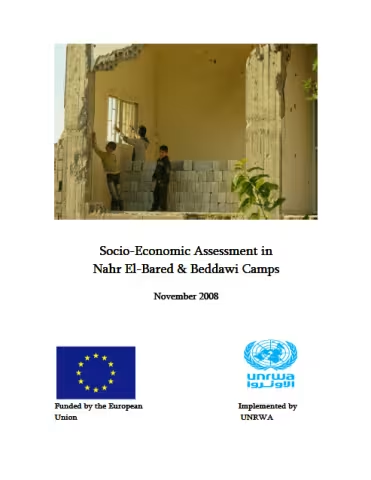
As a consequence of the armed struggle between the Islamist group Fatah al-Islam and the Lebanese Army in and around the Nahr El-Bared Palestinian refugee camp north of Tripoli the past 3 weeks, the vast majority of its population has fled their homes and is now dispersed to
تقوم الحكومة اللبنانية بمعالجة آثار العدوان الاسرائيلي المدمر من خلال العمل على تعزيز صمود الأهالي، وخلق آلية فعالة لتثبيتهم في قراهم وبلداتهم عبر إعادة بناء ما تهدم.
A booklet highlighting UNDP's prompt response to the environmental disaster that hit the Lebanese coastline resulting from the air strike on the fuel storage tanks of the Jiyeh power plant.
The objectives of this assessment are to identify and prioritize environmental impacts caused by the July 2006 war, to propose measures to alleviate those impacts rated as significant, and to recommend opportunities for greening the recovery, reconstruction, and reform process
The proposal is to build a network from existing institutions and bodies already present on the ground with SAMIDOUN, and to build social centers working on various identified issues.
This report is the result of an assessment undertaken by the Danish Refugee Council (DRC) from March 28. to June 27, 2005 in Lebanon. The assessment was supported financially by the European Commission’s Humanitarian Aid department (ECHO).