This study, supported by UNFPA, assessed the reproductive health and gender-based violence among displaced Syrian women in Lebanon between July and September 2012.
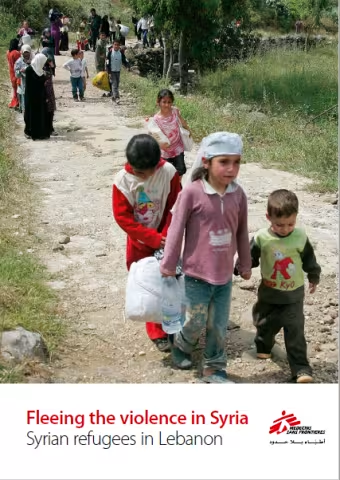
Since the unrest in Syria began in March 2011, the Bekaa Valley in Lebanon has hosted varying numbers of displaced Syrian families. Local actors such as municipalities and NGOs registered families for assistance received through regional and international donors.
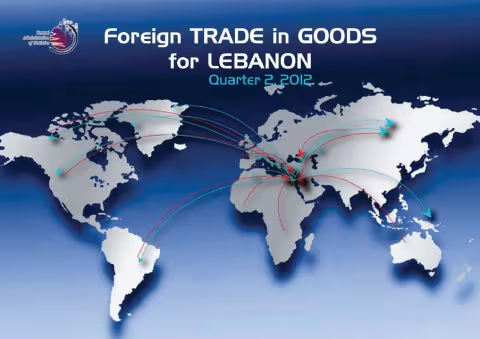
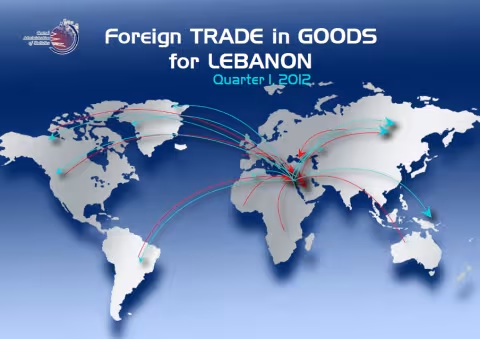
The value of Lebanese imports of goods in Quarter Q1 year 2012 was 9346 billion LBP. This was 518 billion LBP, 5.9% higher than imports in Q4 of previous year 2011, and 2162 billion LBP, i.e. 30% increase comparing to the same Quarter Q1 of year 2011.
The European Bank for Reconstruction and Development (EBRD) was established in 1991, in response to the major changes in the political and economic context in Central and Eastern European countries.1 Today it has 65 shareholders, of which 63 are countries, and the other two ar
The EIB is the European Union’s bank. It is the financing institution of the EU founded in 1958 by the Treaty of Rome and owned by the 27 EU member states. The EIB is headquartered in Luxembourg and has a network of local and regional offices in Europe and beyond.
The human rights situation in the Syrian Arab Republic has deteriorated significantly since November 2011, causing further suffering to the Syrian people. Widespread violence and increasingly aggravated socio-economic conditions have left many communities in a perilous state.
As of the end of April 2012, the number of Syrian families displaced in the Bekaa has increased to 2,800 households. Families registered with local partners receive kits of dry food, but they have requested more variety and choice in food items.
28 refugee households were surveyed, which represented a total of 501 refugees, 48% male and 52% female, which is approximately 11% of the Syrian refugee population in North Bekaa.
Over 57,000 displaced Syrians are receiving protection and assistance in Lebanon through the efforts of the Government of Lebanon and UN and NGO partners.
The list of challenges Palestinian refugee families living in Lebanon face is long and overwhelming. They live in overcrowded camps and have to deal with discrimination, isolation and social exclusion.
The PDM consisted of conducting household surveys with beneficiaries who received Non-Food Items (NFIs in the form of hygiene kits) and food vouchers as part of WVL's Syrian refugee response in the Bekaa.