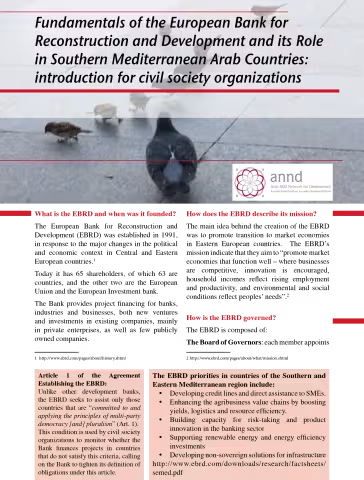
The European Bank for Reconstruction and Development (EBRD) was established in 1991, in response to the major changes in the political and economic context in Central and Eastern European countries.1 Today it has 65 shareholders, of which 63 are countries, and the other two ar
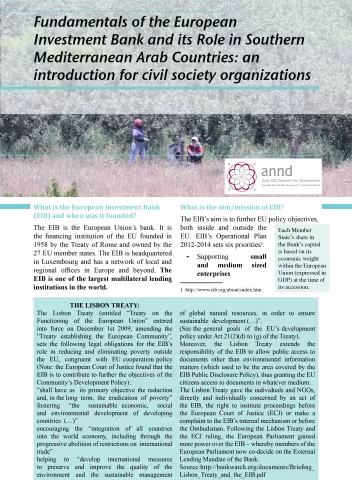
The EIB is the European Union’s bank. It is the financing institution of the EU founded in 1958 by the Treaty of Rome and owned by the 27 EU member states. The EIB is headquartered in Luxembourg and has a network of local and regional offices in Europe and beyond.
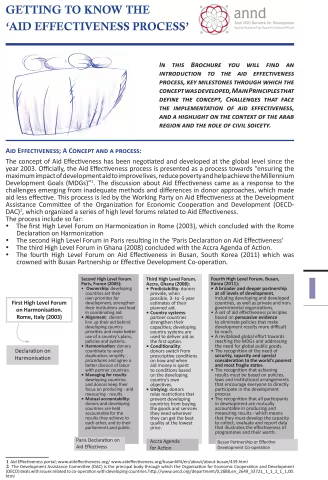
In this Brochure you will find an introduction to the aid effectiveness process, key milestones through which the concept was developed, Main Principles that define the concept, Challenges that face the implementation of aid effectiveness, and a highlight on the context of the
The National Report for the United Nations Conference on Sustainable Development (Rio + 20) presents the current situation as is and highlights the achievements and failures, strengths and weaknesses, opportunities and risks.
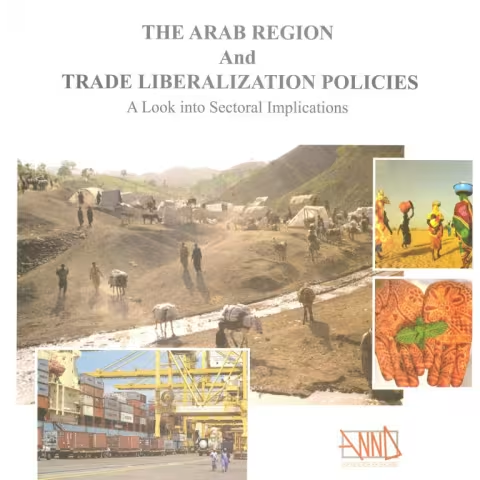
It contains 8 chapters: 1) an introduction to the general debate on trade and development, 2) an overview of the situation In the Arab region, 3) the engagement of Arab countries with the WTO, 4) Arab countries and the Euro-Mediterranean partnership, 5) Arab countries and free
UNDP, through the CEDRO project, and the Ministry of Energy & Water published the first version of the "National Wind Atlas of Lebanon" which will create a growing momentum in Lebanon towards strengthening and developing the renewable energy sector in the country.
Paper Produced as Part of the AUB Tobacco Control Research Group | April 2010
The Economics of Tobacco in Lebanon: An Estimation of the Social Costs of Tobacco Consumption (Full Report)Jad Chaaban, Nadia Naamani, and Nisreen Salti
Tobacco Control is currently being implemented in various countries worldwide. This is a result of the direct effect of tobacco smoking on health. Broadly speaking, Tobacco Control entails a ban on tobacco advertising both below and above the line,1 a ban on smoking in public areas, an increase in the tax on cigarette packs, and the placement of health warnings on...
Summary of Paper Produced as Part of the AUB Tobacco Control Research Group - April 2010
The Economics of Tobacco in Lebanon: An Estimation of the Social Costs of Tobacco Consumption (Executive Summary) Jad Chaaban, Nadia Naamani, and Nisreen Salti
Tobacco Control is currently being implemented in various countries worldwide, as a result of the direct effect of tobacco smoking on health. Lebanon has several pending laws for tobacco control however none is yet ratified and implemented. This paper aims to understand the Lebanese tobacco market and assess whether this market creates an overall...
نتائج رئيسية لبحث لفريق البحث للحد من التدخين في الجامعة الأميركية في بيروت | أب 2009
(كلفة التدخين على لبنان: أرقام تقديرية للآثار الأقتصادية لإستهلاك التبغ (نتائج رئيسيةجاد شعبانو ناديا نعماني و نسرين سلطي
مذكرات للباحثين وصناع القرار #1 | آب 2009
كيف تعيق شركات صناعة التبغ العالمية سياسات مكافحة التدخين في لبنانريما نقّاش
مازال لبنان يعتبر أحد أضعف البلاد في الملنطقة فيما يتعلق بالحد من التدخين، على الرغم من تصديقه على إتفاقية ”منظمة الصحة العاملية“ بشأن "مكافحة التبغ" في عام 2005
.وقد فشل لبنان في محاولاته العديدة بتقديم سياسة وطنية لمكافحة التدخين في الأماكن العامة. وحظر الاعلان والرعاية. ووضع تحذيرات تصويرية صحية قوية على منتاجات التبغ
.بشكل تدخل شركات صناعة التبغ الحاجز الأكبر في عملية وضع حسياسة للحد من التدخين
لمحة موجزة عن بحث لفريق البحث للحد من التدخين في الجامعة الأميركية في بيروت | آب 2009
لمحة موجزة عن سوق التبغ اللبنانيجاد شعبانو ناديا نعماني و نسرين سلطي
يجري حاليا تنفيذ مكافحة التدخين في مختلف بلدان العالم، وذلك نتيجة للتأثير المباشر لتدخين التبغ على الصحة. وفي لبنان عدد من القوانين المعلّقة المرتبطة بمكافحة التدخين ولكن لم يتم تصديق وتنفيذ أي منها بعد. تهدف هذه الورقة إلى فهم سوق التبغ اللبنانية وتقييم ما إذا كانت هذه السوق تخلق إيرادات أو تكاليف للإقتصاد اللبناني. وهذا من شأنه أن يقدّم معلومات قيمة للمناظرة التشريعية القائمة حول إقرار قانون جديد لمكافحة التدخين، كما انه يطلع صانعي...
This paper seeks to explain why women remain marginal in the Lebanese economy. It conducts a thorough review of literature to shed light on the economic, social and legal context to identify barriers to their full participation.
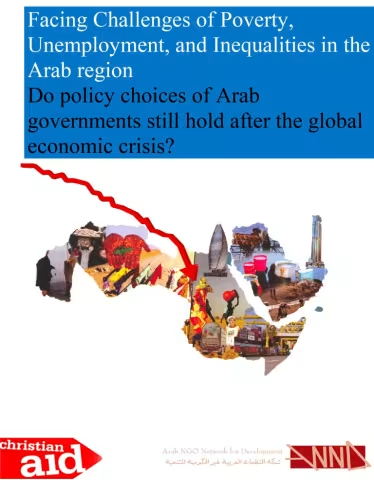
This paper was produced by ANND and Christian Aid and contains five main sections: “Executive Summary: a crisis of multiple dimensions; the threat of explosive vulnerabilities and increasing insecurities”, “Vulnerability to poverty: the key challenges faced by the Arab region”
Following the Nahr EL Bared War, LPDC launched in 2008 a workshop mapping the recovery and development initiatives in the camp's area. They followed up in 2009 with another workshop reviewing the development projects that took place in the NBC area.
The fourth National Human Development Report, “Toward a Citizen’s State”, addresses citizenship in Lebanon through three principle perspectives: citizenship and sectarian state, socio-economic citizenship and citizenship and culture and education.