DRC in Lebanon
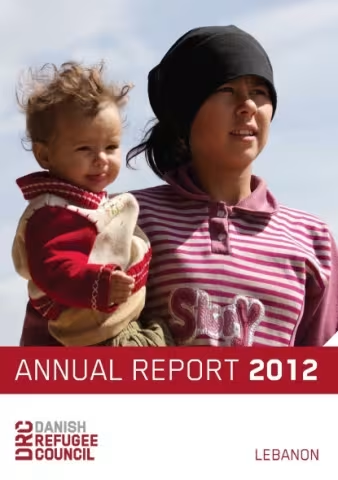
The Danish Refugee Council began operating in Lebanon in 2004. Since then, the organization
has partnered with local and international NGOs to implement different programs that followed the
country’s needs. Today, DRC’s main focus is on assisting those affected by the Syrian crisis, including
refugees and members of the hosting communities. DRC also provides assistance to Palestinian
refugees, migrant domestic workers and women at risk.
DRC currently addresses the needs of four displaced population groups, as well as the affected
Lebanese communities:
-Syrian refugees feeling...
The Syrian crisis continues to provoke an ever increasing displacement across the border into Lebanon. According to the UNHCR, more than 569,000 Syrian refugees are now receiving protection and assistance from the Lebanese government, the UN and NGO’s. With no end to the crisis in sight, the number of Syrian refugees entering Lebanon is expected to rise to one million by the end of the year, posing a significant challenge to hosting communities around Lebanon. DRC and its partners continue to provide essential services to meet the needs of refugees and locals.
DRC’s emergency strategy focuses...
This report summarises the findings of Amel Association International’s latest Rapid Needs Assessment that was conducted from its Haret Hreik community centre in May 2013. It is hoped that the reader will benefit both from the summary of the target population’s needs and the analysis of how Amel Association International can best replicate such assessments in the future.
This report summarises the findings of the recent Rapid Needs Assessment at Amel Association International’s Burj el Barajneh (Baajour) community centre, which took place in late March 2013. It is hoped that the reader will benefit both from the summary of the target population’s needs and the analysis of how Amel Association International can best replicate such assessments in the future.
Sommaire :
Avant‐propos
I) Organigramme d’Adyan
II) Les réalisations par département
A) CCSD
B) SEC‐D
C) Média
D) Solidarité
III) Le Réseau des Volontaires
IV) Les Rencontres internationales
V) L’équipe administrative
VI) Budget et Résultat
VII) Faites un don
VIII) Adresse
IX) Web, 15
Table of content:
Forward
I) Adyan organizational chart
II) Key achievements by department
A) CCSD
B) SEC-D
C) Media D
D) Solidarity D
III) Volunteerism at Adyan
IV) Intercultural and International Meetings
V) Office and admin team
VI) Budget and Balance
VII) Support us
VIII) Address
IX) Web
This report was prepared by ANND in cooperation with its member from 10 Arab countries. It is considered a result of the new direction that was followed after the revolution outbreak in the region. It is the first report of the Arab Watch for social and economic rights.
This report constitutes the final publication of the outcomes of the program "Development in Lebanon: Poverty Eradication, Gender Equity and Youth Participation; the Role of NGOs Civil Society and Other Actors".
A brochure that highlights the work of the “transfer of knowledge through expatriates nationals” (TOKTEN) project in cooperation with several ministries in Lebanon.
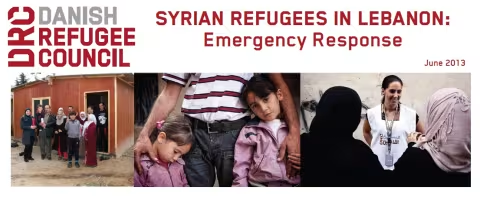
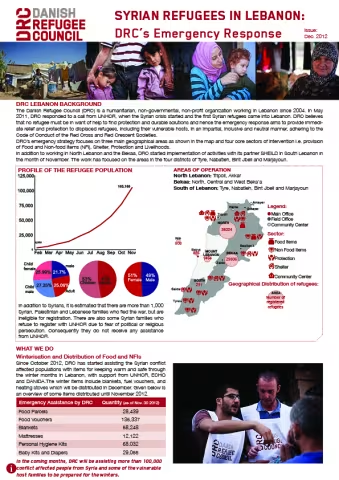
DRC LEBANON BACKGROUNDThe Danish Refugee Council (DRC) is a humanitarian, non-governmental, non-profit organization working in Lebanon since 2004. In May 2011, DRC responded to a call from UNHCR, when the Syrian crisis started and the first Syrian refugees came into Lebanon. DRC believes that no refugee must be in want of help to find protection and durable solutions and hence the emergency response aims to provide immediate relief and protection to displaced refugees, including their vulnerable hosts, in an impartial, inclusive and neutral manner, adhering to the Code of Conduct of the Red...
This report is a summary of the presentations given during the regional workshop on free trade agreements in the Arab region. The meeting was part of the two-year project on the “socio-economic impact of trade liberalization policies on the Arab region”.
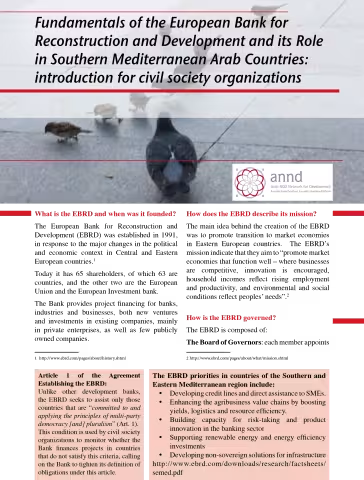
The European Bank for Reconstruction and Development (EBRD) was established in 1991, in response to the major changes in the political and economic context in Central and Eastern European countries.1 Today it has 65 shareholders, of which 63 are countries, and the other two ar
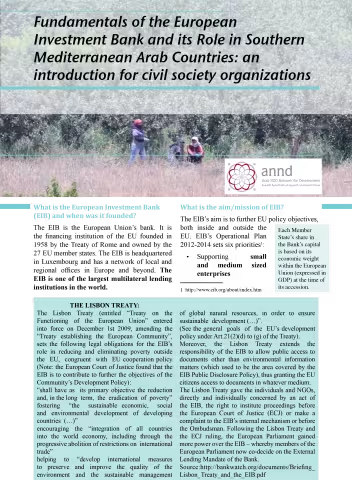
The EIB is the European Union’s bank. It is the financing institution of the EU founded in 1958 by the Treaty of Rome and owned by the 27 EU member states. The EIB is headquartered in Luxembourg and has a network of local and regional offices in Europe and beyond.
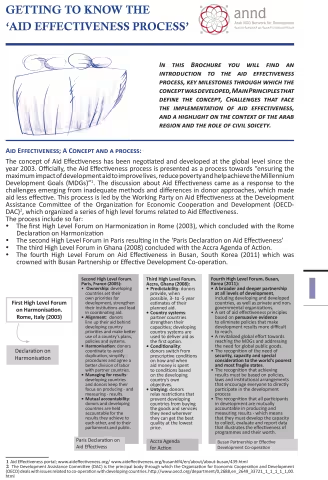
In this Brochure you will find an introduction to the aid effectiveness process, key milestones through which the concept was developed, Main Principles that define the concept, Challenges that face the implementation of aid effectiveness, and a highlight on the context of the
The National Report for the United Nations Conference on Sustainable Development (Rio + 20) presents the current situation as is and highlights the achievements and failures, strengths and weaknesses, opportunities and risks.