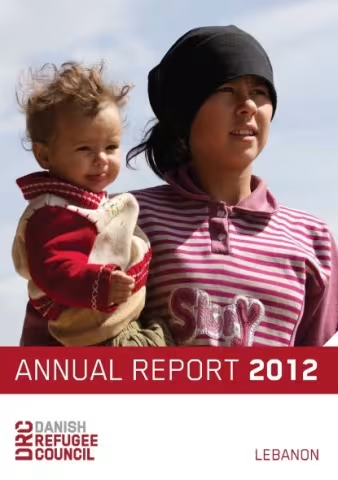
DRC in Lebanon
The Danish Refugee Council has been operating in Lebanon since September 2004.The focus of the organization has shifted over time as the country’s needs changed.
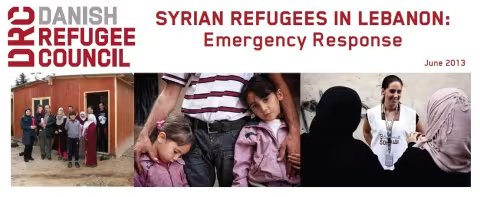
DRC’s main focus in Lebanon in 2013 has been on providing emergency assistance to refugees from Syria, and on developing the capacities of hosting communities across Lebanon. The emergency response program focuses on four sectors of intervention: Protection, Direct Assistance, Shelter/Community Center Management, and Community Development.
In parallel, the organization’s Development Programme works with Migrant...
DRC in Lebanon
The Danish Refugee Council began operating in Lebanon in 2004. Since then, the organization
has partnered with local and international NGOs to implement different programs that followed the
country’s needs. Today, DRC’s main focus is on assisting those affected by the Syrian crisis, including
refugees and members of the hosting communities. DRC also provides assistance to Palestinian
refugees, migrant domestic workers and women at risk.
DRC currently addresses the needs of four displaced population groups, as well as the affected
Lebanese communities:
-Syrian refugees feeling...
The Syrian crisis continues to provoke an ever increasing displacement across the border into Lebanon. According to the UNHCR, more than 569,000 Syrian refugees are now receiving protection and assistance from the Lebanese government, the UN and NGO’s. With no end to the crisis in sight, the number of Syrian refugees entering Lebanon is expected to rise to one million by the end of the year, posing a significant challenge to hosting communities around Lebanon. DRC and its partners continue to provide essential services to meet the needs of refugees and locals.
DRC’s emergency strategy focuses...
This report summarises the findings of Amel Association International’s latest Rapid Needs Assessment that was conducted from its Haret Hreik community centre in May 2013. It is hoped that the reader will benefit both from the summary of the target population’s needs and the analysis of how Amel Association International can best replicate such assessments in the future.
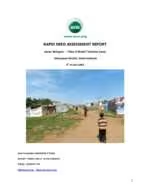
This report summarises the findings of the recent Rapid Needs Assessment at Amel Association International’s Burj el Barajneh (Baajour) community centre, which took place in late March 2013. It is hoped that the reader will benefit both from the summary of the target population’s needs and the analysis of how Amel Association International can best replicate such assessments in the future.
Sommaire :
Avant‐propos
I) Organigramme d’Adyan
II) Les réalisations par département
A) CCSD
B) SEC‐D
C) Média
D) Solidarité
III) Le Réseau des Volontaires
IV) Les Rencontres internationales
V) L’équipe administrative
VI) Budget et Résultat
VII) Faites un don
VIII) Adresse
IX) Web, 15
Table of content:
Forward
I) Adyan organizational chart
II) Key achievements by department
A) CCSD
B) SEC-D
C) Media D
D) Solidarity D
III) Volunteerism at Adyan
IV) Intercultural and International Meetings
V) Office and admin team
VI) Budget and Balance
VII) Support us
VIII) Address
IX) Web
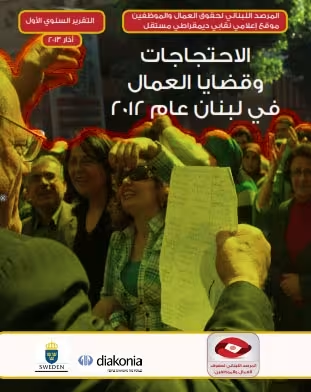
يقدم المرصد اللبناني لحقوق العمال والموظفين، تقريره السنوي الأول "الاحتجاجات وقضايا العمال في لبنان عام 2012: عام نهوض القطاع العام وتعرية الاتحاد العمالي العام." ويأتي التقرير بدعم من منظمة "دياكونيا"، باعتباره الإصدار الأول من سلسلة تقارير مرتقبة.
وبالإضافة إلى رصد التحركات العمالية في مختلف القطاعات، يفرد التقرير مساحة لبعض النقابيين وبعض مؤسسات المجتمع المدني الفاعلة في وسط العمال لتقديم مساهمات حول قضاياهم التي نحن أيضا معنيون في متابعتها بالمرصد العمالي، ومنها قضايا متعلقة بحقوق العمال المعوقين، والعمال الفلسطينين وعاملات المنازل المهاجرات. كما أفرد التقرير مساحة إضافية لأعضاء في هيئة...
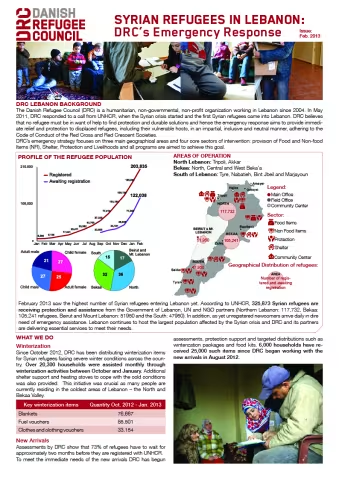
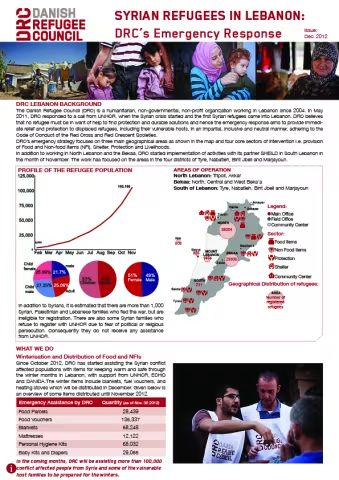
The Danish Refugee Council (DRC) is a humanitarian, non-governmental, non-profit organization working in Lebanon since 2004. In May 2011, DRC responded to a call from UNHCR, when the Syrian crisis started and the first Syrian refugees came into Lebanon. DRC believes that no refugee must be in want of help to find protection and durable solutions and hence the emergency response aims to provide immediate relief and protection to displaced refugees, including their vulnerable hosts, in an impartial, inclusive and neutral manner, adhering to the Code of Conduct of the Red Cross and Red Crescent...
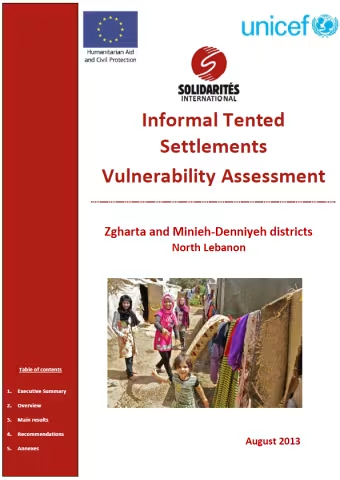
This report is the result of 4 months of field data collection from April to August 2013 carried out in the Informal Tented Settlements (ITS) of the two districts of Zgharta and Minieh-Dennieh by SOLIDARITÉS INTERNATIONAL’s (SI) outreach workers.
Swiss Solidar undertook a multi-sectoral needs assessment in August 2013 to assess the humanitarian needs of Syrian refugees residing in Nabatieh and Jezzine Districts in Southern Lebanon.
Since March 2011 and the continuously escalating crisis in Syria, Lebanon (along with Jordan, Iraq and Turkey) has been a refuge area for Syrian families fleeing the instability and violence in their country.
This "Thirty Questions Guide" is the first guide that addresses the various stages of work and employment based on the principles of the CRPD and its relevant detailed provisions.
This report is the result of 4 weeks’ field work from April 22 to May 17 carried out in the two districts of Zgharta and Minieh-Dennieh by SOLIDARITÉS INTERNATIONAL’s (SI) outreach workers.
DRC LEBANON BACKGROUNDThe Danish Refugee Council (DRC) is a humanitarian, non-governmental, non-profit organization working in Lebanon since 2004. In May 2011, DRC responded to a call from UNHCR, when the Syrian crisis started and the first Syrian refugees came into Lebanon. DRC believes that no refugee must be in want of help to find protection and durable solutions and hence the emergency response aims to provide immediate relief and protection to displaced refugees, including their vulnerable hosts, in an impartial, inclusive and neutral manner, adhering to the Code of Conduct of the Red...