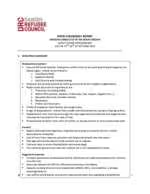
UNHCR, coordinating the operations in the North along side with the HRC (High Relief Commission) and DRC as its main implementing partner, requested from DRC to conduct a first rapid assessment in the Bekaa with the following objectives: a) To identify existing areas of displa
IFI Research and Policy Memo #1 | April 2010
The Transnational Tobacco Industry Effectively Hampers Tobacco Control Policy-Making in LebanonRima Nakkash
Lebanon is still considered one of the weakest countries in the region with regards to regulating tobacco use, despite having ratified the World Health Organisation’s Framework convention on Tobacco Control in 2005. Lebanon has failed numerous attempts to introduce a national tobacco control policy, including banning smoking in closed public areas, banning advertising and sponsorship, and placing large pictorial health warnings on tobacco...
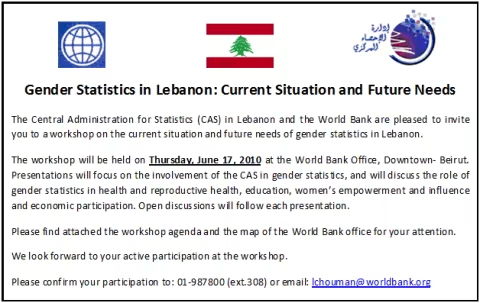
The Central Administration of Statistics (CAS) and the World Bank organized a workshop entitled "Gender Statistics in Lebanon: Current Situation and Future Needs," which took place on June 17, 2010.
Information on the health service in Lebanon including availability of access and availability of drugs and treatment. Information on treatment of mental health issues such as anxiety, depression, post traumatic syndrome, including psychiatric treatment.
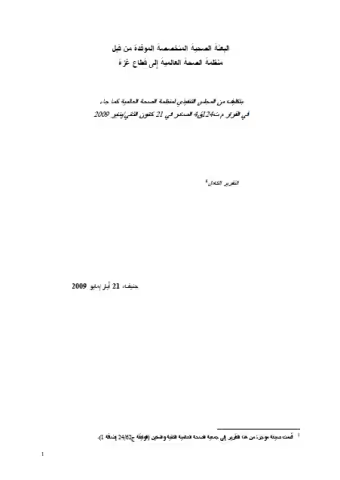
في 21 كانون الثاني/يناير 2009 اعتمد المجلس التنفيذي لمنظمة الصحة العالمية القرار م ت124 ق 4 الذي طلب إلى المديرة العامة لمنظمة الصحة العالمية أن توفد بعثة صحية متخصصة إلى غزة للوقوف على الاحتياجات الصحية و الإنسانية العاجلة بعد 22 يوماً من العمليات العسكرية الإسرائلية التي بدأ
The aim of the “Socio-Economic Assessment in Nahr el-Bared surrounding areas” report is to provide an assessment of the pre and post conflict conditions of households located in the vicinity of Nahr el Bared camp for a variety of livelihood aspects including: housing, health,
IFI Paper | January 2009
UNIFIL II: Emerging and Evolving European Engagement in Lebanon and the Middle EastKarim Makdisi, Timur Göksel, Hans Bastian Hauck, and Stuart Reigeluth
There has been a long-standing debate on the merits and drawbacks of UNIFIL, the UN “interim” peacekeeping operation established by UN Security Council (UNSC) Resolutions 425 and 426 in the aftermath of Israel’s 1978 invasion of Lebanon. Following the 2006 Israel-Lebanon War, this debate intensified as UNIFIL’s original mandate was made more “robust” by UNSC Resolution 1701, which marked a new phase of UN peacekeeping...
This essay proposes to re-orient feminist debates on epistemology towards the care-security nexus as a pathway that can plausibly provide an integral understanding of a human-centred and eco-minded security.
This brochure highlights UNDP’s contribution in the Early Recovery process of the Palestinian and Lebanese populations who were affected by the Nahr El Bared crisis.
Since the beginning of the crisis in Lebanon on July 12, 2006, it has been reported as of August 24, 2006 that 1,1841 of people were killed and more than 4,0591 were wounded.
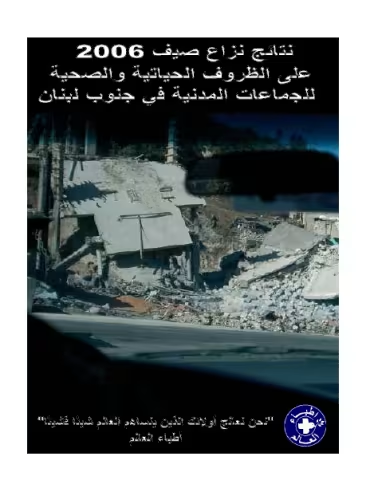
نتائج نزاع صيف 2006 على الظروف الحياتية والصحية للجماعات المدنية في جنوب لبنان تجري "أطباء العالم" (Médecins du Monde) منذ ايلول/سبتمبر 2004 مهمة طويلة الامد في لبنان.
In the coming decades, the world’s rapid urbanization will be one of the greatest challenges to ensuring human welfare and a viable global environment.
The activities, presented in this brochure, are illustrative of UNDP – European Commission Humanitarian Aid Department (ECHO) funded interventions and support in restoring and preserving livelihoods in the Lebanese most damaged regions.