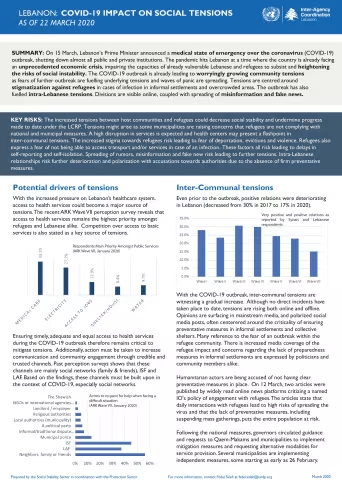
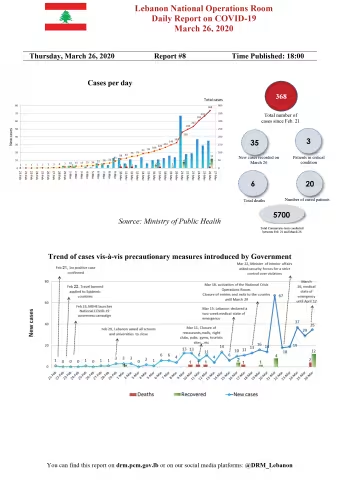
On 15 March, Lebanon’s Prime Minister announced a medical state of emergency over the coronavirus (COVID-19) outbreak, shutting down almost all public and private institutions. The pandemic hits Lebanon at a time where the country is already facing an unprecedented economic crisis, impairing the capacities of already vulnerable Lebanese and refugees to subsist and heightening the risks of social instability. The COVID-19 outbreak is already leading to worryingly growing community tensions as fears of further outbreak are fuelling underlying tensions and waves of panic are spreading. Tensions...
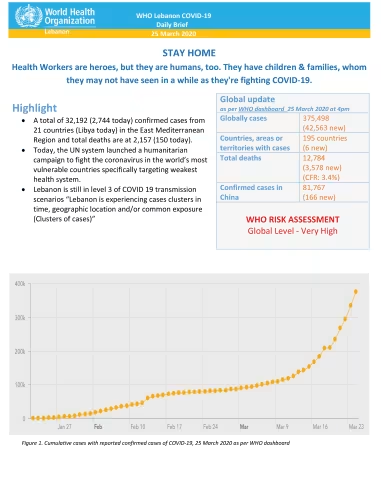
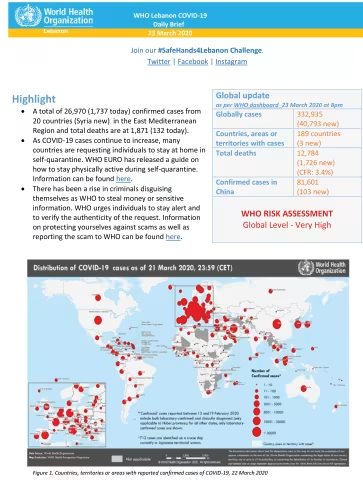
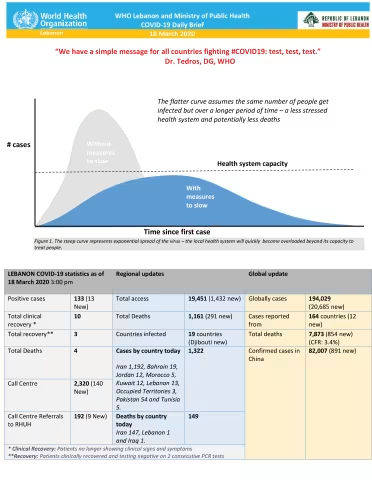
On March 11, 2020, the WHO declared the corona virus (COVID-19) a global pandemic. Originating in Wuhan province
of central China in late 2019, the corona virus has since spread to 166 countries to date.
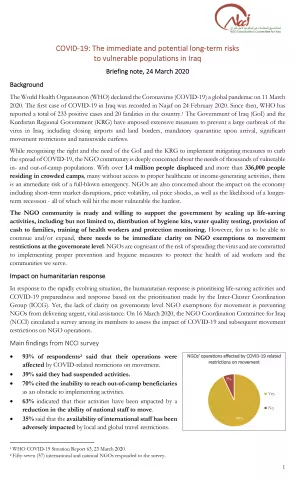
The World Health Organisation (WHO) declared the Coronavirus (COVID-19) a global pandemic on 11 March 2020. The first case of COVID-19 in Iraq was recorded in Najaf on 24 February 2020. Since then, WHO has reported a total of 233 positive cases and 20 fatalities in the country.1 The Government of Iraq (GoI) and the Kurdistan Regional Government (KRG) have imposed extensive measures to prevent a large outbreak of the virus in Iraq, including closing airports and land borders, mandatory quarantine upon arrival, significant movement restrictions and nationwide curfews.
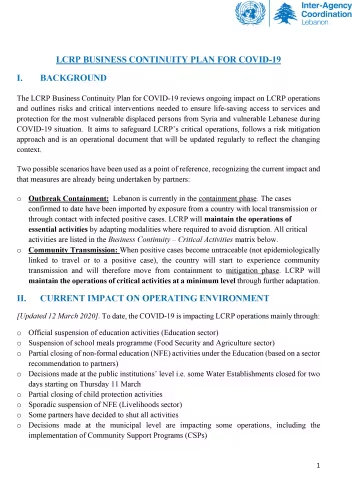
The LCRP Business Continuity Plan for COVID-19 reviews ongoing impact on LCRP operations and outlines risks and critical interventions needed to ensure life-saving access to services and protection for the most vulnerable displaced persons from Syria and vulnerable Lebanese during COVID-19 situation.
People affected by humanitarian crises, particularly those displaced and/or living in camps and camp-like settings,
are often faced with specific challenges and vulnerabilities that must be taken into consideration when planning for
readiness and response operations for the COVID-19 outbreak ..