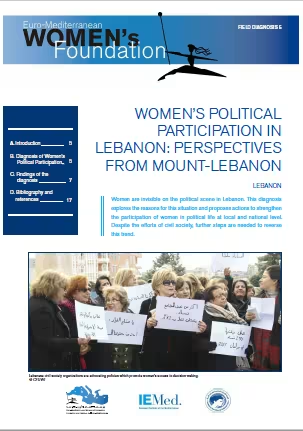
Although Lebanon is sometimes considered as the only democratic country in the Arab region with a free political environment and electoral system, the situation of women has not been strengthened enough for them to have a role on an equal footing with men. Lebanese women form a majority of 53% and they are actively participating in all aspects of Lebanese society. They enjoy equal constitutional rights with men and have the right to vote, hold public office, elect and be elected in municipal councils. Yet, this diagnosis, elaborated by the Committee for the Follow-Up on Women’s Issues (CFUWI)...
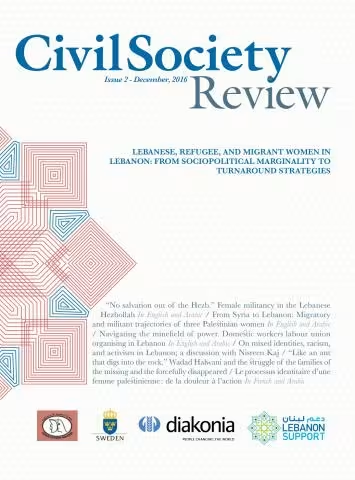
While women’s issues and rights have been at the forefront of public and civil society debate, academic, and activist publications, women’s inequalities and the discrimination women face in Lebanon have been notably undermined, whether as citizens, refugees, or migrants. However, if the publicising of the “issue of women in Lebanon” has prompted the production of more “gender-related” information and knowledge, it has oftentimes adopted the rhetoric of denunciation and victimisation. Hence, there is a scarcity of in-depth and sectoral studies on the logics of exclusion and discrimination in...
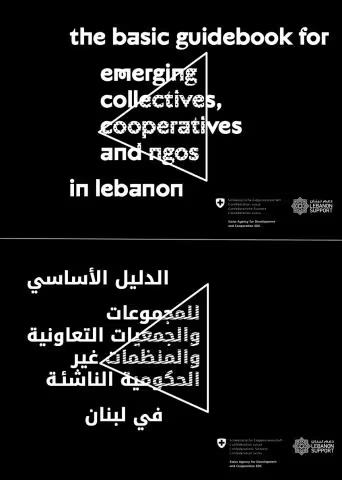
يهدف هذا الدليل الثنائي اللغة للتزويد بالأدوات والمهارات لتأسيس مجموعة أومؤسسة وتنظيم عملها في لبنان، ونُشرَ ضمن مشروع قاعدة المعرفة حول المجتمع المدني، بالشراكة مع الوكالة السويسرية للشراكة والتعاون (SDC).
يجمع تصميم الدليل بين اللغتين العربية والانكليزية من أجل التأكد من وصوله لأكبر عدد ممكن من الفاعلين. وقد صمّمته نايلا يحيا.
This resource published within Lebanon Support's Humanitarian Knowledge Base, in partnership with the Swiss Agency for Development and Cooperation (SDC), aims to provide the tools and know-how to establish an organisation or collective and operate in Lebanon. It provides the basics relevant to establishing and running an NGO or unregistered group in Lebanon.
The Guidebook, designed by Nayla Yehia, presents the information in both English and Arabic so that it has a wider reach.
This study was undertaken by the Center for Women (ECW) at the United Nations Economic and Social Commission for Western Asia (ESCWA), in the context of a regional programme to review progress made in the implementation of the Beijing Declaration and Platform of Action in the
This resource published within Lebanon Support's Humanitarian Knowledge Base, in partnership with the Swiss Agency for Development and Cooperation (SDC)
This report examines the nature of interaction and engagement between Lebanese citizens’ collectives and the state on gender-specific matters, through the case study of
The present guide proposes to reconcile the gender-related targets in the Sustainable Development Goals with the objectives of the Beijing Platform according to various sub-topics. It is organized in two sections.
The 2015 Global Humanitarian Assistance (GHA) Report highlights that in 2013, 147 countries received humanitarian assistance, with countries from the Arab region, particularly those affected by the Syrian crisis, being the highest beneficiaries of aid.
Local actors experience conflicts first hand. Therefore, they have an intimate understanding of what conflict dynamics need to be addressed in order to build sustainable peace.
This report aims to present a general overview of the current local gender actors and their interventions in Lebanon. It also aims to shed light on the complex relationship between women’s organisations in Lebanon and their donors. In this context, it is important to ask to what extent the funding tends to shape project design at a local level? And moreover, does funding of short-term and service-oriented projects edulcorate the political change that these organisations could bring?
Based on a survey done by Lebanon Support during 2015, it gives an overview of the main gender actors, their...
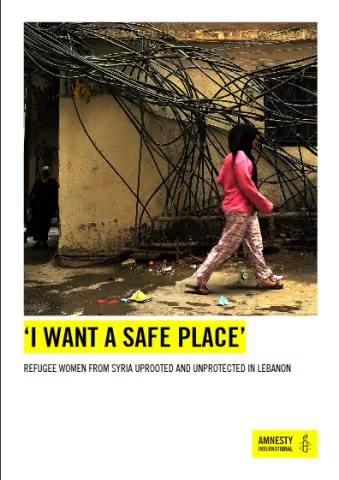
Syrian refugee women and Palestinian refugee women from Syria face risks of serious human rights violations and abuses in Lebanon, including gender-based violence and exploitation. Those who are heads of their households are at particular risk.
ينتمي مفهوم المجتمع المدني إلى تلك المجموعة من المفاهيم التي كلما زاد حضورها في حياة الناس زاد عليهم غموضها، ما يحوّلها إلى أيقونة يحتشد الناس انتصارا لها وينبرون للدفاع عنها، خاصة في بلدان الاستبداد حيث يُحاصر المجتمع المدني ويُضَيّق عليه الخناق حتى يكاد يختنق ويتلاشى. والواقع أن لمفهوم المجتمع المدني دلالات متغيرة بتغيّر الأوضاع التي تمر بها الدولة والمجتمع. كذا هو الحال في منتقطنا حيث تختلف دلالة المجتمع المدني إبان بداية أحداث العنف اختلافا جذريا عما كانت عليه قبلها وكذلك عما آلت إليه الأوضاع اليوم. لكن يبقى وجود مجتمع مدني حر وفاعل شرطا أساسيا لتحقيق الديمقراطية المنشودة، ولا يبدو هذا...
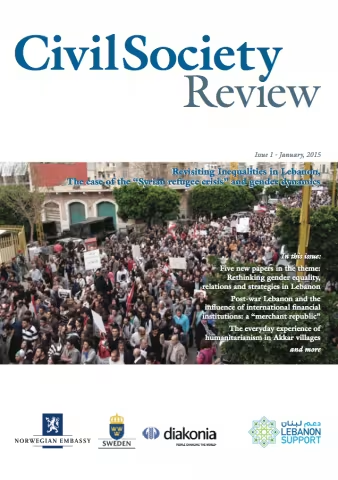
The objective of the Civil Society Review is to bring civil society practitioners, experts, activists, and researchers together to develop knowledge, as well as to innovate new tools and practices so as to strengthen Lebanon’s civil society and its voice. The Civil Society Review produces evidence-based research and analysis and disseminates findings and recommendations to promote civic engagement, shape policies, and stimulate debate within civil society spheres in Lebanon.
Launched on 12 December 2014, the Core Humanitarian Standard on Quality and Accountability (CHS) describes the essential elements of principled, accountable and quality humanitarian action.