مساعدة ذوي الإعاقة العقلیّة (الإخوة) في جمیع مجالات حیاتھم من خلال توفیر الدعم العملي والعاطفي بتوجیه من مسؤول البيت، والمساعدة في تطویر مقدراتھم بخلق بیئة محفزة ورعایة مناسبة.
دليل.فيلم هو مصدر مفتوح من تصميم بيروت دي سي وشركائها، يهدف إلى مساعدة صنّاع الأفلام العرب على إنتاج أفلام تصل إلى الجماهير على امتداد المدن العربية والعالم وتكون مراعية لمعايير الحفاظ على البيئة
daleel.film is the guide of guides: an open resource made by Beirut DC and partners to help Arab filmmakers make great socially and environmentally engaged films that reach audiences in every Arab city and the world
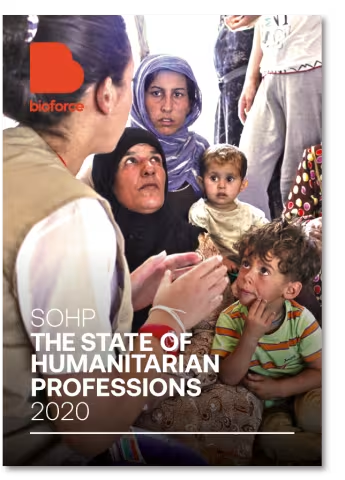
The State of Humanitarian Professions 2020 (SOHP) is the result of a year-long consultation with more than 1,500 humanitarian professionals. For the first time, this study gathers and analyses key figures on 24 humanitarian professions, as well as on recruitment practices and professional development in the sector. In addition, the SOHP study demonstrates the need to coordinate on the challenges of professionalising humanitarian teams, with 19 recommendations to be discovered in the final report.
“More than 60% of Syrian refugees households comprise a person with disabilities and 1/5 Syrian refugees has a disability in Lebanon and Jordan”, shows a large study conducted by Humanity & Inclusion (HI) and iMMAP.
The articles gathered in this dossier offer insights, based on case studies, into the transformation of the “associative sector” in Lebanon, a sector generally seen to be at the core of an increasingly active civil society.
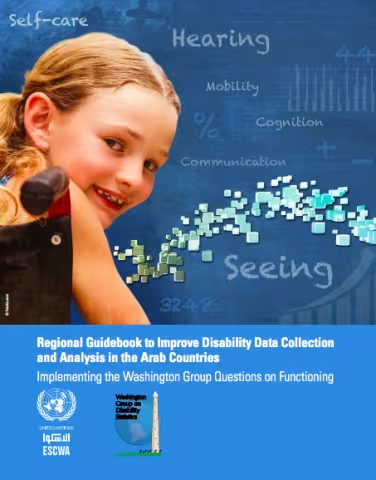
This regional Guidebook explores the different approaches in design, implementation and analysis of disability data collection in the Arab countries, in view of improving the standardization and implementation of the Washington Group Short Set on Functioning and related indica
This study explores the role of community-based organizations in preparing for and responding to crisis in Lebanon. While there has been considerable work conducted on preparedness, responsiveness and recovery to crisis in Lebanon, there has been little work so far that focuses on measuring and assessing the capacities, expertise, strengths and weaknesses of local CBOS in preparing and responding to crises. Managers and decisions makers from nine different organizations were interviewed on the overall expertise gained in past conflicts since the civil war as well as their current level of...
GVC and YAB have implemented a pilot initiative in 6 public schools in order to provide directors, teachers, special educators and social workers with technical tools and expertise to encourage the inclusion of children with special needs. Almost 60 children have been included in regular classes all along the implementation (2012-2015). At the same time, the project involved parents and communities where the 6 schools are located to raise culture of diversity and respect and to enhance participation of children with special needs at all levels of social and cultural life.
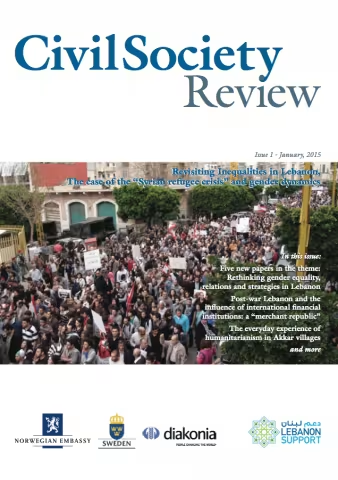
The objective of the Civil Society Review is to bring civil society practitioners, experts, activists, and researchers together to develop knowledge, as well as to innovate new tools and practices so as to strengthen Lebanon’s civil society and its voice. The Civil Society Review produces evidence-based research and analysis and disseminates findings and recommendations to promote civic engagement, shape policies, and stimulate debate within civil society spheres in Lebanon.
Launched on 12 December 2014, the Core Humanitarian Standard on Quality and Accountability (CHS) describes the essential elements of principled, accountable and quality humanitarian action.
Final Akkarouna activity report for the shelter project funded by OTI lebanon.
Project Budget 300,000$, funded by Office of transitional initiatives OTI lebanon to help and aid the syrian refugees have a decent shelter to live in.
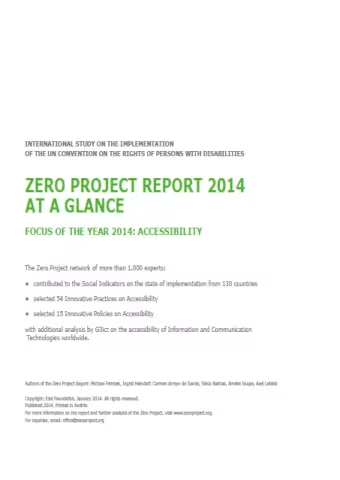
About the Zero Project: For a World without Barriers
The Zero Project was initiated by the Essl Foundation in 2010. It has been run in partnership with the World Future Council (WFC) since 2011 and the European Foundation Centre (EFC) since 2013. The mission of the Zero Project is to work for a world without barriers, according to the principles and Articles of the UN CRPD.
This "Thirty Questions Guide" is the first guide that addresses the various stages of work and employment based on the principles of the CRPD and its relevant detailed provisions.