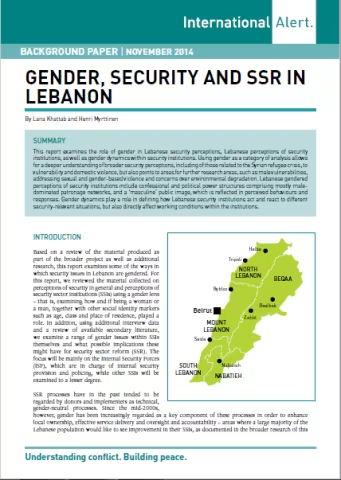
This report examines the role of gender in Lebanese security perceptions, Lebanese perceptions of security institutions, as well as gender dynamics within security institut
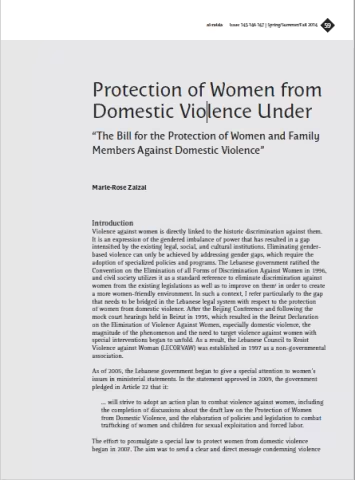
Violence against women is directly linked to the historic discrimination against them. It is an expression of the gendered imbalance of power that has resulted in a gap intensified by the existing legal, social, and cultural institutions.
This resource, published by Oxfam in 2013, aims to present standards that were originally developed for Oxfam staff to ensure a consistent approach to promoting gender equality in humanitarian preparedness and response programming.
The “Review of the Public Procurement Legal Framework in Lebanon” introduces the Sustainable Public Procurement (SPP) in Lebanon and elaborates on the legal of the country’s procurement and sustainability laws that may offer a legal possibility for the adoption of SPP principl
The research will provide better understanding on the legislations and laws that authorities are using to control or oppress any movement or any type of activism on gender and sexuality issues in JORDAN.
Since the unrest in Syria began in March 2011, the Bekaa Valley in Lebanon has hosted varying numbers of displaced Syrian families. Local actors such as municipalities and NGOs registered families for assistance received through regional and international donors.
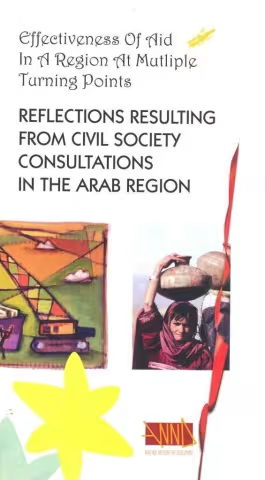
This book tackles key Issues of concern within the aid discussion. It outlines issues of particular importance for civil society in the Arab region and highlights the difference of prospectives between government representatives and CSOs.
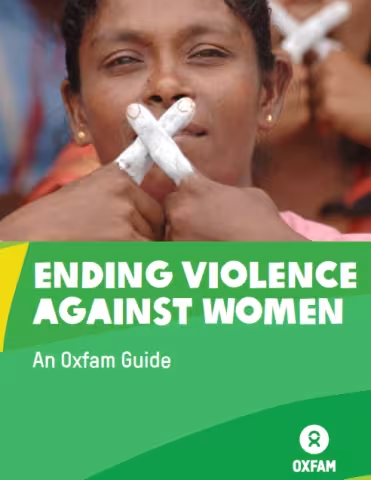
This guide is a resource for Oxfam staff, published in 2012, intended to inform and inspire their work, and to share with partners. It can be read and consulted individually – or used for discussion with peers.
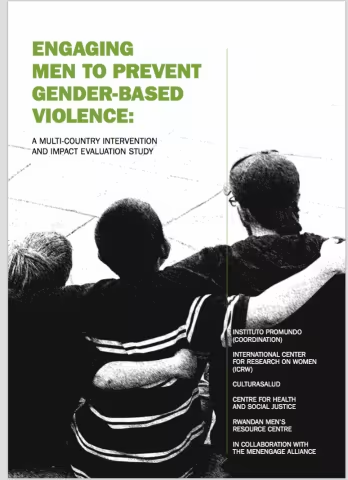
Over the span of three years, Instituto Promundo, with support from the United Nations Trust Fund to End Violence Against Women, implemented a multi-country project to engage men and boys in preventing violence against women and promote gender equality.
The National Report for the United Nations Conference on Sustainable Development (Rio + 20) presents the current situation as is and highlights the achievements and failures, strengths and weaknesses, opportunities and risks.
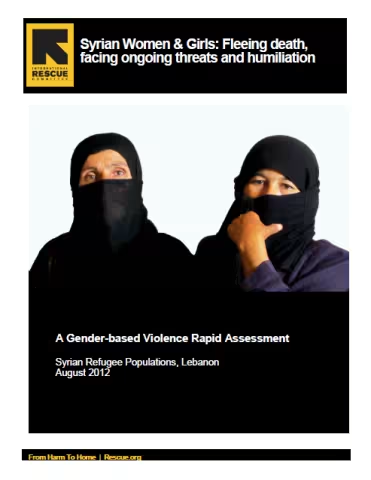
This Gender-based Violence Rapid Assessment conducted by International Rescue Committee in 2012 focuses on risks and violence faced by women and girls among the Syrian refugee population within Lebanon.
The Strategic Planning is based on the findings of fieldwork carried out in several villages in Dinnieh, which aimed at identifying the major characteristics of the region in different fields.
This resource is a United Nations Relief and Works Agency for Palestine Refugees in the Near East (UNRWA) reference training manual for frontline staff on how to work with GBV survivors.
This case study book entitled “Cases of Femicide before Lebanese Courts” was written by Azza Charara Baydoun and published by KAFA (enough) Violence & Exploitation in 2011.
Oxfam GB commissioned the pilot study discussed in this report in order to understand further the context that shapes men’s gender roles and affects their behaviours, practices, and attitudes towards gender equality, with an explicit focus on VAW.
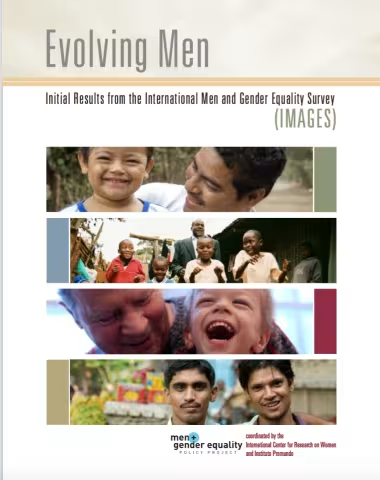
The International Men and Gender Equality Survey (IMAGES) is a comprehensive household questionnaire on men’s attitudes and practices – along with women’s opinions and reports of men’s practices – on a wide variety of topics related to gender equality.
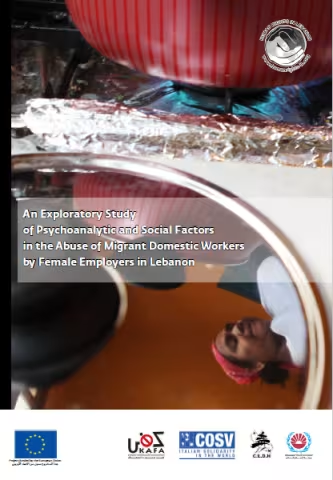
The brief of this qualitative exploratory study was to conduct targeted interviews with female employers of migrant domestic workers, psychiatrists, lawyers and institutional stakeholders in Lebanon.