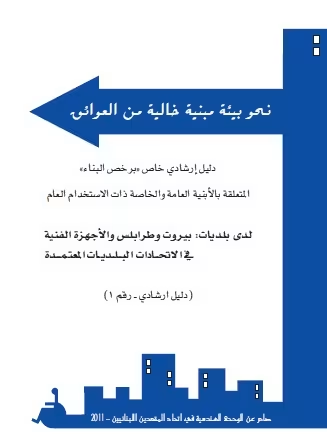
Special guidelines for “Building Licenses” pertaining to public and private buildings of the urban planning centers across Lebanon
Guidelines no. 2
- This guideline is issued by The Lebanese Physical Handicapped Union, arranged by engineer Bashar Abdel Samad, in October 2011.
Objective of the guideline:
Support the application of the decree concerning the accessible environment for people with disability.
Raise awareness on inclusion of people with disability.
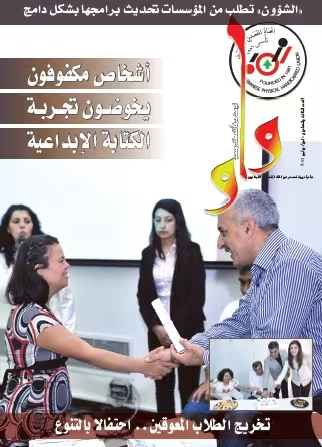
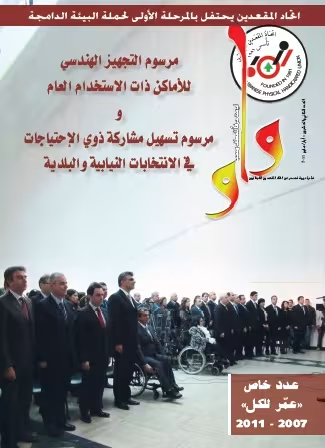
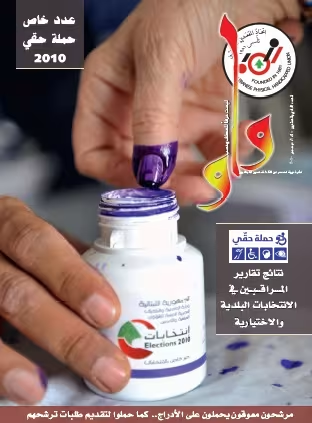
The twenty-second edition May 2011
-Special edition entitled “El Omar kllo”/Life for all 2007-2011 that comprises:
-Preface
-Table of Content
- Respect and appreciation
...
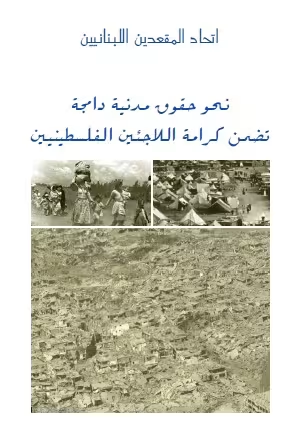
This report is issued by the Lebanese Physical Handicapped Union in July 2011.
Objective of the report:
Awareness of society on inclusion in civil laws encompassing the rights of Palestinian refugees in Lebanon
Content of the report:
-Introduction
Legislative Reality
- Prohibition of refugees to the workplace
- The demanded documents to obtain occupation
- Banning from the benefits of health and social services
- Outlawing refugees from possessing a residence
This report is issued by the Lebanese Physical Handicapped Union in 2011.
Objective of this report:
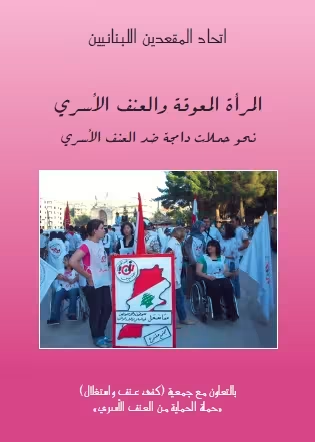
Awareness on repudiating and avoiding domestic violence against women with disability
Special guidelines for “Building Licenses” pertaining to public and private buildings of the urban planning centers across Lebanon
Guidelines no. 2
- This guideline is issued by The Lebanese Physical Handicapped Union, arranged by engineer Bashar Abdel Samad, in October 2011.
Objective of the guideline:
Support the application of the decree concerning the accessible environment for people with disability.
Raise awareness on inclusion of people with disability.
This study is issued by the Lebanese Physical Handicapped Union in 2011.
Objective of the report:
Launch discussion around social inclusion of children with disability in Lebanon and promote the inclusion criteria in accordance with related general policies in Lebanon.
This report will provide a description of the assessment conducted by IMC’s Mental Health and Psychosocial team in the region of Wadi Khaled following the displacement of Syrians into the northern villages between the Lebanese-Syrian borders as a result of the internal conflic
UNHCR, coordinating the operations in the North along side with the HRC (High Relief Commission) and DRC as its main implementing partner, requested from DRC to conduct a first rapid assessment in the Bekaa with the following objectives: a) To identify existing areas of displa
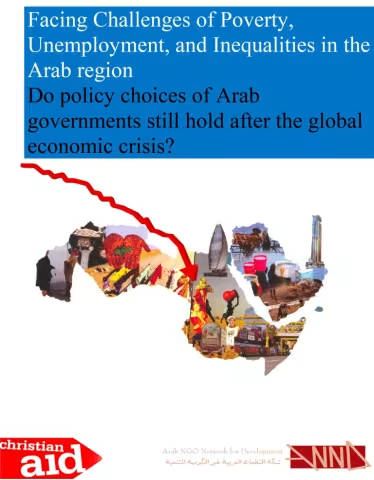
This paper was produced by ANND and Christian Aid and contains five main sections: “Executive Summary: a crisis of multiple dimensions; the threat of explosive vulnerabilities and increasing insecurities”, “Vulnerability to poverty: the key challenges faced by the Arab region”
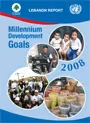
The report assesses the progress made in the achievement of the Millennium Development Goals (MDGs) based on new national data which was formulated after the first MDGR that was published in 2003.
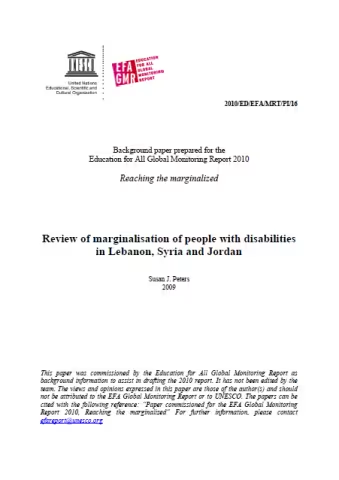
Review of marginalisation of people with disabilities in Lebanon, Syria and Jordan. Using a social exclusion conceptual framework, this paper identifies several causes of marginalization of people with disabilities in the context of the MENA region.
This brochure highlights UNDP’s contribution in the Early Recovery process of the Palestinian and Lebanese populations who were affected by the Nahr El Bared crisis.
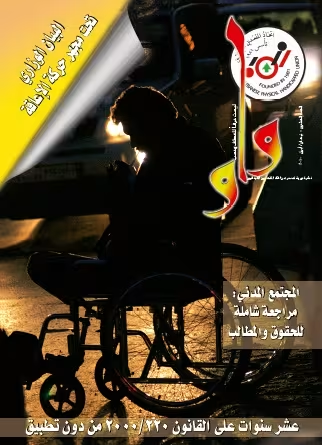
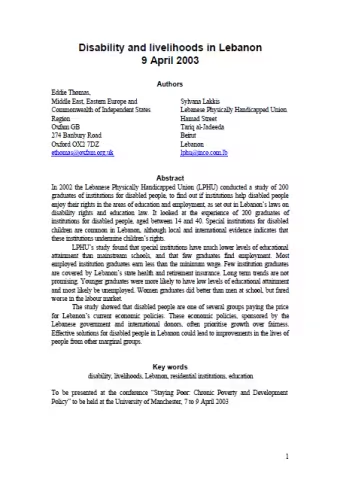
In 2002 the Lebanese Physically Handicapped Union (LPHU) conducted a study of 200 graduates of institutions for disabled people, to find out if institutions help disabled people enjoy their rights in the areas of education and employment, as set out in Lebanon’s laws on disabi
The study upon which this article is based analyzes the status of Arab women in general, gender relations in the Middle East, and the situation of Arab women with disabilities, based on available disability statistics from a few selected countries and the author's observations
The activities, presented in this brochure, are illustrative of UNDP – European Commission Humanitarian Aid Department (ECHO) funded interventions and support in restoring and preserving livelihoods in the Lebanese most damaged regions.