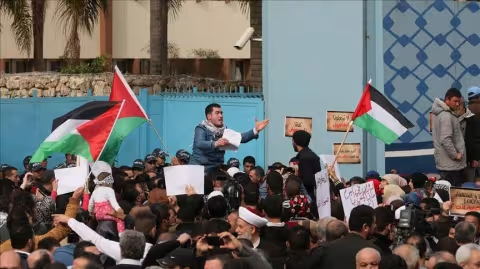
ككل عام تطلق المؤسسة الفلسطينية لحقوق الانسان (شاهد) تقريرها السنوي للعام 2023 حول واقع اللاجئين الفلسطينيين في لبنان، تطرح فيه الأرقام والوقائع الموثقة وتضعها بين يدي صانع القرار المحلي والدولي.
هذا التقرير هو خلاصة للجهود البحثية والمتابعات الميدانية لفريق عمل مؤسسة (شاهد) خلال عام كامل.
The three CS Guidance notes cover 3 essential areas; Getting started with CS in Lebanon; CS in Project Design Cycle; and CS Procurement, Recruitment, and accountability.
إنّ فهم الموارد المالية الخاصّة بمنظمات المجتمع المدني هو أمر أساسي لضمان اتخاذ قرارات صائبة في أنشطة منظمتكم وضمان توافق عملياتكم وآلياتكم المالية مع الخطوط التوجيهية والمبادئ المالية والمحاسبية، كما يمكن في نهاية المطاف أن يوفر لكم الدعم في ضمان استدامة منظمتكم بصورة عامّة.
يشكّل هذا الدليل عن الادارة المالية أداةً أساسية لمساعدة المحاسبين والمدراء الماليين في اتخاذ قرارات مدروسة في ما يخصّ إدارة منظمات المجتمع المدني.
Understanding your Civil Society Organisation’s finances is essential to guarantee proper decision-making in your organisation’s activities and to ensure that your financial operations and processes are in line with the financial and accounting guidelines and principles. It can also ultimately support the sustainability of your organisation as a whole.
This Financial Management Guide is a basic tool to assist accountants and financial managers with making well-in- formed decisions regarding CSO management.
يقدّم هذا الدليل أدوات تسهّل عملية صياغة مقترحات المشاريع والحصول على التمويل، من خلال توضيح ما يتم الاستناد إليه في أغلب المنظمات المانحة، مع الأخذ في الاعتبار الفوارق البسيطة بين مانح وآخر. يتألف هذا الدليل من قسمين لكلٍ منهما أهميته الخاصة. في القسم الأول، يتم التركيز على مفهوم المنح المالية، وكيفية تحديد حاجتنا للتمويل، وكيفية اختيار الشريك الممول لهذا المشروع أو ذاك، وكيفية استهداف الشريك وإقناعه بالفكرة المطروحة. أما القسم الثاني، فيستعرض المراحل الضرورية لبناء مقترح مشروع متكامل، والمحاور الأساسية التي يجب العمل عليها وآلية صياغة الأفكار والأهداف والنتائج المتوقعة، وصولاً إلى صياغة...
This guide provides you with the tools needed to facilitate the proposal writing process and securing funds, by explaining the criteria upon which most donors base their decisions to provide funding, while taking into account the subtle differences between one donor and another. In the first section, we focus on defining the concept of funding grants, in addition to how to identify our funding needs, how to select funding partners for a said project, and how to target partners and persuade them of the proposed idea. In the second section, we present the phases needed to formulate a...
The State of Humanitarian Professions 2020 (SOHP) is the result of a year-long consultation with more than 1,500 humanitarian professionals. For the first time, this study gathers and analyses key figures on 24 humanitarian professions, as well as on recruitment practices and professional development in the sector. In addition, the SOHP study demonstrates the need to coordinate on the challenges of professionalising humanitarian teams, with 19 recommendations to be discovered in the final report.
This report presents the findings of the labour market study in Bar Elias and the Bekaa, focusing on the labour activities, initiatives, and aspirations of current B&Z beneficiaries and Syrian refugee youth and women heads of household respondents that could potentially be
This report presents findings from a survey conducted from 3-11 July, 2017 with three distinct refugee groups in Lebanon: Syrian refugees; Palestine refugees from Syria; and Palestine refugees from Lebanon.
This report examines both the historical development and current situation of Syrians working in Lebanon through the analysis of policies established and implemented by the Lebanese government. While the report is not an assessment of these policies, it nevertheless reflects on its impact on Syrians’ working conditions and livelihoods. In this vein, this report notably focuses on emerging dynamics of increased informality, exploitation, and dependence.
It is part of a series of reports to be published in 2016, the 1st of which being "Formal Informality, Brokering Mechanisms, and Illegality...
Bringing together the years of regional and international experience within civil society activities, Besme was settled in Lebanon in September 2014, in order to contribute to the peaceful settlement of regional conflicts in Middle East. Through a route, which is full of difficulties, we managed to leave the year of 2015 behind, with successful and effective projects. We reckon 2015 as a year of investment for Besme. Reinvigorating the individual connections of management team at national, regional and international levels, we assume that a great step forward was taken for future. In the road...
Over 250,000 migrant women are employed by private households in Lebanon to carry out household tasks such as cleaning, cooking, and caring for children and the elderly.
This working paper seeks to document and analyse collaboration mechanisms between local authorities and humanitarian actors in addressing the Syrian refugee crisis in urban and peri-urban settings in Lebanon.
Since the Syrian conflict began in 2011, 11 million people have been internally displaced or have fled to neighboring states. This has put an incredible strain on the hosting societies, particularly in Lebanon,Jordan, Iraq and Turkey.
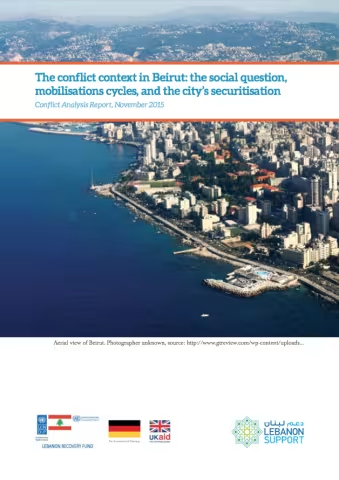
This report provides an analysis of the history and current situation of the conflict context, actors and dynamics in Beirut, Lebanon. The report seeks to shed light on the main actors, topics of contestation, conflict and mobilisation in its historical becoming as well as current expressions. The report includes a special focus on the social question, subsequent political and social mobilisation, gender issues, the securitisation of the city, as well as the interactions between the Lebanese host community and Syrian refugees and their unfolding within the last four years (since 2011).
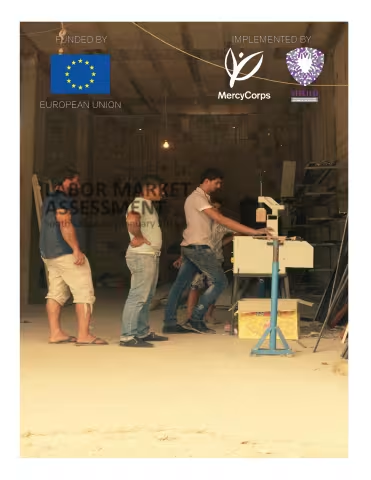
This study was based on a comprehensive assessment of the vocational needs as well as the labor absorption capacity mainly with business owners in the area of intervention and individual workers and vocational trainings candidates following different assessment and data collection methodologies such as key informant interviews, focus groups, and individual assessments