
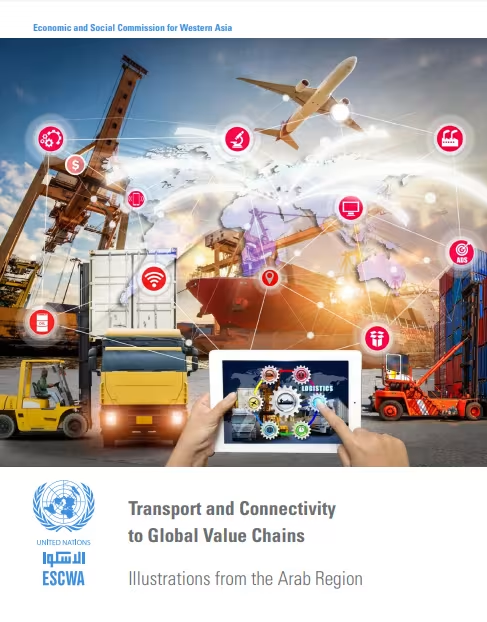
This report explores the impact of transport infrastructure and service availability and efficiency on the connectivity – the state of being connected – of GVCs. It assesses whether the Arab region meets the necessary requirements of infrastructure, logistics and trade facilitation to be able to participate meaningfully in GVCs. Though we acknowledge the impact on employment equality and social issues, including gender specific aspects, this report focuses only on the role of transport infrastructure and policies.This report also shows the performance of transport and logistics services is a key reason behind the relatively poor integration of the region in GVCs, along with the low level of trade facilitation. Most Arab countries fare poorly in efficiency and timeliness of services and infrastructure. Countries have generally poor links with global transport networks and must make substantial progress in implementing trade facilitation measures. The region maintains a high level of restrictions on transport sectors as shown by the OECD (Organisation for Economic Co-operation and Development) Service Trade Restrictiveness Index. The sector is also the most restricted compared with other sectors.
Scope
National
Intervention Sectors
Business & Economic Policy
Science & Technology
Files
transport-connectivity-global-value-chains-english_0_1.pdf
(1.75 ميغابايت)
Publishing Date
Countries
Lebanon
Resource Type
Studies and Reports
Theme
Science & Technology
Transportation
Economic Development