تجاوز إلى المحتوى الرئيسي

موارد

Intervention Sectors
Resource Type
Displaying 1 - 20 of 71
International
Publishing Date
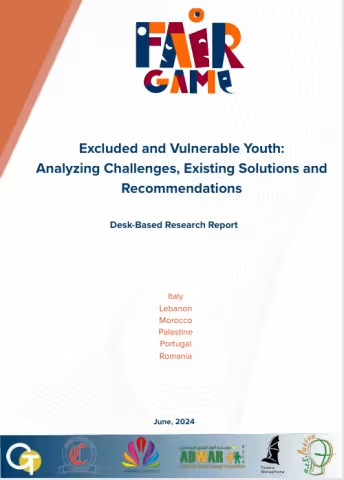
This report brings together insights gathered through extensive desk-based research conducted as part of the Fair Game project 2024 across six diverse countries: Italy, Lebanon, Morocco, Palestine, Portugal, and Romania. The main goal was to explore the complex challenges that excluded and vulnerable youth face in these unique national contexts. The research involved a thorough examination of existing interventions aimed at addressing these challenges. By evaluating their effectiveness, the study aims to establish a foundation for developing targeted training programs and recommending...
National
Publishing Date
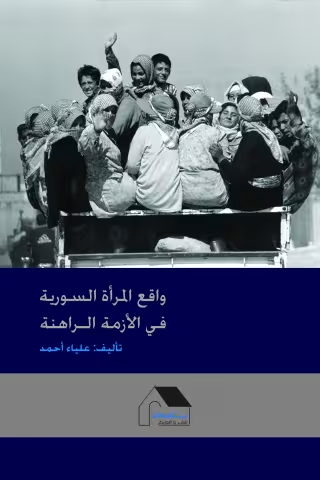
هل تغيّرت، أو تخلخلت، الصورة النمطية للمرأة في الواقع الراهن في سورية؟ هذا هو السؤال المؤسس لهذه الدراسة التي تسعى فيها الباحثة لرصد تحولات المكانة الاجتماعية للمرأة من خلال متابعتها لمدى المشاركة النسوية في الحياة العامة، في سورية. تركز الباحثة على فترة الأزمة الحالية متسائلة «هل يمكن أن يشكل انخراط المرأة السورية في الأزمة، موالاةً أو معارضة، معبراً إلى إنجاز بقية حقوقها... أم يزيد من معاناتها؟
National
Publishing Date
يهدف هذا البحث العمليّ المنحى إلى إعلام الممارِسين وصانعي القرار بشأن وضع الحماية الاجتماعيّة واحتياجاتها والثغرات الموجودة فيها، وذلك بالنسبة إلى العاملين في قطاع المجتمع المدنيّ. يقدّم هذا البحث توصيات مستهدَفة تهدف إلى تعزيز وصول العاملين في قطاع المجتمع المدنيّ إلى الحماية الاجتماعيّة، كما تستهدف الدولة، جماعة المانحين والمنظّمات غير الحكوميّة الدّولية، والمنظّمات غير الحكوميّة المحليّة.
National
Publishing Date
This action-oriented research aims to inform practitioners and decision makers on social protection status, needs and gaps of workers in the civil society sector. It formulates targeted recommendations that aim at enhancing access to civil society workers to social protection, and that target the Lebanese state, the donor community and international NGOs, and local NGOs.
National
Publishing Date
Lebanon may witness a remarkable rise in the number of women serving in Parliament come May 2018 due to initiatives from women’s groups, “civil society” activists, and the substantial number of female candidates – 113 at the start of the election period. However, as this briefing paper shows, Lebanese women continue to face numerous challenges in entering government. The new electoral law passed in June 2017 does not provide women with equal opportunity to be elected, and it is yet to be seen whether it will increase female representation in Parliament. Nevertheless, the historic number of...
National
Publishing Date

Working Paper | February 2014
The Dilemma of Human Rights In Lebanese Electoral Laws by Elie Al-Hindy
This study concludes with a number of recommendations with respect to the issues that need to be introduced to the debate and that can strengthen advocacy efforts by the different stakeholders involved. Reflecting on all of the above, and in light of the current political realities in Lebanon, including present sectarian demographics and political structure, the study concludes that the standards imposed on the new electoral law is impossible to meet, as no law, which this study has reviewed...

National
Publishing Date
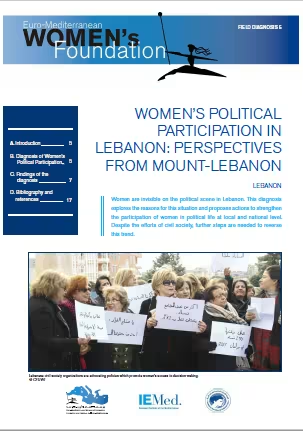
Although Lebanon is sometimes considered as the only democratic country in the Arab region with a free political environment and electoral system, the situation of women has not been strengthened enough for them to have a role on an equal footing with men. Lebanese women form a majority of 53% and they are actively participating in all aspects of Lebanese society. They enjoy equal constitutional rights with men and have the right to vote, hold public office, elect and be elected in municipal councils. Yet, this diagnosis, elaborated by the Committee for the Follow-Up on Women’s Issues (CFUWI)...
National
Publishing Date
The purpose of this policy brief is to inform policy formulation on local level security provision and refugee protection, and to propose modalities for upgrading the sys- tems of the Lebanese security institutions in a way that strengthens protection of the Lebanese communities and the Syrian refugees they host. Based on eld research conducted between February and May 2016 in three locations across Lebanon, this brief analyses the challenges to protecting local communities and refugees in a hybrid system, in which formal and informal security actors coexist and implement a mix of security...
National
Publishing Date
This report aims to analyse how formal and informal security providers implement their respective social order agendas through a security “assemblage”. It also aims to inform the debate on refugee protection and security provision in urban settings, in the context of Lebanon’s hybrid security system. The accounts collected illustrate how state security institutions tacitly accept – or even rely on – informal security actors, managing at times to achieve their political and strategic goals through decentralised and/or illegal forms of control. In this vein, local municipalities imposed curfews...
National
Publishing Date
The influence of terrorist groups operating on the Lebanese-Syrian border, Hezbollah’s involvement in Syria, and the increasing sense of humiliation and powerlessness amongst Sunnis since Hezbollah’s takeover of west Beirut in 2008 is breeding concern about the radicalization
National
Publishing Date
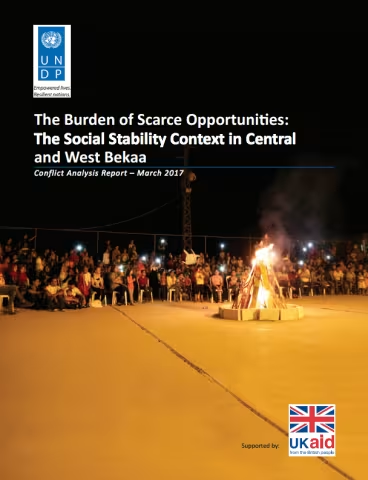
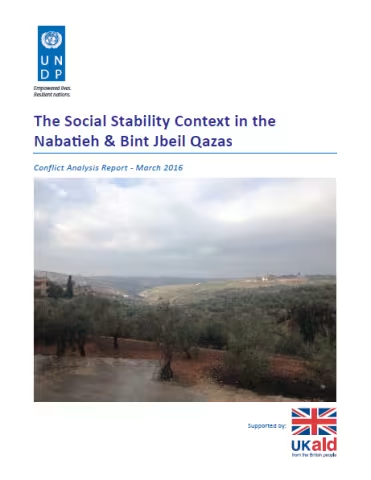
This report presents a brief analysis of the social stability context in the Qazas of Nabatieh and Bint Jbeil in the Nabatieh governorate, a sparsely populated religiously and politically homogenous area which hosts a small number of Syrian refugees.
National
Publishing Date
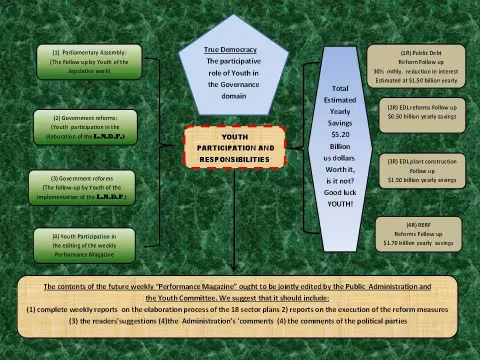
LET THE KIDS DO IT A lot has been said and printed about the role that is expected to be performed by YOUTH in the governance process, and here I am thinking generally of University undergraduates.  However, I do not recall reading any serious and studied proposals on the subject. It is as though, some of our esteemed dinosaur leaders consider the idea so “farfetched “that, for them, it is not really worth considering. They ask: “Do you seriously think that “kids” can tell us what to do or not do? The answers would be: First, these “kids”, as you call them, can come up with some fresh ideas...
National
Publishing Date

Working Paper | April 2015
Social Justice and the Arab Uprisings by Amaney A. Jamal and Michael Robbins
As the Arab Spring proceeded, massive changes swept across the region. Long-standing stability gave rise to ongoing chaos in some countries, most notably Syria and Libya, but also to a significant extent in Tunisia and Egypt. Meanwhile, Islamist parties won free and fair elections in Egypt and Tunisia and were allowed to come to power. These and other changes greatly altered the political landscape across the region. The importance of these changes cannot be overstated. Yet, amidst talk of a...

National
Publishing Date
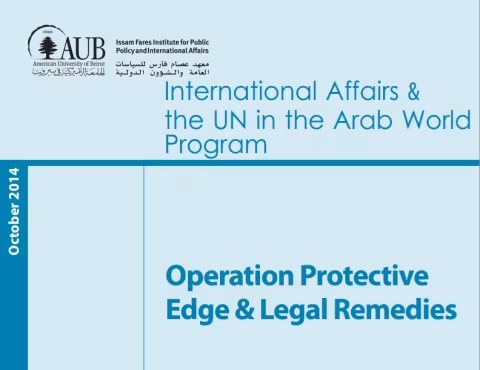
Working Paper Series # 24 | October 2014 Operation Protective Edge & Legal RemediesNoura Erakat, Bianca Isaias, and Salmah Rizvi On 26 August 2014, Israel and Palestinian resistance groups entered into a long-term ceasefire agreement. The terms of the agreement look almost identical to those established in November 2012, including a lack of implementation mechanisms. Indeed, if the parties fail to make these terms more precise and binding, it will be no more than a holding position before Israel’s next assault on the Gaza Strip Its most significant omission is a commitment to lift Israel’s...
National
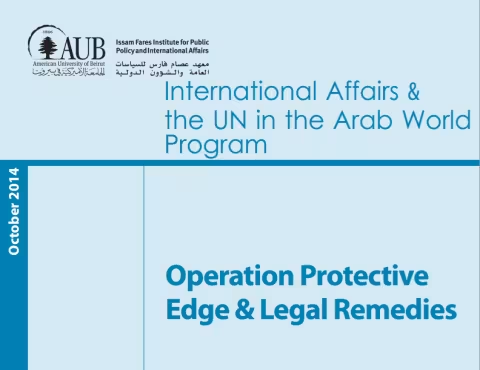
Publishing Date
Working Paper Series # 24 | October 2014 Operation Protective Edge & Legal RemediesNoura Erakat, Bianca Isaias, and Salmah Rizvi On 26 August 2014, Israel and Palestinian resistance groups entered into a long-term ceasefire agreement. The terms of the agreement look almost identical to those established in November 2012, including a lack of implementation mechanisms. Indeed, if the parties fail to make these terms more precise and binding, it will be no more than a holding position before Israel’s next assault on the Gaza Strip Its most significant omission is a commitment to lift Israel’s...