Beyond the mere provision of healthcare, the right to health is entrenched in human rights and encompasses underlying determinants of health (including gender equality, right to food, right to housing for example), freedoms and rights, and entitlements such as equal opportunity to access the highest attainable standards of health.
الحقّ في الصحّة هو حقٌّ مُكرَّس من حقوق الإنسان، ولا يقتصر على الرعاية الصحّية. يتضمّن مجموعة من المُحدِّدات الأساسية للصحّة (بما في ذلك المساواة الجندرية، والحق في الغذاء، والحق في السكن على سبيل المثال)، والحريات والحقوق والاستحقاقات مثل تكافؤ الفرص للوصول إلى أعلى...
In Jordan, while the majority of the population has access to a wide range of public healthcare services, coverage and reach is still limited, unequal, and lacking in terms of quality. Vulnerable groups particularly, and more specifically unregistered refugees have limited access to healthcare benefits.
في الأردن، في حين يتمتع غالبية السكان بإمكانية الوصول إلى مجموعة واسعة من خدمات الرعاية الصحية العامة، لا تزال التغطية والوصول محدودة، غير متساوية، ونوعية متدنية
لقد تكون هذه التغطية محدودة خاصةً للفئات المهمّشة وبينهم اللاجئين غير المسجلين
The healthcare system in Lebanon is fragmented, exclusionary, and highly privatised.
Although there are multiple social protection schemes offering access to different healthcare benefits, some segments of the population, including unemployed, elderly, workers in the informal sector, migrants workers, and refugees have limited and unequal access to healthcare benefits and coverage.
نظام الرعاية الصحية في لبنان مجزأ، باهظ الكلفة ومخصخص إلى حد كبير. رغم وجود العديد من برامج الحماية الإجتماعية التي تغطي كل منها تقدمة مختلفة في مجال الرعاية الصحية، إلا أن بعض شرائح السكان، بما في ذلك العاطلين عن...
“More than 60% of Syrian refugees households comprise a person with disabilities and 1/5 Syrian refugees has a disability in Lebanon and Jordan”, shows a large study conducted by Humanity & Inclusion (HI) and iMMAP.
The purpose of the needs assessment conducted in the Bekaa area is to identify the needs of Syrian refugees (SR), in terms of food, non food items (NFIs), shelter, water and education.
Since March 2011 and the continuously escalating crisis in Syria, Lebanon (along with Jordan, Iraq and Turkey) has been a refuge area for Syrian families fleeing the instability and violence in their country.
This report summarises the findings of the recent Rapid Needs Assessment at Amel Association International’s Burj el Barajneh (Baajour) community centre, which took place in late March 2013.
Severe weather struck the country this week, affecting Syrian refugees sheltered in the mountain region of Bekaa. Heavy rains and snowfall have flooded some settlements, and a number of refugee families were forced to seek shelter elsewhere.
Over 57,000 displaced Syrians are receiving protection and assistance in Lebanon through the efforts of the Government of Lebanon and UN and NGO partners.
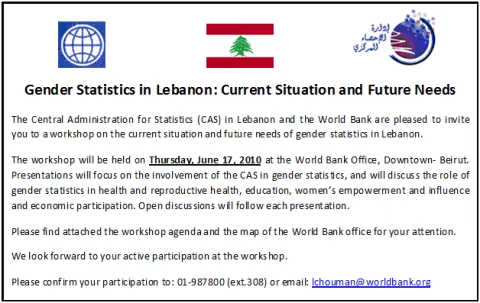
The Central Administration of Statistics (CAS) and the World Bank organized a workshop entitled "Gender Statistics in Lebanon: Current Situation and Future Needs," which took place on June 17, 2010.
The aim of the “Socio-Economic Assessment in Nahr el-Bared surrounding areas” report is to provide an assessment of the pre and post conflict conditions of households located in the vicinity of Nahr el Bared camp for a variety of livelihood aspects including: housing, health,