On March 11, 2020, the WHO declared the corona virus (COVID-19) a global pandemic. Originating in Wuhan province
of central China in late 2019, the corona virus has since spread to 166 countries to date.
In most Arab countries, family matters including Domestic Violence continue to be handled by religious courts as civil legislation does not criminalise acts of violence within the family.
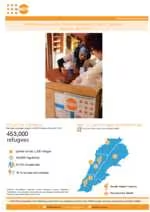
The continuing unrest in Syria is resulting in a growing influx of Syrian refugees to Lebanon. The United Nations High Commissioner for Refugees has registered over 57,000 Syrian refugees in Lebanon (September 7, 2012) while many refugees are awaiting registration.
This operational guidance note is anchored on the principles of universal health care for all persons of concern fleeing the ongoing conflict in Syria and in need of international protection in Lebanon.
Since March 2011 and the continuously escalating crisis in Syria, Lebanon (along with Jordan, Iraq and Turkey) has been a refuge area for Syrian families fleeing the instability and violence in their country.
UNHCR, coordinating the operations in the North along side with the HRC (High Relief Commission) and DRC as its main implementing partner, requested from DRC to conduct a first rapid assessment in the Bekaa with the following objectives: a) To identify existing areas of displa
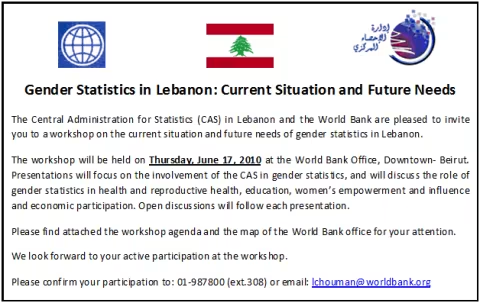
The Central Administration of Statistics (CAS) and the World Bank organized a workshop entitled "Gender Statistics in Lebanon: Current Situation and Future Needs," which took place on June 17, 2010.
This essay proposes to re-orient feminist debates on epistemology towards the care-security nexus as a pathway that can plausibly provide an integral understanding of a human-centred and eco-minded security.
The activities, presented in this brochure, are illustrative of UNDP – European Commission Humanitarian Aid Department (ECHO) funded interventions and support in restoring and preserving livelihoods in the Lebanese most damaged regions.