Beyond the mere provision of healthcare, the right to health is entrenched in human rights and encompasses underlying determinants of health (including gender equality, right to food, right to housing for example), freedoms and rights, and entitlements such as equal opportunity to access the highest attainable standards of health.
الحقّ في الصحّة هو حقٌّ مُكرَّس من حقوق الإنسان، ولا يقتصر على الرعاية الصحّية. يتضمّن مجموعة من المُحدِّدات الأساسية للصحّة (بما في ذلك المساواة الجندرية، والحق في الغذاء، والحق في السكن على سبيل المثال)، والحريات والحقوق والاستحقاقات مثل تكافؤ الفرص للوصول إلى أعلى...
In Jordan, while the majority of the population has access to a wide range of public healthcare services, coverage and reach is still limited, unequal, and lacking in terms of quality. Vulnerable groups particularly, and more specifically unregistered refugees have limited access to healthcare benefits.
في الأردن، في حين يتمتع غالبية السكان بإمكانية الوصول إلى مجموعة واسعة من خدمات الرعاية الصحية العامة، لا تزال التغطية والوصول محدودة، غير متساوية، ونوعية متدنية
لقد تكون هذه التغطية محدودة خاصةً للفئات المهمّشة وبينهم اللاجئين غير المسجلين
The healthcare system in Lebanon is fragmented, exclusionary, and highly privatised.
Although there are multiple social protection schemes offering access to different healthcare benefits, some segments of the population, including unemployed, elderly, workers in the informal sector, migrants workers, and refugees have limited and unequal access to healthcare benefits and coverage.
نظام الرعاية الصحية في لبنان مجزأ، باهظ الكلفة ومخصخص إلى حد كبير. رغم وجود العديد من برامج الحماية الإجتماعية التي تغطي كل منها تقدمة مختلفة في مجال الرعاية الصحية، إلا أن بعض شرائح السكان، بما في ذلك العاطلين عن...
More than a decade after the United Nations’ adoption of the Convention on the Elimination of All Forms of Discrimination against Women, which is adopted by many countries including Lebanon, these countries returned in 2015 to commit themselves to achieve gender equality and t
UNFPA on behalf of UNDP and UN Women organized a national workshop on gender-related laws, policies and practices in Lebanon, which was held in Beirut on the 7th and 8th of August, 2018.
The Arab region continues to manage uncertainties on its path towards an inclusive and sustainable growth trajectory: geopolitical tensions persist, and global interest rates have soared.
This study maps the current state of gender justice in the Arab region, documenting barriers as well as opportunities. Its primary research aim is to determine how to develop an environment, at the legal, policy, and social levels that is conducive to gender justice.
The research will provide better understanding on the legislations and laws that authorities are using to control or oppress any movement or any type of activism on gender and sexuality issues in JORDAN.
Titled “Let The Resolution Begin…. Live Gender Equity”, this resource is the annual report of ABAAD Resource Center for Gender Equity, which lists the accomplishments of the organization for the period between June 2011 and June 2012.
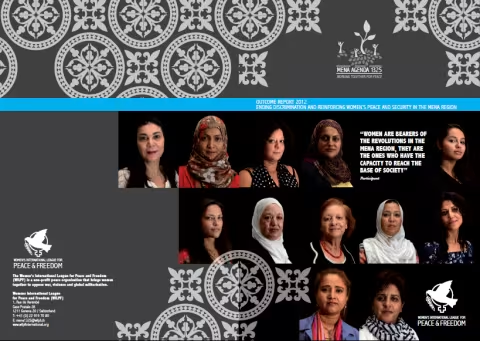
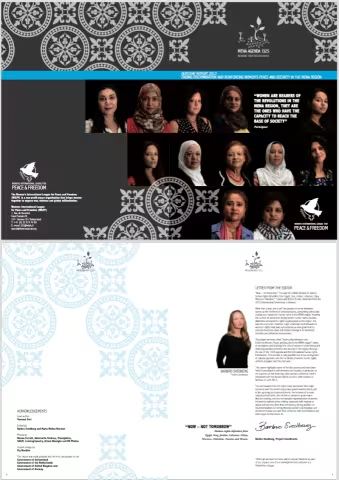
In late 2011, WILPF began to develop a programme to enhance the collective capacities of women’s rights organisations to respond to the unprecedented political events in the Middle East and North Africa (MENA).
ABAAD-Resource Center for Gender Equality, in partnership with Women's League for International Peace and Freedom (WILPF) and in collaboration with the United Nations Interim Forces (UNFIL) in South Lebanon, organized the National Consultation Meeting on May 10th, 2012 at Holi
This publication is a compilation of reports prepared by group of civil society organizations in light of the review of Lebanon under the first-cycle of Universal Periodic Review (2010).The booklet includes the report reviewing conditions of economic and social rights in Leban