تجاوز إلى المحتوى الرئيسي

موارد

Scope
Intervention Sectors
Displaying 1 - 20 of 106
National
Publishing Date
This policy brief was developed as a deliverable in the project “Fair Game: Theatre of the Oppressed for Youth Empowerment” funded by the European Union. It tackles the topic of bullying in schools and offers recommendations drawn from the field experience in Lebanon that focused on the methodology of Legislative Theatre to raise awareness on bullying in schools and advocate for better policies.
National
Publishing Date
This project aims to (1) bring statistical transparency to youth’s opinions, attitudes, feelings, and perceptions about social, cultural, political, and familial freedom of speech barriers within our society, and find what activities facilitate youth’s freedom of speech; (2) create discussion and widespread accountability by engaging the online and offline community, institutional stakeholders, and youth though an advocacy Call to Action based on our research findings, and (3) provide evidence that creative civic spaces are an integral part of our community and change negative attitudes...
National
Publishing Date
We Rise through Art is a handbook produced under the project with the same title in response to Beirut's explosion, highlighting activities and tools that can be adopted by trainers, coaches and facilitators with pre-adolescents and children under arts, sports and recreation.
National
Publishing Date
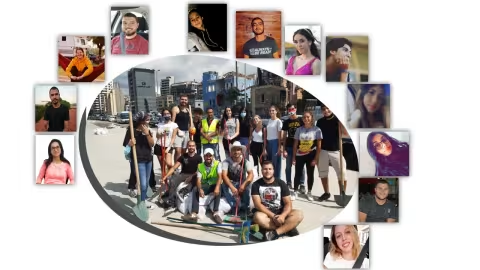
Beirut Explosion: Greatest Tragedies Come With Greatest Acts of Kindness. Youth from a Sports and Youth Association (Chabibeh Sporting Club) become volunteers and share stories of compassion and pain mixed together to shed light on the darkest hour of their country.
National
Publishing Date
Masar Association's  Annual Report for 2020 presents a summary of Masar’s activities over the past year, including profile, programmes, projects implemented, success stories, as well as partners and donors.
National
Publishing Date
We Play for Peace is a handbook produced under the project with the same title highlighting activities and tools that can be adopted by trainers, coaches and facilitators with pre-adolescents and children under arts, sports and recreation.
National
Publishing Date
The toolbox is intended as an open learning resource for youth workers that are engaged in community work with young refugees, asylum seekers and young people with migration background. Specifically: project managers, community leaders, educators, facilitators, social workers, intercultural mediators that are interested to improve their ability in the social inclusion of excluded groups. The toolbox could also be used in formal settings such as schools, colleges and universities addressing development challenges as well as for project managers and experts engaged in the design and...
National
Publishing Date
This document is the outcome of a workshop done during the Erasmus Plus training "Influence Youth". The workshop was about the topic of teamwork, specifically the challenges faced when working with a team of volunteers and how to overcome it. The participants of the workshop talked about their challenges and possible interventions were shared also by participants based on their experience working in this field. The document includes the information shared by the participants in this workshop.
National
Publishing Date
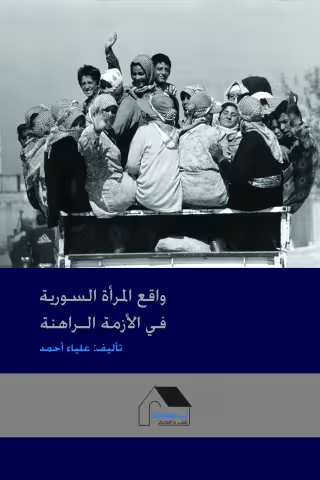
هل تغيّرت، أو تخلخلت، الصورة النمطية للمرأة في الواقع الراهن في سورية؟ هذا هو السؤال المؤسس لهذه الدراسة التي تسعى فيها الباحثة لرصد تحولات المكانة الاجتماعية للمرأة من خلال متابعتها لمدى المشاركة النسوية في الحياة العامة، في سورية. تركز الباحثة على فترة الأزمة الحالية متسائلة «هل يمكن أن يشكل انخراط المرأة السورية في الأزمة، موالاةً أو معارضة، معبراً إلى إنجاز بقية حقوقها... أم يزيد من معاناتها؟
National
Publishing Date
يتشرف مركز دعم لبنان، بالشراكة مع السفارة السويسرية - مكتب التعاون السويسري في لبنان، بدعوتكم لحضور أول معرض المانحين، تمكين المبادرات التي يقودها الشباب من أجل تحقيق أهدافهم
National
Publishing Date
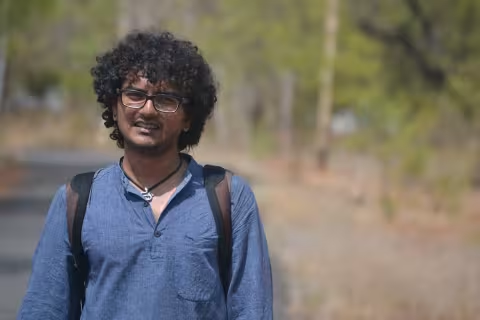
MOSAIC had the pleasure and privilege to speak with activist Gopi Shankar Madurai moments after the Supreme Court in India decriminalized Section 377 of the Penal Code.
National
Publishing Date

Working Paper | February 2014
The Dilemma of Human Rights In Lebanese Electoral Laws by Elie Al-Hindy
This study concludes with a number of recommendations with respect to the issues that need to be introduced to the debate and that can strengthen advocacy efforts by the different stakeholders involved. Reflecting on all of the above, and in light of the current political realities in Lebanon, including present sectarian demographics and political structure, the study concludes that the standards imposed on the new electoral law is impossible to meet, as no law, which this study has reviewed...

National
Publishing Date

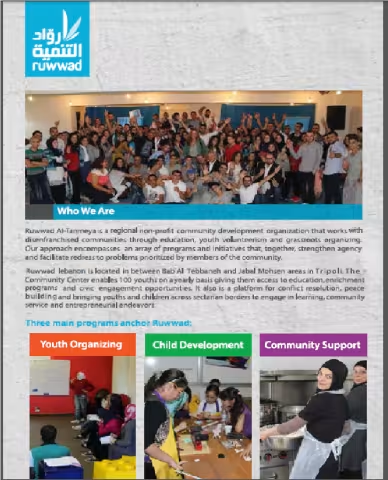
Ruwwad Al-Tanmeya is a regional non-profit community development organization that works with disenfranchised communities through education, youth volunteerism and grassroots organizing. Our approach encompasses an array of programs and projects that, together, strengthen initiative and facilitate redress to problems prioritized by members of the community. We believe in Embracing pluralism, Respecting diversity and Promoting equity wherever we operate.

Ruwwad, which spans today Jordan, Egypt, Lebanon and Palestine, and operates through a strong network of partnerships with civil society and...

National
Publishing Date
This issue of Tatimma focuses on the question of civil rights and liberties in Lebanon. Whilst it is usually considered that civil freedoms in Lebanon are light-years ahead of other Arab countries. Yet this state of liberties appears to be more a facade for a discriminatory system which limits the liberties of Lebanese citizens, specifically Lebanese women, refugees, foreign workers to name a few.
National
Publishing Date
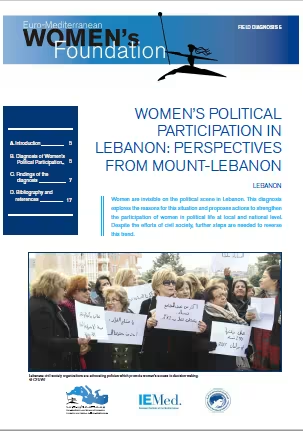
Although Lebanon is sometimes considered as the only democratic country in the Arab region with a free political environment and electoral system, the situation of women has not been strengthened enough for them to have a role on an equal footing with men. Lebanese women form a majority of 53% and they are actively participating in all aspects of Lebanese society. They enjoy equal constitutional rights with men and have the right to vote, hold public office, elect and be elected in municipal councils. Yet, this diagnosis, elaborated by the Committee for the Follow-Up on Women’s Issues (CFUWI)...