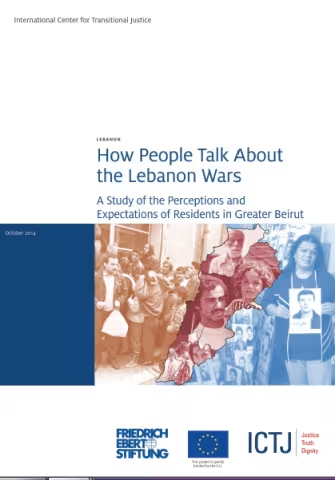
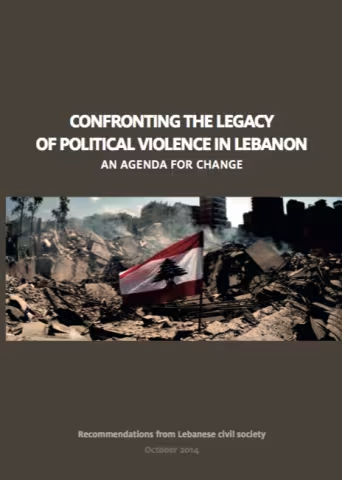
This report examines variations in wartime experiences and the attitudes of residents in Greater Beirut regarding measures to confront Lebanon’s legacy of political violence.
Twenty-five years after the end of the Lebanese Civil War, the families of the missing and forcibly disappeared in Lebanon are still waiting for answers about the fate of their loved ones. A new report by the International Center for Transitional Justice says the country seems to be ready to address this issue through an independent national commission and lays out the features of a successful future commission.
The 38-page study, “The Missing in Lebanon: Inputs on the Establishment of the Independent National Commission for the Missing and Forcibly Disappeared in Lebanon,” includes expert...
This report presents qualitative data collected by ICTJ on how individuals in Greater Beirut talk about the Lebanon wars and the need for truth, justice, and an end to violence in their country.
This report compiles information on hundreds of incidents of serious human rights violations that occurred in Lebanon from 1975 to 2008, including mass killings, enforced disappearances, assassinations, forced displacement, and the shelling of civilian areas.
This report examines the situation of impunity in Lebanon that has persisted since the 1975-1990 war through the lenses of core elements of transitional justice.
يتناول هذا التقرير حالة الإفلات من العقاب في لبنان التي ما زالت سائدة منذ حرب 1975-1990 وذلك من خلال العناصر الأساسية للعدالة الانتقالية. ويحلل التقرير تجربة لبنان في الماضي المعنية بتدابير العدالة الانتقالية غير الفعّالة - بما في ذلك التجارب المحلية المحدودة، ولجان تقصي الحقائق المحدودة الصلاحيات، وسبل الانصاف الغير مكتملة للضحايا - وتأثيرها على المجتمع اللبناني. ويتناول التقرير الدروس التي يمكن أن تساعد على الشروع في عملية محاسبة أوسع في لبنان والتي تساهم في احلال السلام والأمن على المدى الطويل
This paper examines the situation of impunity in Lebanon that has persisted since the 1975–1990 war. It highlights the price of the Lebanese authorities’ failure to address the legacy of past conflict.
This study recommends a holistic approach to crafting a comprehensive and victim-centered transitional justice process in Lebanon. An incremental approach to reform would be of value, given the likely challenges to pursuing accountability in the country. Programming must involve state and nonstate actors—political and community leaders, civil society, and the broader public. In addition, human...