
- Problem Statement
Lebanon remains entrenched in a multi-dimensional crisis characterized by economic collapse, currency devaluation, soaring inflation, weakened governance, and regional conflict. The 2023–2024 war triggered large-scale displacement and severely affected already marginalized communities, particularly in border regions and rural areas. As a result:
- Food prices surged beyond affordability.
- Livelihoods collapsed due to job loss and disrupted markets.
- Public safety nets eroded, and communities became increasingly dependent on humanitarian aid.
This left over 80% of the population facing food insecurity, especially returnees, IDPs, and host communities living conflict-affected villages.
- Project Objectives
- Ensure Continuous Access to Nutritious and Culturally Appropriate Meals
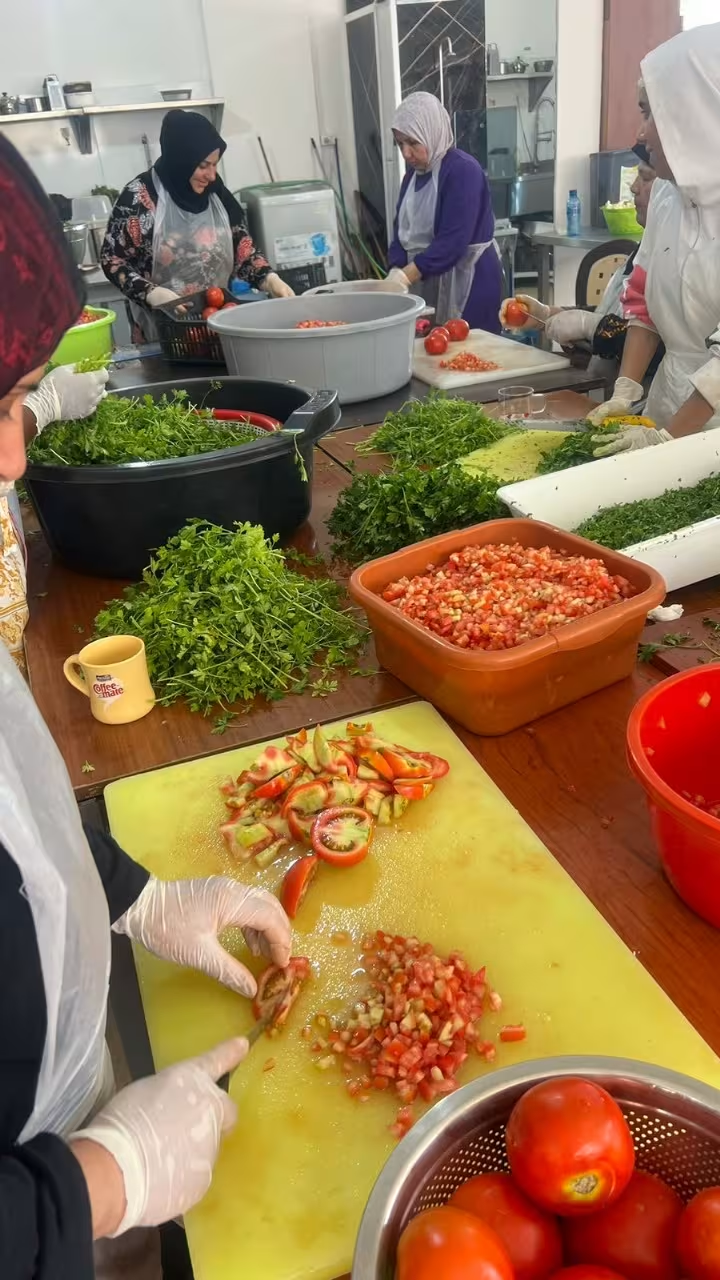
- Provide hot, balanced, and culturally relevant meals to vulnerable populations—including returnees, IDPs, and impoverished host communities—across conflict-affected and food-insecure regions.
- Safeguard Livelihoods through Community Kitchen Engagement
- Generate short-term income for vulnerable individuals, especially women and youth, by employing them in food preparation, kitchen operations, and logistics.
- Preserve the functionality of kitchens through a cash-for-work model, ensuring local economic resilience and dignity of labor.
- Support Community Kitchens as Platforms for Recovery and Local Food Systems
- Reactivate and operate community kitchens in rural and affected areas as locally managed food security hubs.
- Promote circular economies by sourcing ingredients from local farmers, cooperatives, and small-scale producers, reinforcing market linkages and minimizing reliance on external suppliers.
- Reinforce Local Ownership, Dignity, and Humanitarian Accountability
- Uphold humanitarian principles of dignity, participation, and transparency by involving municipalities and community leaders in planning, implementation, and monitoring.
- Design inclusive services that respect cultural norms and prioritize equitable access for the most affected.
- Maintain Strategic Coordination with Local Authorities and Partners
- Strengthen collaboration with municipal unions, governors, and local networks to facilitate needs assessments, target village selection, and adaptive distribution routing.
- Establish readiness to scale services based on evolving needs and funding availability.
- Project Milestones and Achievements
- March 2025: Full-Scale Operations
- Over 733,835 hot meals delivered across four kitchens in Ansar (Nabatieh), Hasbaya-Marjeyoun, Baalbek, and Lower Chouf.
- Provided 22,000 hot meals/day during Ramadan consisting of a hot meal, salad, soup, and dates.
- Created over 70 livelihood opportunities for local cooks, assistants, and logistics personnel.
- Activated circular economy linkages with local suppliers and cooperatives.
- April 2025: Abrupt Funding Disruptions
- Faced two major funding reallocations by WCK (toward Myanmar and Gaza responses).
- Service delivery reduced to two kitchens (Ansar and Tyre) with only 3,000 meals/day.
- Despite this, 24 essential jobs preserved, and menu adjusted to maintain cultural acceptance.
- May 2025: Sustained Reduced Operations
- A total of 93,000 hot meals distributed from the two remaining kitchens (2,000 in Ansar, 1,000 in Tyre).
- One protein-rich meal/week reintroduced via in-kind donations (meat, chicken, vegetables) provided by World Vision International.
- Municipal drivers supported logistics, reducing costs and enabling continued access to remote villages.
Total cumulative meals distributed since project inception surpassed 1,024,000.
Scope
National
Intervention Sectors
Food & Nutrition
Organisation
Files
sbt_article_daleelmadani.pdf
(1.01 MB)
Publishing Date
Countries
Lebanon
Resource Type
Activity Reports
Theme
Food & Nutrition
Dossier
Agriculture & Rural Development