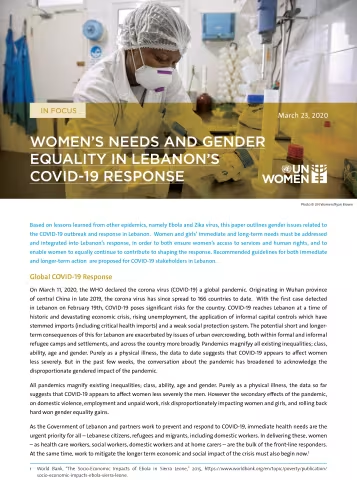
On March 11, 2020, the WHO declared the corona virus (COVID-19) a global pandemic. Originating in Wuhan province
of central China in late 2019, the corona virus has since spread to 166 countries to date.
This report attempts to answer current gaps in the literature analysing WPE and WPP donor-funded initiatives in Lebanon, and asks the following question: what explains the current gap between donor-funded WPE and WPP initiatives, and the continued low rates of women’s political participation and overall low political empowerment in Lebanon?
The toolbox is intended as an open learning resource for youth workers that are engaged in community work with young refugees, asylum seekers and young people with migration background. Specifically: project managers, community leaders, educators, facilitators, social workers, intercultural mediators that are interested to improve their ability in the social inclusion of excluded groups.
The toolbox could also be used in formal settings such as schools, colleges and universities addressing
development challenges as well as for project managers and experts engaged in the design and...
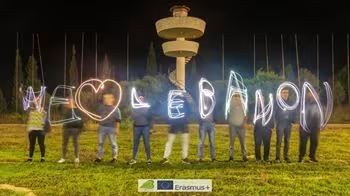
This document is the outcome of a workshop done during the Erasmus Plus training "Influence Youth".
The workshop was about the topic of teamwork, specifically the challenges faced when working with a team of volunteers and how to overcome it.
The participants of the workshop talked about their challenges and possible interventions were shared also by participants based on their experience working in this field.
The document includes the information shared by the participants in this workshop.
يتشرف مركز دعم لبنان، بالشراكة مع السفارة السويسرية - مكتب التعاون السويسري في لبنان، بدعوتكم لحضور أول معرض المانحين، تمكين المبادرات التي يقودها الشباب من أجل تحقيق أهدافهم
Lebanon Support, in partnership with the Embassy of Switzerland - Cooperation Office in Lebanon, is pleased to invite you to the first Funders’ Fair, Enabling Youth-Led Initiatives to Achieve Their Mission
This policy brief was developed based on an in-depth report titled “Women’s Political Participation: Exclusion and Reproduction of Social Roles. Case Studies from Lebanon;” in addition to discussions and insights gathered during a consultation workshop held on 8 November 2018, and which marked the participation of women who had taken part of the research, as well as activists, representatives of civil society organisations, and academics.
في إطار النظام السياسي اللبناني الذي يقوم على المحاصصة الطائفية والعائلية السياسية والزبائنية المتمثلة في نظام الزعامة، والذي يعزز من الأبوية القائمة على القرابية، تسعى هذه الدراسة إلى فهم وتحليل مشاركة النساء في مواقع قيادية وقاعدية في أربعة كيانات في لبنان تتضمن حزب سياسي، نقابة، منظمة مجتمع مدني وحركة اجتماعية. تفحص الدراسة الهياكل والبنى المؤسسية لتلك الكيانات ومواقفها من قضايا النساء، والديناميات التي تعتمدها للتفاعل مع محيطها، وذلك من خلال تحليل وثائقها الرسمية، خطابها العام، ممارساتها، وأخيراً تجارب النساء المنتميات لها وما عايشنه من تحديات ضمن هذا الإطار.
بالإضافة إلى هذه التقرير،...
Lebanon may witness a remarkable rise in the number of women serving in Parliament come May 2018 due to initiatives from women’s groups, “civil society” activists, and the substantial number of female candidates – 113 at the start of the election period. However, as this briefing paper shows, Lebanese women continue to face numerous challenges in entering government. The new electoral law passed in June 2017 does not provide women with equal opportunity to be elected, and it is yet to be seen whether it will increase female representation in Parliament. Nevertheless, the historic number of...
In light of recent proposals for legislation againsts sexual harassment (SH) in Lebanon, this policy brief explores the subject of SH in public, institu
The Arab region continues to manage uncertainties on its path towards an inclusive and sustainable growth trajectory: geopolitical tensions persist, and global interest rates have soared.
This Gender Manual is a practical guide for civil society organisations in Lebanon that wish to enhance gender equity in their practices and policies. Far from being exhaustive, this manual contains practical guidelines that can help to both gain a better understanding of gender-sensitive topics, as well as to integrate and implement them in internal processes, action plans, and organisational structures and policies. It is informed by the findings of a series of meetings and consultations with various stakeholders engaged in gender issues. It is worth noting, however, that the guidelines...
This issue of Tatimma focuses on the question of civil rights and liberties in Lebanon. Whilst it is usually considered that civil freedoms in Lebanon are light-years ahead of other Arab countries. Yet this state of liberties appears to be more a facade for a discriminatory system which limits the liberties of Lebanese citizens, specifically Lebanese women, refugees, foreign workers to name a few.
“We Can Never Go Back to How Things were Before”* is a qualitative study carried out as a partner study to the International Men and Gender Equality Survey – Middle East and North Africa (IMAGES MENA).
This Policy Brief is based on research that explored the process of establishing and implementing Law 293, and on a policy dialogue that took place at the Institute on March 8, 2017 t
Lebanon provides a refuge for many women and teenagers driven away from neighbouring countries by wars and conflicts, as well as some who have come from other countries seeking better economic conditions.