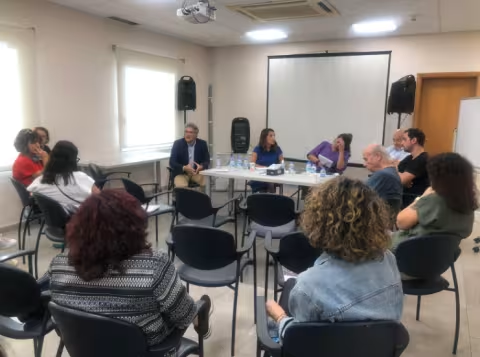
On September 25, 2025, CeSSRA convened a roundtable discussion titled “The End of the Grant Era: Implications and Potential for Civil Society Actors in Lebanon,” bringing together local civil society actors to reflect on the shifting funding landscape and its impact on the sector.
This policy brief was developed as a deliverable in the project “Fair Game: Theatre of the Oppressed for Youth Empowerment” funded by the European Union. It tackles the topic of bullying in schools and offers recommendations drawn from the field experience in Lebanon that focused on the methodology of Legislative Theatre to raise awareness on bullying in schools and advocate for better policies.
مساعدة ذوي الإعاقة العقلیّة (الإخوة) في جمیع مجالات حیاتھم من خلال توفیر الدعم العملي والعاطفي بتوجیه من مسؤول البيت، والمساعدة في تطویر مقدراتھم بخلق بیئة محفزة ورعایة مناسبة.
Terre des hommes foundation has been present in Lebanon since 1977. We provide life saving child protection assistance to the most vulnerable children and their families regardless of their nationality, ethnic origin and religious affiliation. Through our child protection in migration and access to justice programmes, our staff support victims of physical and sexual abuse, worst forms of child labor, child marriage, severe neglect and children in contact or conflict with the law. We work with children, their families, communities, NGO and UN partners, local authorities and religious leaders .
Beirut Explosion: Greatest Tragedies Come With Greatest Acts of Kindness.
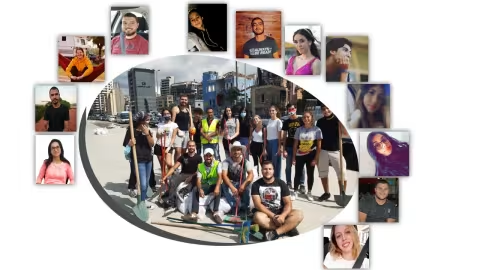
Youth from a Sports and Youth Association (Chabibeh Sporting Club) become volunteers and share stories of compassion and pain mixed together to shed light on the darkest hour of their country.
يقدم هذا الكتاب، بالنص والصورة، شهادة صادقة عن الكارثة السورية.
في روايات الأمهات المتضمنة في الكتاب ينضح الألم من بين السطور. ومن صورهن تلمع بارقة الأمل بالسلام رغم الحزن المقيم.
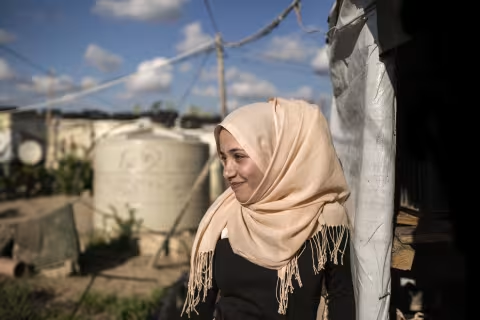
ويأتي هذا الكتاب تتويجاً لمشروع استمر لأكثر من سنة قام خلاله عدد من أعضاء الرابطة وأصدقائها بلقاء عشرات الأمهات السوريات على اتساع رقعة تواجدهن في سورية، وفي مخيمات اللاجئين في لبنان، فجمعوا شهاداتهن عن مآسيهن وعذاباتهن خلال سنوات الجحيم الخمس الماضية. كما قاموا بتصوير الأمهات، إلا من اعتذرت عن ذلك لسبب أو آخر.
”أمهات سوريات“، شهادة عن الذاكرة الكليمة والأمل المتسامي على الموت.
This policy brief was developed based on an in-depth report titled “Women’s Political Participation: Exclusion and Reproduction of Social Roles. Case Studies from Lebanon;” in addition to discussions and insights gathered during a consultation workshop held on 8 November 2018, and which marked the participation of women who had taken part of the research, as well as activists, representatives of civil society organisations, and academics.
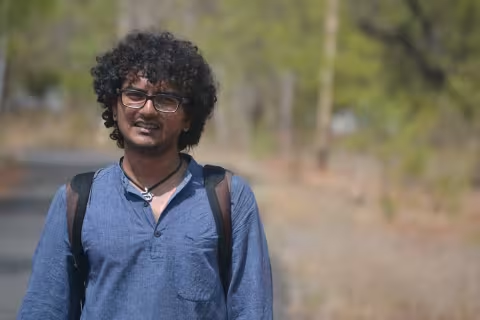
MOSAIC had the pleasure and privilege to speak with activist Gopi Shankar Madurai moments after the Supreme Court in India decriminalized Section 377 of the Penal Code.
The articles gathered in this dossier offer insights, based on case studies, into the transformation of the “associative sector” in Lebanon, a sector generally seen to be at the core of an increasingly active civil society.
In light of recent proposals for legislation againsts sexual harassment (SH) in Lebanon, this policy brief explores the subject of SH in public, institu
This Policy Brief is based on research that explored the process of establishing and implementing Law 293, and on a policy dialogue that took place at the Institute on March 8, 2017 t
This policy brief outlines options for strengthening rule of law in Lebanon to improve access to justice for both Lebanese citizens and Syrian refugees.
With globalisation, the mobility of people has grown, and women are essential actors in this migratory phenomenon. This article focuses on the role of women in migration and the role of migration in advancing women’s rights to achieve gender equality.
The 2015 Global Humanitarian Assistance (GHA) Report highlights that in 2013, 147 countries received humanitarian assistance, with countries from the Arab region, particularly those affected by the Syrian crisis, being the highest beneficiaries of aid.
Lebanon has had an ambiguous approach to the more than one million Syrians seeking protection in the country since 2011. The country is neither party to the 1951 Convention relating to the Status of Refugees, nor does it have any national legislation dealing with refugees.
Digital Citizen is a biweekly review of news, policy, and research on human rights and technology in the Arab World.
It is a collaborative reporting effort by Global Voices Advocacy, Access, EFF, and Social Media Exchange.
Get the latest edition of Digital Citizen on the web.
The population shift from Syria, as a result of the Syrian Crisis, is causing enormous pressure on host communities and exacerbating instability factors.
Having limited legal status has direct negative consequences for Syrian refugees’ access to protection and assistance during their stay in Lebanon. Limited legal status also increases the risks of abuse and exploitation. Lebanon is not a signatory to the 1951 Refugee Convention, hence the limited legal protection for refugees and asylum seekers in Lebanon, although it is bound by the customary law principle of non-refoulement and by the obligations of the human rights treaties which it has signed and which are incorporated into its Constitution. International standards under these obligations...