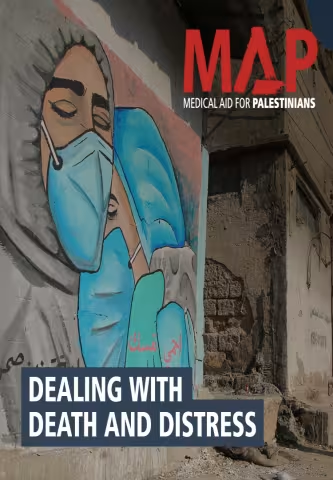
Based on interviews conducted with doctors, nurses and other frontline staff across West Bank, East Jerusalem and Gaza, the paper exposes how the stresses and strains of protracted COVID-19 response have compounded existing challenges of working in a health system already rendered fragile, fragmented and resource-deprived by perpetual occupation and blockade, to cause a deepening wellbeing crisis among the Palestinian healthcare workforce.
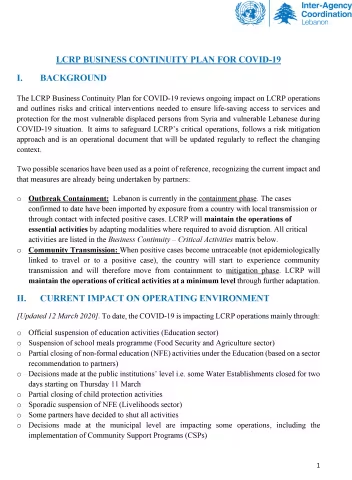
The LCRP Business Continuity Plan for COVID-19 reviews ongoing impact on LCRP operations and outlines risks and critical interventions needed to ensure life-saving access to services and protection for the most vulnerable displaced persons from Syria and vulnerable Lebanese during COVID-19 situation.
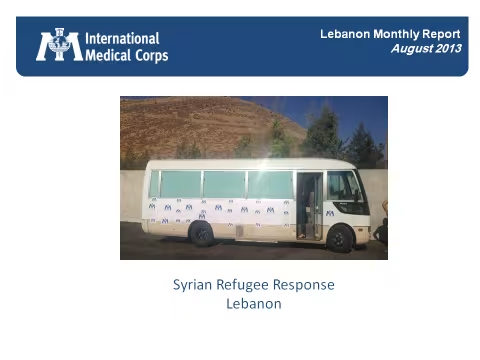
International Medical Corps Lebanon began providing services for Syrian refugees in September 2011 in North Lebanon. Since then, International Medical Corps has scaled up considerably, both geographically and in terms of types of services offered.
In August, International Medical Corps:
mobilized a mobile medical unit for the Masnaa border crossing
provided ToT training for 54 Syrian refugee women on health-related topics
supported over 14,000 primary health care (PHC) consultations
admitted 2,600 patients for hospitalization
completed two mental health GAP refresher trainings for 24 PHC...
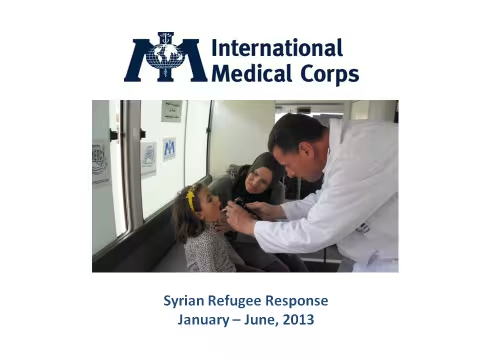
International Medical Corps Lebanon began providing services for Syrian refugees in September 2011 in North Lebanon. Since then, IMC has scaled up considerably, both geographically and in terms of types of services offered.
In the health sector International Medical Corps is at the forefront of the emergency response effort, providing services for both registered and nonregistered refugees. In the first six months of 2013, through its primary, secondary and mental health care programs across Lebanon, International Medical Corps has:
• Provided 53,885 primary health care consultations;
•...
Information on the health service in Lebanon including availability of access and availability of drugs and treatment. Information on treatment of mental health issues such as anxiety, depression, post traumatic syndrome, including psychiatric treatment.
This essay proposes to re-orient feminist debates on epistemology towards the care-security nexus as a pathway that can plausibly provide an integral understanding of a human-centred and eco-minded security.
In the coming decades, the world’s rapid urbanization will be one of the greatest challenges to ensuring human welfare and a viable global environment.