This study aims to shed light on the industry that profits from the recruitment of women from South Asian countries into domestic work employment in the Middle East, with a particular focus on Bangladesh, Jordan and Lebanon.
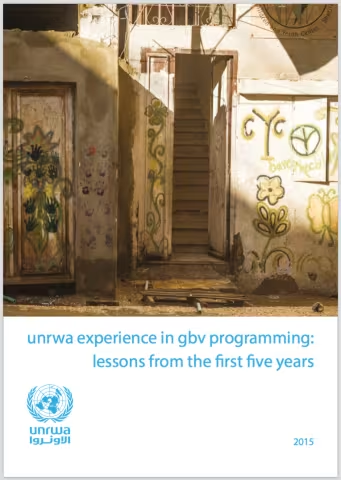
This document provides elements of discussion and pragmatic solutions to challenges in addressing GBV in the context of resistance. It does not provide clear cut answers to all questions, but intends to bring together evidence from UNRWA and results from other agencies.
Summary Booklet | June 2012
Arab Uprisings Symposium Summary Critically Assessing the Changing Landscape of Power and Players IFI by Maureen Ali
This symposium is part of the AUB-wide Arab Uprisings Research Initiative, which
was launched and is supported by the Office of the Provost and managed by the
Issam Fares Institute for Public Policy and International Affairs. AUB has invited over
twenty scholars from the Arab world and abroad to this Symposium to discuss critical
themes that have emerged to date, and to help shape our future research agenda. The
symposium will highlight shifting power...
This document is the outcome of a workshop organised by UNRWA on the 31st of March 2010 on “Community of Practice in Building Referral Systems for Women Victims of Violence”.
This paper explores some faces of globalization by using a gender perspective, in order to consider reproduction (psychological and emotional as well as biological) and the activities and attitudes of care that give moral resources for response to systemic tragedy, not only fo
This paper provides a brief overview of what is known about effective strategies for involving men in violence prevention efforts from the perspective of men who are recipients of anti-violence programs as well as from the men who provide them.
This study, prepared by Dr. Ray Jureidini, identifies practices and patterns that are the key causes for women domestic migrant workers' vulnerability in Bahrain and provide alternative approaches for effective means for action.