Over 57,000 displaced Syrians are receiving protection and assistance in Lebanon through the efforts of the Government of Lebanon and UN and NGO partners.
In recent years, the “sponsorship system” (kafala) in Lebanon and in other countries in the region has been identified as a core problem leading to the exploitation and abuse of migrant domestic workers.
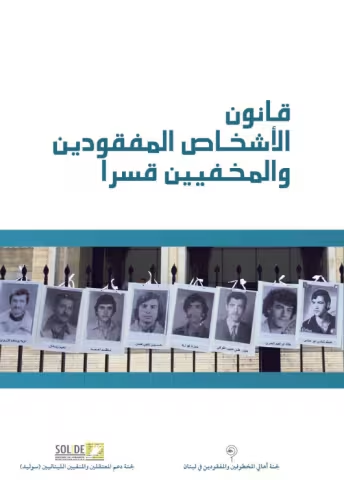
قانون الأشخاص المفقودين والمخفيين قسراًوضعت منظّمات المجتمع المدني، وعلى رأسها جمعيّّات الأهالي، مشروع قانون للأشخاص المفقودين والمخفيين قسرًا، بهدف اعتماده من قبل السلطات اللبنانيّة.
الأسباب الموجبةمع انتهاء الحرب (١٩٧٥ - ١٩٩٩) ، لم يتمكن لبنان من ايجاد حل مرض لضحايا الحرب وقضاياهم، وتحديدا لقضايا المفقودين والمخفيين قسرًا وذويهم.وحتّى الآن، لا زال أهالي الضحايا يناضلون في سبيل حقّهم بمعرفة ما جرى لهؤلاء الّذين أخذوا منهم، إن كانوا لا يزالون على قيد الحياة- وباسترداد رفاتهم إذا تبيّن أنّهم توفّوا، لكنهميناضلون أيضًا في سبيل حقّهم بالحصول على اعتراف مّمن نجوا من الحرب، أي الدولة...
This brochure presents a brief introduction to the Universal Periodic Review (UPR) process and introduces the different stages of possible engagement by civil society groups with the process.
This resource is a United Nations Relief and Works Agency for Palestine Refugees in the Near East (UNRWA) reference training manual for frontline staff on how to work with GBV survivors.
A one - day expert group meeting called for by the UN special rapporteur on VAW Ms. Rashida Manjoo was convened in the UNFPA New York headquarters on Wednesday October 12, 2011. Sixteen experts from different corners of the globe presented papers that portrayed the regional idiosyncrasies of manifestations, root causes and consequences of gender - motivated killings (femicide and feminicide). Besides papers that presented concepts and related conceptual challenges, the presentations covered selected countries from Africa, Latin America, the Middle East, South East Asia, Canada and Europe...
Working Paper Series #5 | July 2011
Europe’s Lopsided Foreign Policy: Israel, Lebanon and the PalestiniansStuart Reigeluth
Europe is in the process of creating a common foreign policy. This is a difficult task since, as a supra-national entity, the European Union must take into consideration the different interests of its 27 member states. These interests usually coincide more than they diverge and thus European member states contribute resources and personnel to new EU mechanisms for both external and internal conflict management and rule of law efforts. Externally, these efforts have...
Research and Policy Memo #10 | May 2011
Climate Change and Health Research in the Eastern Mediterranean Region (EMR)Rima R. Habib
Climate change is likely to aggravate the burden of disease in the Arab region currently suffering from political instability, natural disasters and humanitarian crises. The prevailing arid environment and the reliance on rain-fed food production exacerbate the situation. Therefore, governments and key stakeholders are encouraged to make further outlays to counteract new and increasing challenges to population health.
سلسلة أوراق عمل #2 | أذار 2011
حصار غزة ليس خطأ بل غير مشروع : وضع الحصار بين القانون الدولي واستجابة الأمم المتحدة نورا عريقات
منذ اندلاع الانتفاضة الفلسطينية الثانية، عزّزت إسرائيل فكرة أنها طرف مشارك في نزاع مسلح دولي في الضفة . وبناء عليه، تزعم أنه يمكننها أولاً، أن تلجأ إلى الدفاع عن النفس بموجب المادة 51 من ميثاق الأمم الغربية وقطاع غزة المتحدة، وثانياً، أن تستخدم قوة تتجاوز تلك المسموح بها خلال إنفاذ القانون، حتى في حالة وجود احتلال تطبّق فيه قوانين الاحتلال . يؤكّد قرارا مجلس الأمن 1368) 2001 (و 1373) 2001 ،(اللذان أقرّا رداً على هجمات 11 أيلول / سبتمبر على الولايات المتحدة، على أن...
Research and Policy Memo #2 | March 2011
Partisan Urban Governance Restricts Access to Public Space Fadi Shayya
As well as their many ecological, environmental, and cultural advantages, green urban public spaces are the inalienable right of every citizen.
Dating back 350 years, Beirut’s unique 330,000 m2 park is part of the historical Horsh Al-Sanawbar that once measured more than 1,250,000 m2 . Today the park is concealed from the lives of many Beiruti residents and visitors. Less than 20% is open to the public—with restrictions on practices—whilst over 80% is fenced off with barbed wire and...
Research and Policy Memo #2 | March 2011
Partisan Urban Governance Restricts Access to Public Space Fadi Shayya
As well as their many ecological, environmental, and cultural advantages, green urban public spaces are the inalienable right of every citizen.
Dating back 350 years, Beirut’s unique 330,000 m2 park is part of the historical Horsh Al-Sanawbar that once measured more than 1,250,000 m2 . Today the park is concealed from the lives of many Beiruti residents and visitors. Less than 20% is open to the public—with restrictions on practices—whilst over 80% is fenced off with barbed wire and...
Working Paper Series #2 | March 2011
Is It Wrong or Illegal? Situating the Gaza Blockade between International Law and the UN ResponseNoura Erakat
Since the Second Palestinian Intifada, or uprising, Israel has advanced the notion that it is engaged in an international armed conflict both within the West Bank as well as Gaza. Accordingly, it argues that it can 1) invoke self-defense, pursuant to Article 51 of the United Nations Charter, and 2) use force beyond that permissible during law enforcement, even where an occupation exists and to which the laws of occupation apply. UN Security Council...
Paper | January 2011
Constructing Security Council Resolution 1701 for Lebanon in the Shadow of the ‘War on Terror’Karim Makdisi
This article argues that the ‘war on terror’ gave global meaning to the 2006 Israel– Lebanon war and to the construction of UN Security Council resolution 1701 that authorized the deployment of robust UN peacekeepers in southern Lebanon (UNIFIL). It uses a critical, discursive approach to argue that UN resolutions have embedded in them a particular, powerful discourse, in this case the ‘war on terror’. This discourse grounded a global struggle for and against US...
Oxfam GB commissioned the pilot study discussed in this report in order to understand further the context that shapes men’s gender roles and affects their behaviours, practices, and attitudes towards gender equality, with an explicit focus on VAW.
UNHCR, coordinating the operations in the North along side with the HRC (High Relief Commission) and DRC as its main implementing partner, requested from DRC to conduct a first rapid assessment in the Bekaa with the following objectives: a) To identify existing areas of displa